Reported by Simon Daniel Yusuph l Journalist at Weng Global
Kenyan President William Ruto is expected to visit the Dangote Petroleum Refinery in Lagos on Friday, September 25, ahead of the planned groundbreaking of a new 700,000-barrel-per-day refinery in Lamu, Kenya, on September 30.
The planned visit was confirmed by Dangote Group, which said its President, Aliko Dangote, would host Ruto at the Lekki-based refinery. The visit comes as Kenya and Dangote Industries make final preparations for the multibillion-dollar Lamu project.
Ruto and Dangote Prepare for Lamu Project
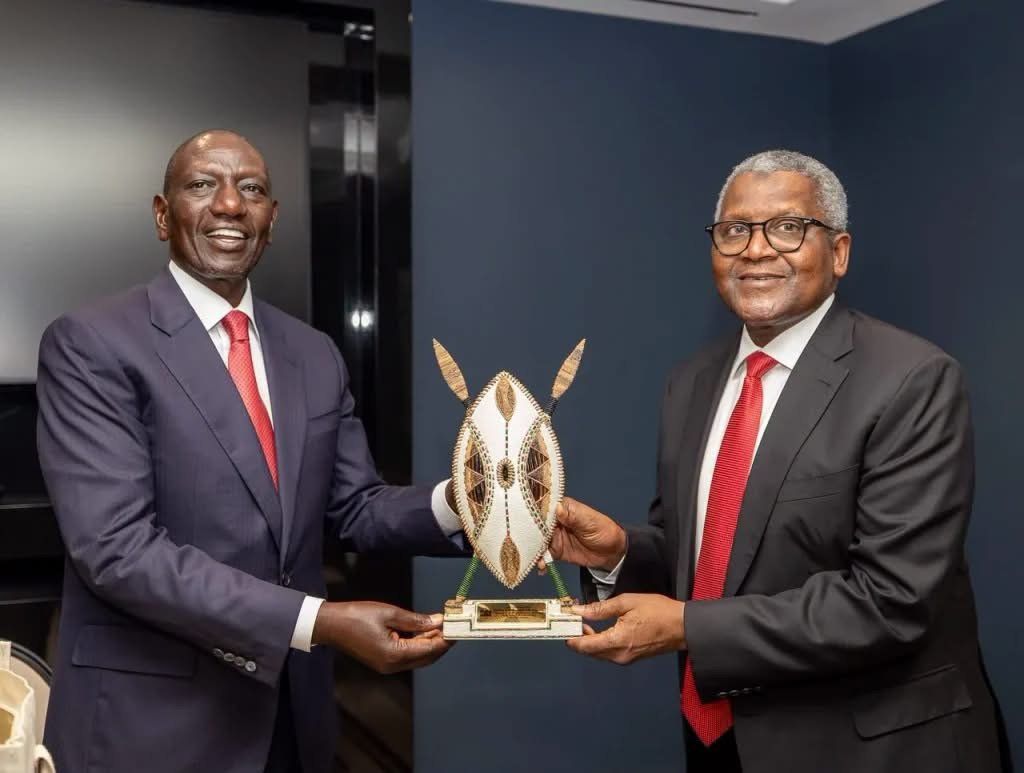
Ruto’s visit to Lagos follows discussions he held with Dangote and Africa Finance Corporation (AFC) Chief Executive Officer Samaila Zubairu on the sidelines of the 81st United Nations General Assembly in New York.
According to reports from the meeting, the discussions focused on financing arrangements and final preparations for the Lamu refinery project. Ruto subsequently said Kenya was ready to proceed with the groundbreaking ceremony.
Dangote has set September 30 as the date for the groundbreaking ceremony in Lamu.
Kenyan authorities have also confirmed that preparations are underway for the event, with President Ruto expected to lead the ceremony.
Proposed 700,000-Barrel-Per-Day Refinery
The planned Lamu refinery is expected to have a processing capacity of approximately 700,000 barrels of crude oil per day.
That would put the proposed facility at a similar scale to Dangote’s flagship refinery in Nigeria, which has a stated capacity of 650,000 barrels per day.
Kenyan media reports have placed the estimated cost of the Lamu project at between $15 billion and $17 billion, reflecting differences in reported project valuations. Reuters has reported a planned investment of about $15 billion to $16 billion.
The facility is planned for Lamu County and is expected to serve Kenya and wider East African fuel markets.
Kenyan officials have presented the project as part of efforts to strengthen domestic refining capacity, reduce dependence on imported refined petroleum products and develop the country’s industrial base.
Expected Impact on East Africa’s Energy Market
The proposed refinery could significantly alter the petroleum supply structure in East Africa if completed as planned.
Kenya currently relies heavily on imported refined petroleum products to meet domestic demand. A large-scale refinery could provide an alternative source of refined fuels for Kenya and potentially neighbouring markets.
President Ruto has said the project would strengthen regional energy security, create economic opportunities and support industrialisation.
Kenyan authorities have also linked the project to employment and broader economic development in Lamu and the coastal region.
The refinery is expected to be connected to broader infrastructure and industrial development plans around Lamu.
Financing and Crude Supply Remain Key Issues
Despite the planned groundbreaking, the project faces important challenges that will need to be addressed during construction and eventual operations.
Reuters reported earlier in September that crude supply remains one of the major issues facing the proposed refinery because Kenya does not currently have commercial crude oil production.
Potential supplies could come from countries including South Sudan and Uganda, while seaborne imports could also be considered. Each option presents different infrastructure, cost and geopolitical considerations.
Financing is another major consideration.
Reports have indicated that Dangote is considering different funding arrangements for the project, while Kenya and other East African governments have been involved in discussions surrounding participation and investment.
The project’s eventual financing structure and access to reliable crude supplies will therefore be important factors in determining how quickly construction can progress and how competitively the refinery can operate.
Dangote’s Expanding Refining Ambitions
The Lamu project would represent a major expansion of Dangote’s refining interests beyond Nigeria.
The company’s 650,000-barrel-per-day refinery in Lekki has become a major part of Nigeria’s petroleum industry since beginning operations, supplying refined products to the domestic market and exporting to international destinations.
Dangote is also seeking to expand the Nigerian refinery’s capacity to 1.4 million barrels per day, according to the latest reports.
If both expansion plans progress, Dangote’s refining operations could become increasingly significant across multiple African petroleum markets.
The proposed Lamu facility would particularly position the company closer to East African fuel markets.
Regional Industrialisation
The project is also being presented as more than a refinery.
Kenyan authorities have linked the development to industrialisation, regional supply chains, employment and energy security.
The Kenya News Agency reported that the proposed facility would be located within the LAPSSET corridor area in Lamu and is planned alongside wider industrial infrastructure. The report said local authorities were preparing for a major gathering of regional and international dignitaries for the groundbreaking ceremony.
The project could therefore become an important component of Kenya’s broader ambition to develop Lamu as a logistics and industrial centre.
For East Africa, a large refinery could also create demand for supporting services in transportation, storage, engineering, maintenance and petroleum distribution.
Environmental and Community Concerns
The scale of the project also means that environmental and community considerations will remain important.
Reuters reported that environmental concerns and the refinery’s proximity to the UNESCO-listed Lamu Old Town are among the issues that could affect the project’s development.
Local communities have also raised questions about participation and land-related matters as the groundbreaking approaches.
Any large industrial project in Lamu will therefore have to balance its economic objectives with environmental safeguards, community interests and regulatory requirements.
What Happens Next
The immediate next step is Ruto’s planned visit to the Dangote Petroleum Refinery in Lagos on Friday.
The Kenyan President and Dangote are then expected to participate in preparations for the September 30 groundbreaking ceremony in Lamu.
Kenyan authorities have been coordinating security, logistics and protocol arrangements ahead of the event, with regional leaders and other invited officials expected to attend.
The groundbreaking itself will mark the formal start of the project, but construction, financing, crude supply arrangements and regulatory requirements will determine the project’s longer-term progress.
For Nigeria, the development also highlights the expanding regional role of Dangote’s industrial investments. For Kenya and East Africa, the proposed refinery represents an attempt to build greater domestic and regional refining capacity.
The project’s eventual impact will depend on whether the major financing, crude supply, infrastructure and environmental challenges can be successfully addressed.
Weng Global – stories beyond borders
Sources
- Dangote Group
- Kenya Government
- Kenya News Agency
- Reuters
- Punch
- The Star Kenya
- The Standard Kenya