Reported by Weng Patrick Atokor l Journalist at Weng Global
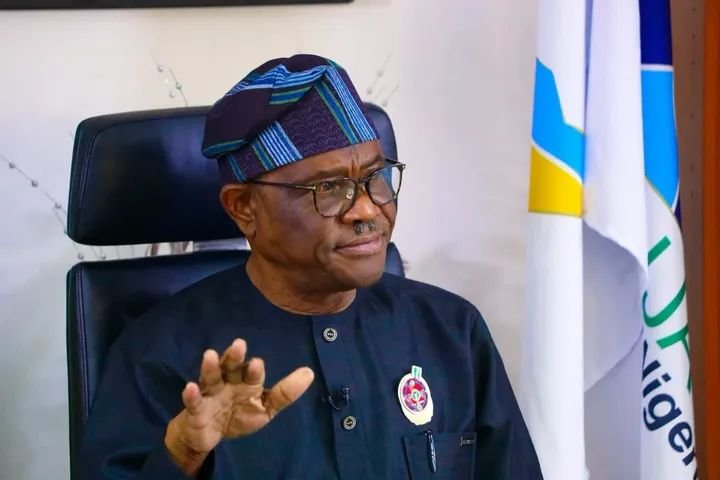
The Minister of the Federal Capital Territory (FCT), Nyesom Wike, has challenged the Academic Staff Union of Universities (ASUU) over its opposition to the reallocation of portions of the University of Abuja’s land, insisting that the union has no authority to determine land administration in the Federal Capital Territory.
Wike dismissed the union’s threat of industrial action, maintaining that the Federal Capital Territory Administration (FCTA) has the statutory responsibility to regulate land use and enforce the Abuja master plan.
The minister also expressed confidence that President Bola Ahmed Tinubu would secure victory in Rivers State during the 2027 presidential election, urging residents to support the President and candidates of the All Progressives Congress (APC).
He made the remarks on Thursday, November 5, 2026, during his monthly media interaction in Port Harcourt, Rivers State, and a town hall meeting in Abonnema, Akuku-Toru Local Government Area.
Wike Questions ASUU’s Authority Over University Land
Addressing the disagreement with ASUU, Wike questioned why the university’s academic staff union was challenging decisions concerning land administration in the FCT.
The minister argued that trade unions did not have the authority to determine how land within the territory should be allocated or administered.
He rejected allegations that the FCTA was unlawfully taking over university property, insisting that the administration was exercising its responsibilities concerning land management and urban development.
Wike questioned the justification for the university retaining a large expanse of land reportedly measuring 11,824 hectares, particularly where portions had allegedly remained undeveloped.
He argued that government should ensure that land was properly utilised rather than allowing extensive areas to remain idle when they could support development projects.
The minister also maintained that the FCTA was prepared to defend its decisions in court if ASUU pursued legal action.
He dismissed the union’s strike threat, accusing its leadership of attempting to pressure the government through industrial action rather than following established procedures.
ASUU Threatens Industrial Action Over Disputed Land
The disagreement intensified after ASUU’s University of Abuja chapter warned that industrial harmony on the campus could no longer be guaranteed unless the FCT minister reversed the disputed allocations.
The union’s chairman, Professor Sylvanus Ugoh, made the position public during a press conference on Tuesday, November 3, 2026.
ASUU accused the FCTA of unlawfully allocating portions of the university’s land to private companies and individuals, arguing that the move threatened the institution’s long-term development plans.
The union also alleged that Wike’s actions violated an existing court order issued by the Maitama High Court, which it said directed parties involved in the dispute to maintain the status quo.
According to the union, the disputed allocation of September 26 involved land belonging to the university.
ASUU maintained that it would explore all available legal options to protect the institution’s property and called on President Tinubu to intervene.
The union argued that the university needed the land for future expansion, agricultural research, infrastructure development and other academic activities.
These concerns have placed the dispute beyond a disagreement between the FCTA and an academic union, raising questions about the protection of public university assets and the legal authority governing land administration in Abuja. Premium Times Nigeria +1
Background: How the University of Abuja Land Dispute Started
The disagreement over the University of Abuja’s land dates back to June 2025, when Wike announced plans to reduce the institution’s land allocation from approximately 11,000 hectares to 4,000 hectares.
The announcement followed the commissioning of an access road to the Economic and Financial Crimes Commission (EFCC) Institute in the Giri District of the FCT.
At the time, Wike questioned why the university required such an extensive land area, arguing that significant portions had not been adequately developed.
He also claimed that the institution had acquired the land without the necessary documentation and directed relevant FCTA departments to take steps towards reallocating the remaining portions for development.
However, the university challenged the minister’s position.
Its Pro-Chancellor, Olanrewaju Tejuoso, reportedly maintained that the institution possessed valid documents supporting its allocation of the land.
He also argued that much of the approximately 4,000 hectares left for the university consisted of rocky hills, raising concerns about whether the remaining area could adequately accommodate its future development requirements.
The competing positions have kept the dispute alive, with the latest disagreement involving the proposed allocation of portions of the university’s land to private developers and government agencies. Premium Times Nigeria +1
Wike Says FCTA Will Defend Its Decision in Court
Despite ASUU’s objections, Wike maintained that the FCTA would not reverse its position because of threats of industrial action.
He argued that institutions and organisations operating within the FCT must comply with relevant land regulations, documentation requirements and development policies.
The minister also questioned the practice of federal institutions retaining large portions of land without demonstrating adequate utilisation.
He maintained that the government had a responsibility to ensure that land within the capital territory was used in accordance with its development plans.
Wike said the union was free to approach the courts if it believed its rights had been violated, adding that the FCTA was prepared to defend its decisions through the legal process.
However, the existence of competing legal claims makes the outcome of the dispute particularly important. ASUU has alleged that a court order protects the university’s interests, while Wike has insisted that the FCTA is exercising its statutory responsibilities.
The precise legal effect of the reported court order and the parties’ respective rights will ultimately depend on the relevant court documents and judicial proceedings.
Wike Mobilises Support for Tinubu’s 2027 Re-election
Beyond the university land controversy, Wike used his engagements in Rivers State to rally political support for President Bola Tinubu ahead of the 2027 general election.
Speaking during a town hall meeting in Abonnema, Akuku-Toru Local Government Area, the former Rivers State governor expressed confidence that Tinubu would win the state.
He urged residents to support the President and candidates contesting under the APC.
Wike also discouraged voters from supporting a governorship candidate from the area contesting under the Nigeria Democratic Congress (NDC), arguing that the party lacked the political strength to secure victory.
He maintained that political decisions should be guided by electoral realities rather than emotional attachment to candidates.
The minister further argued that the political structure being mobilised across Rivers State was positioned to deliver electoral support for Tinubu.
His comments reflect his continued involvement in Rivers State politics, despite his appointment to the federal cabinet.
Wike Criticises Opposition Parties and Defends Tinubu’s Policies
Wike also questioned the ability of opposition parties to present a united and credible challenge to Tinubu in 2027.
He specifically referred to the internal crisis within the Peoples Democratic Party (PDP), arguing that the divisions could make it difficult for the opposition to produce a presidential candidate capable of challenging the incumbent.
He urged Rivers residents to continue supporting Tinubu, presenting the President’s administration as a government capable of taking difficult economic decisions.
The FCT minister particularly defended the removal of Nigeria’s petrol subsidy, describing the decision as an example of political courage.
Although he acknowledged that the economic reforms had imposed hardship on Nigerians, he argued that the sacrifices would eventually produce positive results.
Wike also cited increased federal allocations to state and local governments as one of the benefits of the administration’s economic policies.
He claimed that Rivers State had secured at least 47 federal appointments under Tinubu, describing the figure as higher than what the state received under previous administrations.
These figures and assessments were presented by Wike and have not been independently established in the reporting available for this article. Punch Newspapers
Bodo-Bonny Road Among Projects Wike Credits to Tinubu
The minister also highlighted infrastructure development in Rivers State as part of his argument for continued political support for the President.
He identified the completion of the Bodo-Bonny Road as an important achievement of the Tinubu administration.
The road has strategic importance for communities in the Bonny area, which have historically relied heavily on water transportation because of limited road access.
Wike argued that the project had improved connectivity and provided communities with an alternative to water-based transportation.
He also referred to roads, bridges, public infrastructure and the recognition of traditional rulers during his tenure as Rivers State governor.
The minister challenged opposition politicians seeking electoral support in Akuku-Toru to explain their contributions to the development of the area.
He also criticised Labour Party’s 2023 presidential candidate, Peter Obi, arguing that social media popularity was not sufficient qualification for the presidency.
Wike maintained that Nigeria required a leader with the political experience and capacity to make difficult decisions.
Why the ASUU-Wike Dispute Matters
The disagreement over the University of Abuja’s land raises important questions about university autonomy, public asset protection, government land administration and the relationship between federal institutions and the FCT authorities.
Universities require sufficient land to accommodate academic buildings, research facilities, student accommodation, agricultural programmes and future expansion.
For the University of Abuja, the disputed land is particularly significant because ASUU maintains that the original allocation is necessary for the institution’s long-term development.
On the other hand, the FCTA argues that land within the capital territory must be properly documented, regulated and developed in accordance with the Abuja master plan.
The central issue is therefore not simply whether the land should be developed, but whether the disputed reallocations comply with existing legal rights, administrative procedures and any applicable court orders.
The threat of industrial action introduces another concern.
Any disruption to academic activities could affect students, lecturers, examinations and the university’s broader operations.
For students and parents, the immediate concern is whether the disagreement will escalate into a strike or other disruption to academic activities.
The legal dimension is equally important. If the parties disagree over the interpretation of land documents or the enforcement of a court order, judicial clarification will be essential to resolving the controversy.
What Happens Next?
The immediate next steps are likely to revolve around the positions taken by ASUU and the FCTA.
ASUU has indicated its willingness to pursue legal action and has warned that industrial harmony cannot be guaranteed if the disputed allocations are not reversed.
Wike, meanwhile, has maintained that the FCTA will defend its decisions and will not abandon its land administration responsibilities because of strike threats.
Attention will therefore remain on whether the union proceeds with legal action, whether the reported court order is enforced and whether the FCTA takes further steps concerning the disputed land.
The university community will also be watching for developments that could affect teaching, research and other academic activities.
On the political front, Wike’s endorsement of Tinubu signals his determination to mobilise support for the President in Rivers State ahead of the 2027 election.
However, the outcome of the university land dispute and the wider political contest will depend on developments beyond the minister’s public declarations.
For now, the disagreement between Wike and ASUU remains unresolved, with the legal status of the disputed land and the possibility of industrial action among the most important issues to watch.
Weng Global – Stories beyond borders
Sources
- Punch Newspapers – Wike tackles ASUU over UniAbuja land, backs Tinubu’s re-election
- Premium Times – ASUU threatens industrial action over Wike’s allocation of UniAbuja land
- Channels Television – Wike dismisses UniAbuja ASUU strike threat
- TheCable – You have no authority over FCTA land, Wike tells ASUU