Reported by Weng Patrick Atokor l Journalist at Weng Global
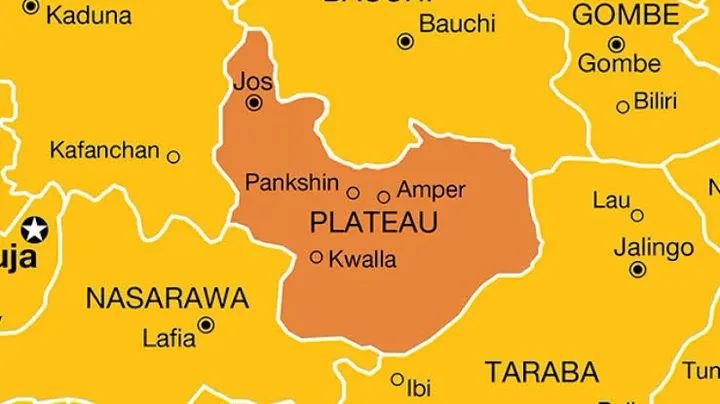
Chairmen of the 17 local government areas (LGAs) in Plateau State have agreed to establish formally registered community-based security outfits to strengthen grassroots security and support conventional security agencies amid persistent killings and other security challenges across the state.
The decision will see the local governments adopt the security model introduced by Wase Local Government Area, where a community security network has recruited and trained personnel to support surveillance, intelligence gathering and responses to criminal activities.
Plateau State Commissioner for Local Government and Chieftaincy Affairs, Ephraim Usman Gar, disclosed the agreement on Thursday, November 5, during a press conference in Jos, where he presented findings from the ministry’s inspection of projects executed by the 17 local government councils.
Gar appeared alongside the council chairmen and explained that the proposed security arrangements would complement the work of established security agencies rather than operate as competing institutions. Punch Newspapers +2
Wase Security Network to Serve as Model
According to the commissioner, Wase Local Government has already established a community-based security structure whose personnel underwent three months of training conducted by the Nigeria Security and Civil Defence Corps (NSCDC).
Gar said the other local government chairmen had agreed to follow the Wase example by establishing formally registered outfits in their respective areas.
He explained that formal registration would help improve information sharing and strengthen cooperation between community security personnel and conventional security agencies.
The Wase initiative is being presented as an example of how local communities can contribute to security through organised personnel, training and coordination with established institutions.
The Wase Rock Security Network Limited reportedly has 140 officers who recently completed their training and participated in a passing-out ceremony organised by the council chairman, Hamisu Mohammed Anani.
As part of efforts to strengthen the network’s operational capacity, the council also provided 25 patrol motorcycles and two Toyota Hilux vehicles to improve mobility and response to security incidents.
The outfit was formally inaugurated by the Plateau State Command of the NSCDC following the training programme. Punch Newspapers +2
Plateau’s Existing Community Security Structures
The proposed arrangements will add to Plateau State’s existing community security framework.
The state already has Operation Rainbow and Neighbourhood Watch, established under the Plateau State Operation Rainbow and Neighbourhood Watch Law of 2012.
Neighbourhood Watch operates as a civilian intelligence-gathering structure intended to support formal security operations.
The expansion of local government security outfits therefore raises the importance of coordination between community-based personnel and established institutions, including the police, NSCDC and other security agencies.
For the new initiative to deliver meaningful results, the outfits will need clearly defined responsibilities, appropriate training, effective supervision and reliable channels for reporting security threats.
It will also be important to establish safeguards that prevent abuses, unauthorised arrests and conflicts between community personnel and conventional security operatives.
These considerations are particularly significant in a state where security challenges have affected communities with different ethnic, religious and local interests.
Insecurity and Recent Attacks in Plateau State
The decision comes against a background of repeated attacks and killings in parts of Plateau State, particularly in communities across the state’s central and northern areas.
According to reports cited by Punch, at least 13 people were killed in separate attacks in Jos South, Mangu and Riyom local government areas on September 13, 2026.
Another attack on communities in Mangu in August reportedly claimed at least 25 lives.
The recurring violence has raised concerns about the protection of rural communities, particularly farmers, traders and residents who depend on access to farmland, markets and other essential services.
For many affected communities, insecurity has consequences beyond the immediate loss of lives. It disrupts agricultural activities, affects local businesses, threatens education and forces residents to reconsider their safety.
The planned security outfits are expected to strengthen local surveillance and improve the flow of information to established security agencies. Punch Newspapers +1
Plateau State Also Exploring State Policing
The development comes as Plateau State considers broader changes to its security architecture, including the proposed establishment of a state police service.
On September 9, 2026, Governor Caleb Mutfwang received a progress report from the Plateau State Police Advisory Committee and called for wider consultations on its recommendations.
According to the Federal Ministry of Information and National Orientation, the committee had prepared draft versions of the Plateau State Police Service Establishment Law 2026 and the Plateau State Police Service Regulations 2026.
The governor called for safeguards to prevent potential abuse of state policing powers by political authorities.
The committee was also expected to consult traditional rulers, security institutions, the State House of Assembly and other stakeholders before finalising its proposals.
The discussions indicate that the state is considering multiple approaches to improving security, including stronger community participation and a possible decentralised policing structure. FMIONO
Why the Community Policing Initiative Matters
The decision by the 17 local government chairmen could strengthen security at the grassroots if properly implemented.
Community-based security personnel are potentially better positioned to understand local terrain, recognise unusual movements and communicate emerging threats to relevant authorities.
Their familiarity with local communities could also support early warning systems and improve communication between residents and security agencies.
However, establishing additional security outfits does not automatically guarantee improved safety.
The effectiveness of the initiative will depend on the quality of training, operational discipline, accountability and cooperation with established security institutions.
There must also be clear procedures governing the activities of the personnel, including the limits of their authority, the handling of intelligence and the protection of residents’ rights.
Without adequate supervision, additional security structures could create confusion over responsibilities or introduce new security concerns.
The Wase model therefore provides an opportunity for the other councils to learn from an existing arrangement while ensuring that appropriate safeguards are incorporated into their own operations.
What Happens Next?
The immediate next step is for the remaining local government areas to translate their agreement into formally registered and properly organised security arrangements.
The commissioner has indicated that the chairmen are prepared to adopt the Wase model, but the November 5 announcement did not provide a detailed implementation timetable for all 17 councils.
Further details are also needed on funding, recruitment procedures, training arrangements, operational responsibilities and the mechanisms that will coordinate the outfits with conventional security agencies.
The participation of traditional rulers and community leaders will also be important in building public confidence and ensuring that the initiative reflects the security needs of different communities.
For residents of Plateau State, the central question will be whether the proposed arrangements can translate into fewer attacks, better intelligence gathering and more effective protection of lives and property.
Ultimately, the success of the initiative should be measured not by the number of security personnel recruited or vehicles purchased, but by improvements in the safety of communities across the state.
Weng Global – Stories beyond borders
Sources
- Punch – Plateau LG Chairmen to Establish Security Outfits in 17 Councils, November 5, 2026.
- Federal Ministry of Information and National Orientation – Mutfwang Receives Brief From State Police Committee, Urges Broad Stakeholder Consultations on Draft Report, September 9, 2026.
- The Street Reporters – Wase Security Network Passes Out in Grand Style at Plateau Stadium, November 3, 2026.
- New Telegraph – Killings: Plateau LG Chairmen Move to Establish Security Outfits in 17 Councils, November 5, 2026.