Reported by Simon yusuph,| Journalist at wengglobal
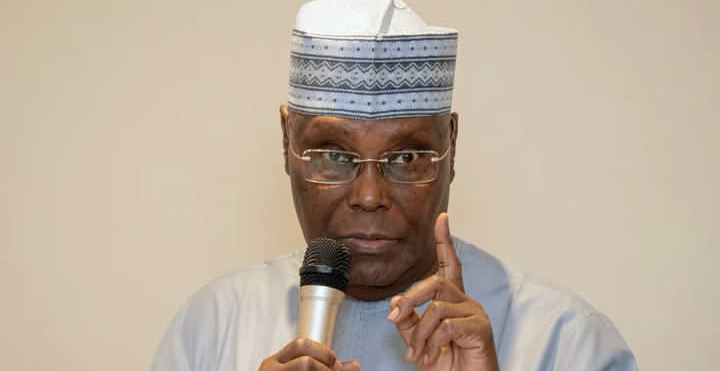
Nigeria’s former Vice President and 2023 presidential candidate, Atiku Abubakar, has accused the administration of President Bola Ahmed Tinubu of presenting a misleading picture of the country’s economic performance through selective statistics, arguing that official figures fail to reflect the realities faced by millions of Nigerians.
In a statement released over the weekend, Atiku alleged that the Federal Government has relied on favorable economic data while ignoring mounting challenges such as rising inflation, worsening living conditions, increasing public debt, and declining purchasing power. The criticism comes amid ongoing debates over the effectiveness of the Tinubu administration’s sweeping economic reforms, including the removal of fuel subsidies and the unification of the foreign exchange market.
According to Atiku, government officials have consistently highlighted improvements in macroeconomic indicators while ordinary Nigerians continue to grapple with soaring food prices, high transportation costs, and diminishing household incomes.
The former vice president specifically criticized what he described as “lying with statistics,” arguing that official narratives have failed to acknowledge the economic hardships confronting workers, small businesses, and vulnerable households across the country.
Atiku Questions Government’s Economic Narrative
Atiku maintained that while the administration frequently points to improvements in selected economic indicators, key financial obligations and structural weaknesses continue to undermine confidence in Nigeria’s economy.
Among his concerns is the growing exposure of the Central Bank of Nigeria (CBN) to public sector financing, which he argued reflects deeper fiscal pressures than government officials have admitted publicly.
He also questioned the government’s commitment to improving workers’ welfare, noting that many Nigerians continue to struggle despite repeated assurances that recent economic reforms would eventually produce broad-based prosperity.
According to Atiku, economic reforms should be measured not only by statistical indicators but by tangible improvements in citizens’ quality of life, employment opportunities, purchasing power, and access to affordable essential goods and services.
Government Defends Reform Agenda
The Tinubu administration has consistently defended its economic policies, arguing that difficult but necessary reforms were required to stabilize Nigeria’s economy after years of structural imbalances.
Since assuming office in May 2023, President Tinubu has introduced reforms aimed at reducing fiscal distortions, attracting investment, increasing government revenues, and restoring confidence in Nigeria’s financial markets.
Government officials have cited improvements in foreign exchange stability, increased investor confidence, higher state revenues, and stronger macroeconomic indicators as evidence that the reforms are beginning to yield positive results.
The administration has repeatedly acknowledged that the reforms have imposed short-term hardship but insists that the measures are designed to deliver sustainable long-term economic growth.
Officials have also pointed to efforts to cushion the impact of the reforms through targeted social intervention programmes, infrastructure investments, agricultural initiatives, and negotiations that led to a new national minimum wage.
Rising Cost of Living Remains Major Concern
Despite the government’s optimism, many Nigerians continue to face severe economic pressure.
Food inflation remains one of the biggest challenges affecting households nationwide, while transportation, housing, healthcare, and education costs have continued to rise over the past year.
Labour unions and civil society organisations have repeatedly urged the Federal Government to accelerate the implementation of social protection measures and improve workers’ welfare to ease the burden on citizens.
Economic analysts note that while macroeconomic reforms often require time before producing measurable benefits, maintaining public confidence depends largely on whether citizens experience visible improvements in their daily lives.
Economic Debate Intensifies Ahead of 2027
Atiku’s latest remarks add to growing political debate over Nigeria’s economic direction as parties gradually position themselves ahead of the 2027 general elections.
Opposition leaders have intensified scrutiny of the administration’s economic performance, arguing that headline statistics alone cannot capture the realities confronting ordinary Nigerians.
Supporters of the government, however, maintain that inherited economic challenges required decisive policy action and that judging the reforms prematurely ignores their long-term objectives.
Independent economists generally agree that Nigeria’s economic recovery will ultimately be evaluated through a combination of macroeconomic stability, employment generation, reduced inflation, increased productivity, improved living standards, and sustainable fiscal management.
Importance of Data Transparency
The exchange between Atiku and the Tinubu administration underscores the importance of transparency and accountability in economic reporting.
Economic statistics serve as essential tools for policymakers, investors, businesses, and international institutions. However, analysts caution that data should be interpreted alongside broader social and economic realities.
Measures such as inflation, unemployment, debt sustainability, poverty levels, wage growth, and household purchasing power collectively provide a more comprehensive picture of economic health than any single indicator.
As Nigeria continues implementing ambitious economic reforms, both government and opposition are expected to remain engaged in vigorous debates over policy outcomes and the country’s economic future.
For investors, development partners, and citizens alike, sustained economic progress will ultimately be judged by whether reforms translate into improved livelihoods, greater job creation, stronger institutions, and inclusive growth that benefits the wider population.
While political disagreements over economic data are common in democratic societies, analysts emphasize that evidence-based discussions and transparent communication remain essential for maintaining public trust and supporting informed policymaking.
Sources
- Reuters
- Bloomberg
- BBC News
- Channels Television
- Premium Times
- Punch Newspapers
- Daily Trust
- Central Bank of Nigeria (CBN)
- National Bureau of Statistics (NBS)