Reported by Weng Patrick Atokor | Journalist at Weng Global
President Bola Ahmed Tinubu has received the outgoing President of the Economic Community of West African States Commission, Dr. Omar Alieu Touray, at the State House in Abuja, as the regional bloc prepares for a transition in the leadership of its executive arm.
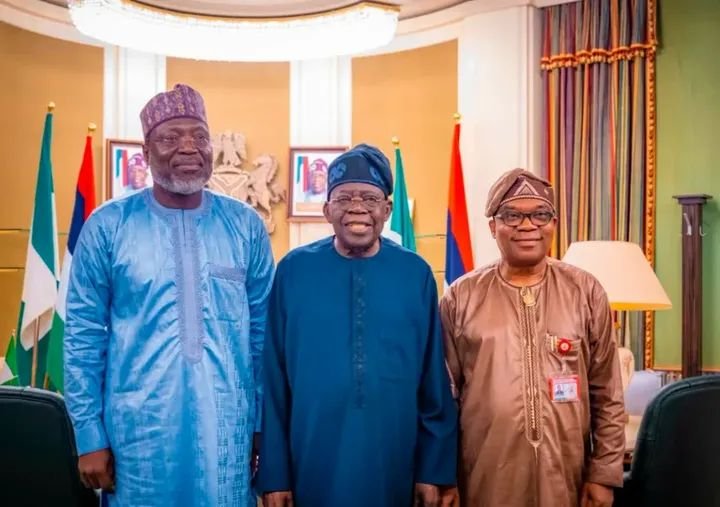
Touray visited the Presidential Villa on Thursday, August 6, 2026, accompanied by Nigeria’s Minister of State for Foreign Affairs, Ambassador Sola Enikanolaiye.
The meeting comes weeks before Touray is expected to formally conclude his four-year tenure as President of the ECOWAS Commission and hand over leadership to his successor.
Details of the discussions during the meeting were not immediately made public. However, the engagement comes at an important moment for ECOWAS as the organisation continues efforts to strengthen regional integration, security cooperation, economic development and democratic governance across West Africa.
The meeting was confirmed through photographs released by the State House media office, showing President Tinubu with Touray and Ambassador Enikanolaiye at the Presidential Villa in Abuja.
𝗧𝗼𝘂𝗿𝗮𝘆’𝘀 𝗘𝗖𝗢𝗪𝗔𝗦 𝘁𝗲𝗻𝘂𝗿𝗲
Dr. Omar Touray, a Gambian diplomat and development professional, became President of the ECOWAS Commission on July 3, 2022, after his nomination by The Gambia and subsequent endorsement by the ECOWAS Authority of Heads of State and Government.
He was appointed for a four-year term, succeeding Ivorian diplomat Jean-Claude Kassi Brou, who headed the Commission from 2018 to 2022.
Touray brought extensive diplomatic experience to the regional institution. Before taking charge of the ECOWAS Commission, he served The Gambia in several senior diplomatic positions, including as Ambassador and Permanent Representative to the African Union and Ambassador to Ethiopia, with concurrent accreditation to South Africa and Kenya.
He also served as The Gambia’s Permanent Representative Designate to the United Nations in New York before becoming Minister of Foreign Affairs and International Cooperation.
His professional experience also included work with international development institutions, including the Islamic Development Bank, as well as assignments with United Nations agencies and the African Union.
𝗔 𝗰𝗿𝗶𝘁𝗶𝗰𝗮𝗹 𝗽𝗲𝗿𝗶𝗼𝗱 𝗳𝗼𝗿 𝗪𝗲𝘀𝘁 𝗔𝗳𝗿𝗶𝗰𝗮
Touray’s tenure has coincided with one of the most challenging periods in ECOWAS history.
The regional organisation has faced major political, security and economic pressures, including military takeovers in parts of West Africa, tensions over democratic governance, terrorism and violent extremism, economic challenges and disagreements over the future direction of regional integration.
The organisation has also had to manage changing relationships with member states and the wider regional security environment.
Against this backdrop, ECOWAS has continued to pursue regional cooperation on trade, infrastructure, security, governance and economic integration.
The organisation’s 2026 agenda has placed particular emphasis on strengthening regional integration and addressing barriers that limit economic cooperation among member states.
At the 69th Ordinary Session of the ECOWAS Authority of Heads of State and Government held in Sierra Leone in July, regional leaders considered a number of issues concerning the future of the Community.
The leaders also adopted commitments aimed at advancing regional integration, industrialisation, trade, infrastructure development and governance.
𝗡𝗶𝗴𝗲𝗿𝗶𝗮’𝘀 𝗿𝗼𝗹𝗲 𝗶𝗻 𝗘𝗖𝗢𝗪𝗔𝗦
Nigeria remains one of the most influential members of ECOWAS and has historically played a central role in the organisation’s political, economic and security initiatives.
For President Tinubu, engagement with the ECOWAS leadership is particularly significant given Nigeria’s position within the regional bloc and its long-standing interest in maintaining West African integration.
Tinubu served as ECOWAS Chairman during a period marked by significant regional political tensions and security concerns.
His administration has repeatedly emphasised the importance of strengthening regional cooperation while promoting economic growth, stability and integration.
The ECOWAS framework remains important to Nigeria because of the extensive movement of people, goods, services and capital across West African borders.
The organisation also provides a platform for member states to coordinate responses to regional security challenges and political developments.
𝗕𝗶𝗿𝗮𝗺𝗲 𝗗𝗶𝗼𝗽 𝗻𝗮𝗺𝗲𝗱 𝗧𝗼𝘂𝗿𝗮𝘆’𝘀 𝘀𝘂𝗰𝗰𝗲𝘀𝘀𝗼𝗿
The transition at the ECOWAS Commission is already taking shape.
At the 69th ECOWAS Summit in Freetown, regional leaders appointed General Birame Diop of Senegal as the next President of the ECOWAS Commission.
Diop is scheduled to assume office on September 1, 2026, following the completion of Touray’s four-year mandate.
The appointment represents an important leadership transition for the regional organisation at a time when ECOWAS is seeking to rebuild cohesion and strengthen confidence in its integration agenda.
Diop, a former Senegalese Minister of Defence and former Chief of Defence Staff of Senegal, is expected to take over responsibility for the executive arm of the organisation as it enters another phase of its institutional development.
𝗧𝗿𝗮𝗻𝘀𝗶𝘁𝗶𝗼𝗻 𝗮𝗺𝗶𝗱 𝗿𝗲𝗴𝗶𝗼𝗻𝗮𝗹 𝗰𝗵𝗮𝗹𝗹𝗲𝗻𝗴𝗲𝘀
The transition from Touray to Diop will take place against the backdrop of continuing debates about the future of ECOWAS.
The organisation has been under pressure to strengthen its ability to respond to political instability, insecurity and economic challenges while preserving the principles of regional cooperation.
At the same time, ECOWAS is seeking to deepen economic integration by improving trade links, developing regional value chains, reducing barriers to investment and expanding infrastructure connections.
During the July summit, leaders called for faster industrialisation and the development of regional value chains, while also highlighting the need to remove obstacles to trade and investment and strengthen infrastructure and governance.
These priorities are expected to remain central as the new leadership assumes responsibility for the Commission.
𝗧𝗶𝗻𝘂𝗯𝘂’𝘀 𝗺𝗲𝗲𝘁𝗶𝗻𝗴 𝘄𝗶𝘁𝗵 𝗧𝗼𝘂𝗿𝗮𝘆
Although the specific issues discussed by Tinubu and Touray were not publicly disclosed, the timing of the meeting places it within the broader transition process at the ECOWAS Commission.
The meeting also provides an opportunity for Nigeria and the outgoing ECOWAS leadership to maintain institutional continuity ahead of the September handover.
Touray’s visit to the State House comes shortly after the regional bloc appointed Diop as his successor.
It therefore represents one of the final high-level engagements between the outgoing ECOWAS Commission president and the Nigerian presidency before the change of leadership takes effect.
The presence of Nigeria’s Minister of State for Foreign Affairs, Ambassador Sola Enikanolaiye, also underscores the diplomatic importance of the engagement.
Nigeria has a long-standing strategic interest in the stability and effectiveness of ECOWAS, particularly because developments within the regional bloc directly affect Nigeria’s security, trade, migration and diplomatic priorities.
𝗧𝗵𝗲 𝗿𝗼𝗮𝗱 𝗮𝗵𝗲𝗮𝗱 𝗳𝗼𝗿 𝗘𝗖𝗢𝗪𝗔𝗦
As Touray prepares to leave office, the ECOWAS Commission faces the task of consolidating the progress made during his tenure while responding to emerging regional challenges.
The next administration will inherit an organisation dealing with questions about regional unity, economic integration, democratic governance and collective security.
The success of the transition will depend not only on the new leadership but also on the willingness of member states to maintain cooperation and support common regional objectives.
For Nigeria, continued engagement with the ECOWAS Commission will remain strategically important.
The country’s economic and political influence gives it a major role in shaping the direction of the regional bloc, while Nigeria also has a direct interest in ensuring that West Africa remains stable, economically connected and capable of responding collectively to shared challenges.
President Tinubu’s meeting with Touray therefore comes at a significant moment in the history of ECOWAS.
As the outgoing commission president prepares to conclude his mandate and General Birame Diop prepares to assume office on September 1, the regional organisation is entering another chapter.
The transition will test ECOWAS’ ability to preserve institutional continuity while adapting to the changing political, security and economic realities of West Africa.
For Touray, the conclusion of his tenure marks the end of a four-year period at the helm of one of Africa’s most important regional institutions.
For ECOWAS, the forthcoming leadership change represents an opportunity to strengthen the organisation and renew its commitment to regional integration, peace, economic cooperation and shared development.
Sources: The PUNCH; ECOWAS Commission; The State House, Abuja.