Reported by Weng Patrick Atokor | Journalist at Weng Global
A humanitarian tragedy has unfolded on Europe’s southern frontier after at least 72 migrants reportedly died during a mass attempt to enter Spain’s North African enclave of Ceuta from neighbouring Morocco. The incident, one of the deadliest migration disasters in recent years, has reignited global concerns over irregular migration, border security, and the growing desperation driving thousands to risk their lives in search of safety and better opportunities.
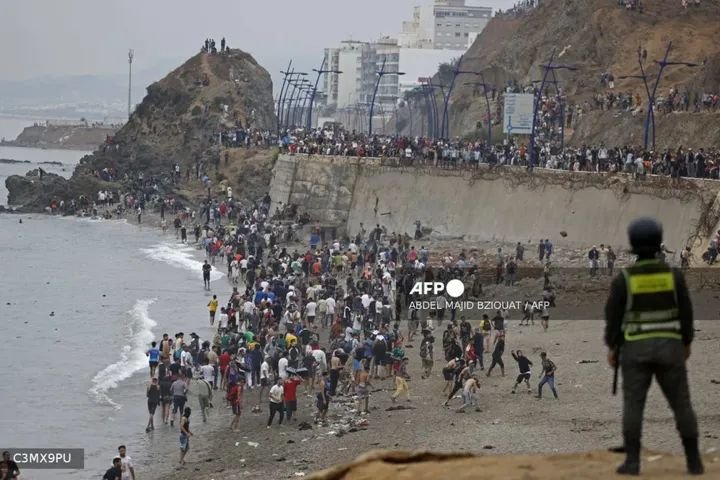
The fatal crossing occurred as hundreds of migrants attempted to breach border barriers separating Morocco from the Spanish territory. According to reports from local authorities and humanitarian organizations, the chaotic rush quickly turned deadly as overcrowding, panic, and dangerous conditions overwhelmed both migrants and security forces.
The deaths have sparked international condemnation and renewed calls for European and African governments to strengthen efforts aimed at addressing the root causes of irregular migration, including conflict, poverty, political instability, and climate-related displacement.
A Deadly Rush Across the Border
Ceuta, together with Melilla, represents Europe’s only land border with Africa. The Spanish enclave has long served as a focal point for migrants hoping to gain entry into the European Union.
Witnesses described scenes of panic as hundreds attempted to climb fences, swim around coastal barriers, or force their way through border checkpoints. Many reportedly became trapped in overcrowded areas, while others drowned or sustained fatal injuries during the chaos.
Emergency responders worked through the aftermath, recovering bodies and treating dozens of injured migrants suffering from dehydration, fractures, and exhaustion.
Authorities continue to identify victims, many believed to have originated from countries across sub-Saharan Africa where conflict, unemployment, and food insecurity continue to push people toward dangerous migration routes.
Humanitarian Organisations Raise Alarm
International humanitarian agencies have expressed deep concern over the mounting death toll.
Aid groups argue that repeated tragedies along Europe’s borders demonstrate the urgent need for safer and more legal migration pathways. They also emphasized that migrants often undertake perilous journeys after exhausting all other options in their home countries.
Human rights organizations urged authorities to ensure transparency in investigations surrounding the incident while guaranteeing humane treatment for survivors.
Medical volunteers assisting at the scene described the emotional toll of treating exhausted migrants who had travelled for months through deserts, forests, and conflict zones before reaching Morocco.
Spain Launches Investigation
Spanish authorities have begun investigations into the circumstances surrounding the disaster.
Officials are expected to examine border security operations, emergency response measures, and whether criminal smuggling networks played a role in organizing the attempted crossing.
Spain’s Interior Ministry reaffirmed its commitment to protecting national borders while emphasizing respect for international humanitarian obligations.
Authorities also pledged cooperation with Moroccan officials to determine the sequence of events leading to the deaths.
Security has since been reinforced around Ceuta to prevent further mass crossings.
Morocco Faces Growing Migration Pressure
Morocco has increasingly become a major transit country for migrants seeking access to Europe.
Thousands from West, Central, and East Africa travel through the country hoping to cross into Spain via Ceuta, Melilla, or dangerous Mediterranean sea routes.
Moroccan authorities frequently dismantle migrant camps near border areas and conduct operations targeting human trafficking networks.
However, migration experts argue that enforcement alone cannot solve the crisis without broader economic and political solutions across Africa and beyond.
Smuggling Networks Continue to Exploit Migrants
Criminal trafficking organizations remain one of the biggest drivers of dangerous migration attempts.
These networks often charge desperate migrants large sums of money while promising safe passage into Europe.
In many cases, migrants are abandoned during journeys across deserts or forced onto overcrowded boats and unsafe border crossings.
International law enforcement agencies have intensified efforts to dismantle these smuggling operations, but demand remains high as economic hardship continues across several regions.
Experts warn that unless legal migration opportunities expand, traffickers will continue profiting from vulnerable populations.
International Community Reacts
The tragedy has prompted reactions from governments, humanitarian organizations, and international institutions.
Migration experts called for renewed dialogue between European and African leaders to develop long-term strategies addressing migration management, economic development, and regional security.
The United Nations has repeatedly stressed that migration should be managed through policies that balance border protection with the safeguarding of human rights.
Analysts argue that tragedies like the Ceuta incident highlight the limitations of border enforcement without corresponding investments in development, peacebuilding, and employment opportunities across migrant-origin countries.
Europe’s Migration Challenge Persists
Migration remains one of Europe’s most politically sensitive issues.
Several European countries continue to debate asylum reforms, border management policies, and burden-sharing arrangements among EU member states.
Spain has experienced repeated migration surges through Ceuta, Melilla, and the Canary Islands in recent years.
Changing migration patterns, armed conflicts, political instability, and climate change have contributed to increasing displacement worldwide.
According to international migration agencies, millions of people remain displaced globally, with many seeking protection or improved living conditions beyond their countries of origin.
Calls for Lasting Solutions
Humanitarian organizations insist that preventing future tragedies requires more than stronger border controls.
They advocate greater investment in education, job creation, conflict prevention, and climate resilience across vulnerable regions.
Migration specialists also recommend expanding legal labour migration pathways and improving international cooperation to reduce dependence on criminal trafficking networks.
For many families mourning loved ones lost during the Ceuta crossing, however, those discussions come too late.
The latest deaths serve as another painful reminder of the human cost of one of the world’s most persistent migration crises, underscoring the urgent need for coordinated international action that protects both national borders and human dignity.
Sources: Reuters, AFP, Associated Press (AP), United Nations High Commissioner for Refugees (UNHCR), International Organization for Migration (IOM)