Reported by Weng Patrick Atokor l Journalist at Weng Global
Nigeria is strengthening its national response to child labour as the Federal Government moves to implement a new 2026–2030 National Child Labour Policy and Action Plan, backed by updated data on the scale and nature of child labour across the country.
The renewed effort places the elimination of child labour within Nigeria’s broader child-protection, education, social-protection and decent-work agenda.
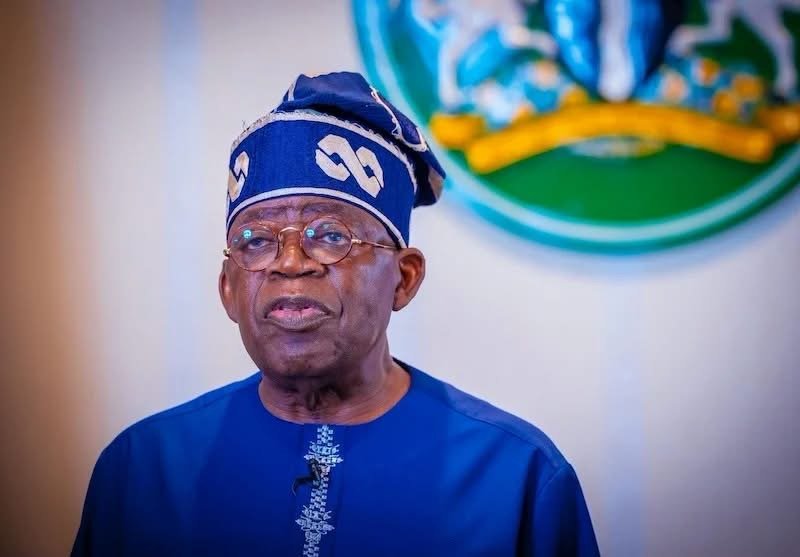
While the supplied report says President Bola Ahmed Tinubu has declared the elimination of child labour a national priority and unveiled a four-year action plan, available official and International Labour Organization (ILO) records confirm that Nigeria has developed and validated a new National Child Labour Policy and National Action Plan for 2026–2030. The latest framework succeeds the 2021–2025 action plan and is intended to strengthen enforcement, coordination, monitoring and interventions aimed at protecting children from hazardous work.
Nigeria’s new child labour framework
The National Steering Committee on the Elimination of Child Labour formally validated Nigeria’s third National Child Labour Policy and National Action Plan on June 2 and 3, 2026, in Abuja.
The process was jointly convened by the Federal Ministry of Labour and Employment and the ILO, with support from the European Union-funded Free Movement of Persons and Migration in West Africa II project and the Government of the Netherlands-funded ACCEL Africa II project. The ECOWAS Commission also supported the process.
The new framework covers the 2026–2030 period and is designed to provide a coordinated roadmap for tackling child labour.
The policy development process involved government institutions, workers’ and employers’ organisations, civil society groups and development partners.
According to the ILO, the framework is intended to reduce hazardous child labour, strengthen institutions and help children remain in safe environments and continue their education.
The development of the plan followed a review of Nigeria’s previous 2021–2025 National Action Plan.
In April 2026, stakeholders met in Abuja to review the existing policy, examine evidence and develop the next phase of the national response. The discussions also included the creation of a monitoring and evaluation framework to track implementation.
New data highlights scale of child labour
The renewed government effort comes against the background of extensive child labour documented by national and international institutions.
The 2022 Nigeria Child Labour Survey, produced by the National Bureau of Statistics in collaboration with the ILO, found that approximately 24.7 million children were engaged in child labour.
The ILO also reported that more than 14 million children were involved in hazardous work.
The underlying 2022 survey covered children between five and 17 years old and was based on a nationally representative sample of 16,418 households. The survey examined children’s participation in economic activities, schooling and different forms of child labour.
The findings illustrate the complicated relationship between work and education.
Among children aged five to 14, the survey found that 35.3 per cent were simultaneously in school and working, while 11.2 per cent were working without being in school.
For children aged 15 to 17, 21.9 per cent were working only, while 45.3 per cent were both working and attending school.
These figures demonstrate why eliminating child labour cannot be addressed solely through workplace inspections. Education access, household income, social protection and conditions in informal economic activities are also relevant to the problem.
Nigeria validates updated 2024 child labour data
Nigeria’s response is also being supported by newer evidence.
In July 2026, more than 140 representatives from government, employers’ organisations, civil society, development partners, statistical institutions, children and young people participated in the national validation of the 2024 National Child Labour Survey Report.
The National Bureau of Statistics and Federal Ministry of Labour and Employment led the analytical work, with technical support from the ILO.
The updated data is expected to help authorities identify where interventions are most needed and improve the allocation of resources.
The ILO said the findings will support implementation of the 2026–2030 National Action Plan, including labour inspections, education interventions, social protection, assistance for vulnerable families and responsible business practices across supply chains.
This represents a shift toward more regular collection and use of child labour data rather than relying only on periodic national surveys.
Why child labour remains difficult to eliminate
Child labour in Nigeria is connected to several socioeconomic pressures.
The ILO has identified poverty, limited access to education and weak social protection as among the underlying factors that can push children into work.
During the April 2026 review of the national policy and action plan, Nigeria’s labour authorities stressed that eliminating child labour would require stronger enforcement, coordination across different levels of government and action on the causes that leave children vulnerable to exploitation.
The problem also extends beyond formal workplaces.
Children may work in agriculture, markets, workshops, mines, homes and other informal settings, making enforcement more difficult.
The Federal Ministry of Labour and Employment says its child labour programme includes a national policy, a national action plan and a hazardous list of child labour activities. The ministry also identifies government institutions, labour unions, employers’ organisations, civil society and faith-based groups as important stakeholders.
Education and social protection remain central
The government’s new approach places education and family support alongside enforcement.
The ILO says the 2026–2030 action plan is intended to help children leave hazardous work and remain in school, while also addressing institutional and socioeconomic conditions that contribute to child labour.
This is important because simply removing a child from work without addressing the circumstances that led the child into employment may not provide a lasting solution.
For vulnerable households, income insecurity can make children’s economic contribution an important source of survival. Interventions therefore need to consider the welfare of the wider household while protecting children from hazardous and exploitative work.
Nigeria’s previous action plan also recognised the importance of social programmes, stronger enforcement and cooperation between government agencies and other stakeholders.
The role of businesses and supply chains
The private sector is another important part of the new strategy.
Child labour can occur within agricultural and other supply chains, particularly where production involves large informal networks of small producers and subcontractors.
The 2026–2030 framework is expected to strengthen responsible business conduct and efforts to identify and address child labour within supply chains. The ILO said the updated evidence will help inform this work.
This approach means companies and employers are not viewed solely as economic actors but also as participants in efforts to prevent children from being exposed to hazardous or exploitative work.
What the new action plan means
The 2026–2030 framework gives Nigeria a new policy period in which to coordinate efforts against child labour.
The ILO reported that the plan is expected to strengthen institutions, improve monitoring and support interventions involving education, social protection, labour inspection and vulnerable families.
The framework also aligns Nigeria’s efforts with broader regional and international commitments, including the ECOWAS Regional Action Plan and global efforts connected to the elimination of child labour.
However, adopting a policy does not by itself eliminate child labour.
The effectiveness of the new framework will depend on implementation, funding, enforcement, reliable data and cooperation between federal and state authorities, communities, employers, workers’ organisations and civil society.
What happens next
Nigeria’s next stage is implementation of the 2026–2030 National Child Labour Policy and National Action Plan.
The ILO has indicated that the updated child labour data will be used to guide interventions, while monitoring mechanisms are intended to help measure progress.
The government and its partners will therefore face the challenge of translating the new framework into practical measures that reach children and families, particularly in communities where poverty, limited educational opportunities and informal employment increase the risk of child labour.
The central test will be whether the new policy produces measurable reductions in hazardous child labour and improves children’s access to education and protection.
For Nigeria, the issue extends beyond labour policy. It concerns children’s rights, education, household welfare, human capital development and the country’s long-term economic future.
The new four-year framework provides a policy structure for the period ahead. Its impact will ultimately depend on how effectively that structure is implemented across Nigeria.
Weng Global – Stories beyond borders
Sources
- International Labour Organization (ILO), From Work to School: Nigeria Takes a Major Step to Protect Millions of Children.
- International Labour Organization (ILO), Nigeria strengthens child labour action through new evidence and continuous monitoring.
- International Labour Organization, Nigeria advances review of National Policy and Action Plan to eliminate child labour.
- International Labour Organization/National Bureau of Statistics, Nigeria Child Labour Survey 2022.
- Federal Ministry of Labour and Employment, Child Labour Programme.