Reported by Simon Daniel Yusuph l Journalist at Weng Global
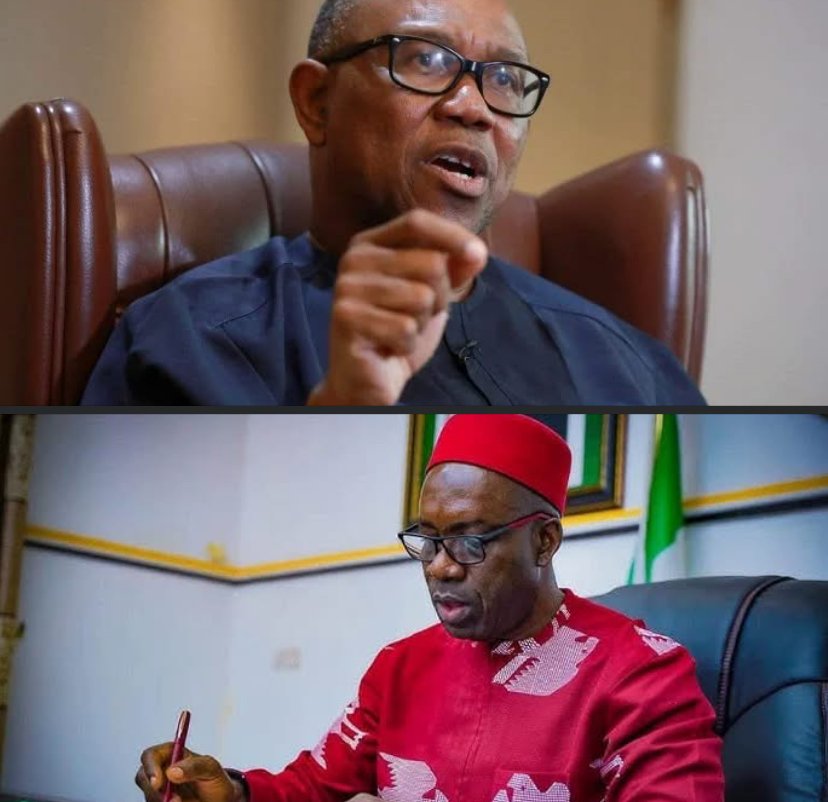
Former Anambra State Governor and 2027 presidential candidate Peter Obi has rejected claims that his administration left behind unpaid obligations in the state, challenging the Anambra State Government to produce evidence of anyone he owed when he left office.
Obi said he would end his 2027 presidential campaign if evidence emerged showing that he owed salaries, pensions, gratuities, contractors or suppliers at the time he handed over power in March 2014.
His comments followed renewed controversy over Anambra State’s inherited debt obligations after the state government’s Commissioner for Finance, Izuchukwu Okafor, said the administration of Governor Chukwuma Soludo was still servicing loans incurred by previous administrations, including those of Obi and former Governor Willie Obiano.
Obi Challenges Anambra Government
Obi, who governed Anambra from 2006 to 2014, disputed the suggestion that his administration left the state with unpaid financial obligations.
He maintained that when he left office, the state government was not owing salaries, pensions, gratuities, suppliers or contractors.
“I left office nearly 13 years ago. On the day I left, I was not owing any salaries, pensions, gratuities or any money that the Anambra State Government was supposed to pay,” Obi said, according to reports of his response.
He further challenged those questioning his record to identify anyone who was owed by his administration.
“I did not owe a single supplier or contractor. If you find even one person I owed, I will end my 2027 campaign today,” he said.
The statement has added a new political dimension to an already contentious debate over Anambra’s finances and the fiscal record of successive administrations.
What the Anambra Government Said
The controversy was triggered by comments from Commissioner for Finance Izuchukwu Okafor during a Ndi Anambra podcast published by the state’s New Media team.
Okafor said the Soludo administration had not obtained any commercial bank loan since assuming office but continued to make repayments on loans inherited from previous governments.
According to the commissioner, deductions were being made from the state’s Federation Account Allocation Committee (FAAC) revenues to service loans obtained by earlier administrations.
He also said the state had made significant progress in reducing inherited liabilities, including clearing several domestic obligations.
The commissioner distinguished between legacy obligations and the loans being serviced through deductions from federal allocations, saying the state’s domestic debt position was now close to zero while some external loan obligations remained subject to repayment arrangements.
The Anambra government’s position, therefore, is that some financial obligations inherited from previous administrations remain under repayment. That claim does not, by itself, establish that Obi personally left unpaid contractors, suppliers, workers or pensioners when he handed over power.
Official Debt Records Add Context
Available historical records from Nigeria’s Debt Management Office (DMO) show that Anambra had outstanding debt around the end of Obi’s tenure.
The DMO’s revised domestic debt figures for December 2013, the final full year of Obi’s administration, put Anambra’s domestic debt stock at about ₦3.03 billion. The DMO also recorded approximately $30.32 million in external debt for the state at the same point.
These figures are important to the debate because they demonstrate that Anambra had formal debt obligations recorded by the DMO around the end of Obi’s tenure.
However, the existence of state debt in official records does not automatically establish that all of those obligations were incurred personally by Obi, nor does it necessarily mean that the state owed unpaid contractors or workers when he left office.
That distinction is central to the current dispute.
Obi’s challenge specifically concerns whether his administration left unpaid obligations to people and entities that were supposed to be paid by the state government. The Anambra government’s broader claim concerns loans and financial obligations inherited by subsequent administrations.
The Difference Between Loans and Unpaid Liabilities
The disagreement highlights an important distinction in public finance.
A government can have formal long-term loans while simultaneously meeting its immediate obligations to workers, contractors and suppliers.
Similarly, a subsequent administration can inherit a loan that was contracted years earlier without the loan necessarily representing an unpaid bill to a contractor or employee at the point of transition.
For that reason, determining whether Obi’s administration left Anambra with debt requires examination of the specific loan agreements, dates, disbursements, repayment schedules and official financial records rather than relying solely on political claims.
The DMO’s records provide evidence that Anambra had outstanding domestic and external debt around the end of 2013, but the available figures alone do not establish which administration incurred every individual obligation.
Obi’s Financial Legacy Under Scrutiny
The latest dispute is part of a broader political argument over Obi’s record as Anambra governor as he campaigns for the 2027 presidential election.
Obi has repeatedly pointed to the financial position he says he left behind after eight years in office as evidence of fiscal discipline and prudent management.
His supporters have cited savings and investments attributed to his administration, while critics have questioned aspects of his claims about the state’s finances.
Independent fact-checking has also examined previous statements by Obi concerning Anambra’s financial position. The Guardian’s 2025 fact-check, for example, found that his broad claim that he left without any debt was misleading when compared with DMO records showing outstanding state debt.
The distinction is significant because saying that a government did not owe contractors, suppliers or workers is not necessarily identical to saying that the government had no outstanding loans.
Why the Dispute Matters
The disagreement comes at a politically sensitive time, with Nigeria’s 2027 presidential contest already beginning to shape national political debate.
For Obi, his record in Anambra remains an important part of the argument surrounding his suitability for national office. His supporters frequently cite the state’s finances during his tenure as evidence of his approach to public expenditure and fiscal management.
For the Soludo administration, the issue provides an opportunity to explain the financial obligations it inherited and the steps it says it has taken to reduce them.
The wider issue extends beyond the political rivalry between two former and current Anambra leaders. It raises questions about transparency in the transfer of public debt between administrations and the importance of making state financial records accessible enough for citizens to determine who borrowed what, when the money was obtained and how it was spent.
What Happens Next
The latest exchange is likely to keep Anambra’s financial history in the political spotlight as the 2027 election approaches.
A definitive assessment of responsibility would require detailed examination of official debt records, loan agreements, budget documents, audited accounts and handover records covering the relevant administrations.
For now, the positions remain sharply different.
The Anambra State Government says the current administration continues to service inherited loans associated with previous governments, including those of Obi and Obiano. Obi, meanwhile, insists that he left office without owing salaries, pensions, gratuities, contractors or suppliers and has challenged his critics to produce evidence to the contrary.
The available DMO records confirm that Anambra had outstanding debt around the end of Obi’s tenure, but further evidence would be required to determine precisely when each obligation was incurred and which administration should be held responsible for it.
Weng Global – Stories beyond borders
Sources:
- Nigeria’s Debt Management Office (DMO) — 2013 Revised Domestic Debt Stock for States.
- Nigeria’s Debt Management Office (DMO) — Federal and State Governments’ External Debt Stock as at December 31, 2013.
- Premium Times — Report on Anambra’s inherited loans and debt obligations.
- The Guardian — Fact-check of Peter Obi’s claims about Anambra’s debt position.
- Tribune — Report on the Anambra government’s position on inherited debts.