Reported by Simon Daniel Yusuph l Journalist at Weng Global
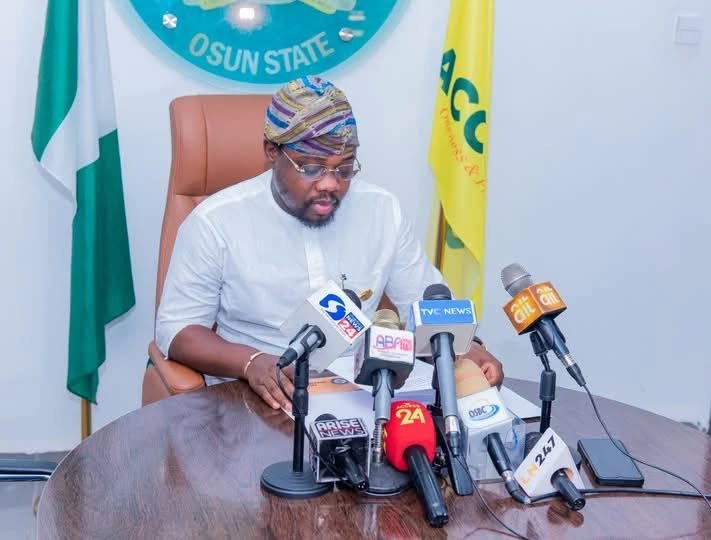
The Speaker of the Osun State House of Assembly, Adewale Egbedun, has directed the state Ministry of Environment to urgently clear heaps of refuse and unblock drainage channels across the state following concerns over poor environmental sanitation and the risk of flooding.
Egbedun issued the directive on Tuesday, September 15, 2026, during plenary in Osogbo, where he called for immediate action to address accumulated waste and blocked waterways.
The directive comes against the backdrop of renewed flooding concerns in parts of Osun State after recent heavy rainfall, with state authorities previously warning residents about the dangers posed by blocked drainage channels and indiscriminate waste disposal.
Egbedun Demands Immediate Environmental Action
The Speaker urged the Ministry of Environment to move beyond routine monitoring and take concrete steps to remove refuse that has accumulated in public spaces and drainage systems.
He also called for the clearing of blocked drainages to allow the free movement of rainwater and reduce the possibility of flooding in communities across the state.
The directive places emphasis on the need for coordinated environmental management as the rainy season continues.
Blocked drains can prevent stormwater from flowing properly, increasing the risk of water accumulating on roads and residential areas, particularly during periods of intense rainfall.
The Speaker’s intervention therefore links environmental sanitation with the wider responsibility of preventing avoidable flooding and protecting residents and property.
Osun Faces Renewed Flooding Concerns
The latest directive follows recent flash flooding in parts of Osogbo and other areas of Osun State.
On September 10, the state government said Governor Ademola Adeleke had directed relevant agencies to activate flood-prevention measures after receiving reports on recent flash floods in Osogbo.
The measures included clearing blocked drainage channels and waterways, removing structures obstructing river lines, sensitising residents against dumping refuse in waterways and continuing channelisation projects.
The state government also warned residents against disposing of waste in drainage systems and other waterways.
These measures demonstrate that waste disposal and drainage management have become increasingly important parts of Osun’s flood-prevention efforts.
Government Warns Against Dumping Refuse in Waterways
The Osun State Government has repeatedly identified indiscriminate waste disposal as one of the environmental practices capable of worsening flooding.
An official state government advisory issued earlier in 2026 urged residents to clear blocked drainage channels and waterways around homes, markets, offices and business premises.
Residents were also warned against dumping refuse in drains, canals and water passages.
The government said relevant agencies and emergency response teams had been placed on alert to monitor flooding and other extreme-weather risks.
The warning underscores the shared responsibility between government agencies and residents in preventing drainage blockages.
While government authorities are responsible for maintaining public drainage infrastructure and managing waste systems, residents’ disposal practices can also affect whether drainage networks remain functional.
Earlier Dredging and Drainage Measures
Osun has previously undertaken drainage and waterway interventions as part of its flood-prevention strategy.
In April 2024, the state government announced the commencement of dredging of major waterways ahead of the rainy season.
The exercise was designed to improve water flow and reduce the risk of flooding.
The Ministry of Environment and Sanitation at the time also expressed concern over the dumping of refuse into waterways, warning that such practices could contribute to flooding.
The latest directive from the House of Assembly therefore comes within a broader pattern of government efforts to improve drainage and waterway management across the state.
Why Blocked Drainages Matter
Drainage systems play a critical role in moving rainwater away from roads, residential areas, markets and other built-up locations.
When drains become blocked by refuse, silt or other materials, the capacity of the system to carry stormwater can be significantly reduced.
During heavy rainfall, this can contribute to water accumulating on roads and entering homes and businesses.
For Osun, where several communities experience intense rainfall during the wet season, maintaining functioning drainage channels is therefore an important part of flood-risk management.
The issue is also connected to public health.
Accumulated refuse can create unsanitary conditions, attract pests and contribute to environmental pollution. Stagnant water resulting from blocked drainage can also create additional sanitation concerns.
Prompt removal of waste and maintenance of waterways can consequently serve both environmental and public-health objectives.
Flood Prevention Requires More Than Clearing Refuse
Although clearing blocked drains can reduce immediate environmental risks, experts and government authorities generally recognise that flood management requires a broader approach.
Such measures can include drainage construction and maintenance, dredging of waterways, enforcement against indiscriminate waste disposal, proper waste collection, urban planning and public awareness.
Osun’s recent flood-prevention measures have included several of these components.
The state government has also previously urged residents to stop dumping refuse on drainage channels and waterways while continuing channelisation projects in different communities.
The challenge is therefore not limited to removing existing refuse. Sustaining clean drainage channels requires consistent waste-management systems and enforcement alongside public cooperation.
Speaker’s Directive Puts Pressure on Ministry
Egbedun’s directive now places renewed responsibility on the Ministry of Environment to respond to the sanitation concerns across the state.
The ministry will be expected to coordinate the removal of accumulated refuse and address drainage blockages that could worsen flooding during heavy rainfall.
The effectiveness of the intervention will depend partly on how quickly the affected areas are identified and cleared, as well as whether the measures are maintained after the immediate cleanup exercise.
For lawmakers, the issue also provides an opportunity to monitor government agencies responsible for environmental sanitation and ensure that directives translate into visible action in communities.
Residents Also Have a Role
While the state government has responsibility for public sanitation and drainage infrastructure, residents also have an important role in preventing blockages.
Improper disposal of household and commercial waste into drains can undermine drainage systems even after government agencies have cleared them.
Public compliance with waste-disposal regulations is therefore essential if sanitation interventions are to produce lasting results.
The Osun government has repeatedly urged residents to use appropriate waste-disposal arrangements and avoid dumping refuse in waterways.
Such cooperation becomes particularly important during periods of heavy rainfall when blocked drains can quickly become a flood risk.
What Happens Next?
The immediate expectation is that the Ministry of Environment will begin clearing refuse and blocked drainage channels in locations identified as requiring urgent intervention.
Further action may also be required in communities affected by recent flooding or areas where drainage infrastructure is inadequate.
The state government’s existing flood-prevention programmes, including channelisation and waterway maintenance, are also expected to continue.
For the Osun State House of Assembly, continued oversight will be important in determining whether the ministry’s response addresses the problem beyond the immediate cleanup.
The broader objective is to reduce avoidable flooding, improve environmental sanitation and protect residents, businesses and public infrastructure.
As the rainy season continues, timely action on drainage and waste management could become increasingly important for communities across Osun State.
Weng Global – Stories beyond borders
Sources
- Punch Newspapers — September 15, 2026 report on Speaker Adewale Egbedun’s directive to the Osun Ministry of Environment to clear refuse and blocked drainages.
- Osun State Government — Official flood-prevention advisory warning residents about blocked drainage channels, indiscriminate waste disposal and extreme weather conditions.
- Osun State Government — September 2026 report on Governor Ademola Adeleke’s directives following recent flash flooding in Osogbo, including drainage clearance and waterway management.
- Osun State Government — Official report on the 2024 dredging of major waterways as part of efforts to prevent flooding.
- Vanguard Newspapers — Recent report on Adewale Egbedun’s activities as Speaker of the Osun State House of Assembly.