Reported by Weng Patrick Atokor l journalist at wengglobal
The Osun State Government says it will not protect anyone found responsible for the recent wave of killings linked to disputes over transport union leadership and cult-related violence, as authorities move to prevent further bloodshed across the state.
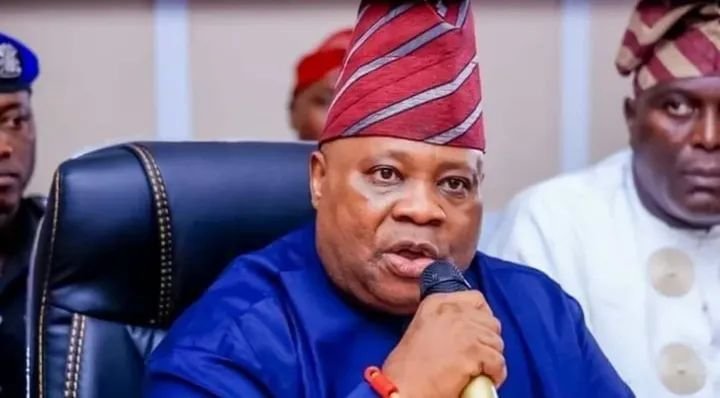
The assurance came from Samuel Ojo, Special Adviser to Governor Ademola Adeleke on Security Matters, following an emergency security meeting held on Wednesday, September 16, 2026.
Speaking during a telephone interview with The PUNCH, Ojo said the government was not shielding anyone connected to the recent violence and that security agencies had been directed to investigate the killings and bring anyone found culpable before the law.
The statement comes against the backdrop of several violent incidents recorded in Osun in recent weeks, including clashes associated with motor parks, disputes within the National Union of Road Transport Workers and cult-related confrontations.
What triggered the latest concern?
One of the incidents at the centre of the current controversy was the killing of Olalekan Oyeyemi, popularly known as Emir Ajagungbade, in Ile-Ife.
Oyeyemi, a political associate of Governor Adeleke and Accord Party figure, was killed during violence around motor parks in Ile-Ife on September 13.
The incident reportedly occurred amid a longstanding leadership dispute within the Osun chapter of the NURTW.
The NURTW is a major transport union whose activities have historically intersected with the management of motor parks and garages. That makes disputes over leadership more than an internal organisational disagreement: control of transport parks can also involve influence over transport workers, revenue collection and the daily administration of busy commercial spaces.
Following Oyeyemi’s killing, Governor Adeleke ordered rival NURTW factions to vacate motor parks and garages across the state and directed security agencies to arrest those suspected of involvement in the violence. The government also announced plans for a new park management system.
The government subsequently came under allegations that it was protecting individuals allegedly connected to the killing.
Ojo rejected those allegations.
According to him, the government had already directed the police and Department of State Services to thoroughly investigate the case and identify those responsible. He said the law should take its course.
A dispute over who was supposed to lead the NURTW
An important part of the controversy is disagreement over whether Oyeyemi had been selected to become the next Osun NURTW chairman.
Two NURTW leaders identified by The PUNCH as Gbedegesin and Kareem Akeem alleged in a viral video that Oyeyemi had been designated for the position after receiving government backing at a meeting involving union leaders and the state Commissioner for Transportation.
The commissioner, however, denied that the government had endorsed Oyeyemi for the position.
According to the commissioner, the union leaders had merely informed him of their own decision to make Oyeyemi the new chairman.
That distinction is significant.
It means that while claims of government involvement have become part of the public debate, the available accounts do not establish that the state government formally appointed Oyeyemi as NURTW chairman.
For Weng Explain readers, this is one of the key issues to understand: an allegation of political or governmental endorsement is not the same thing as established evidence of an official appointment or directive.
The competing accounts remain part of an investigation that security agencies are expected to conduct.
The killings are bigger than one incident
The September 13 killing did not occur in isolation.
The PUNCH reported that about five people had been killed between August 24 and September 15 in Ikire, Ile-Ife and Osogbo in circumstances linked to motor-park control disputes and cult-related conflicts.
The Ikire violence is particularly important in understanding the wider security picture.
On August 24, violence erupted around the Naira and Kobo Junction motor-park area in Ikire, Irewole Local Government Area.
Police later arrested four suspects in connection with the deaths of two people during the incident. According to the Osun Commissioner of Police, Ibrahim Zungura, the suspects reportedly admitted during preliminary questioning that they were political thugs and identified a person known as Ayewo as the leader of their faction. Police said Ayewo and others remained at large at the time of the report.
The government subsequently established a Coroner Inquest and Panel of Inquiry into the Ikire violence.
The panel was given powers to examine the circumstances surrounding the killings, identify people whose actions or omissions may have contributed to the violence, examine the role of security personnel and recommend prosecution, disciplinary measures, compensation and institutional reforms where appropriate.
This means the government has already created a formal mechanism for examining at least one of the recent major incidents.
Where cultism enters the picture
Osun’s security problem is complicated by the fact that not every violent incident can automatically be classified as political violence.
Recent reporting has pointed to an overlap between political mobilisation, transport-union disputes and cult-related violence.
A Premium Times analysis of violence surrounding the 2026 Osun election noted that the distinction between political violence and cult violence had increasingly become blurred. The report cited police accounts attributing some incidents to cult reprisals while civil-society monitors raised concerns about armed and cult-linked networks being used within political mobilisation.
That distinction matters because determining the motive behind a killing is part of establishing responsibility.
A person may be involved in a political dispute, for example, while the immediate cause of a particular attack could involve a cult rivalry, criminal activity or a dispute over control of a motor park.
Until investigations establish the circumstances, it would be premature to assign every killing to one political group, one union faction or one motive.
Why motor parks have become a security flashpoint
Motor parks are important economic spaces in Nigerian cities.
They bring together transport workers, drivers, passengers, traders and union structures. Leadership disputes within transport unions can therefore have consequences beyond the union itself.
When rival groups attempt to establish control over a park, conflict can affect transportation and create opportunities for intimidation and violence.
This is why the Osun Government’s decision to suspend NURTW activities following the Ile-Ife killing was presented as a security measure rather than simply an administrative decision.
The government has also indicated that it wants to introduce a new system for managing the state’s motor parks.
The effectiveness of such a system, however, will depend on how it is implemented and whether it can reduce rivalry, clarify authority and prevent armed groups from using motor parks as centres of confrontation.
The government’s latest response
At Wednesday’s emergency security meeting, several security and law-enforcement agencies were represented.
According to Ojo, those present included the police, DSS, Army, NDLEA, Immigration, Correctional Service, Civil Defence and Amotekun, alongside senior state government officials.
The meeting was convened because of the recent killings, with the government seeking an immediate halt to further loss of life.
Ojo said the security agencies assured the government that efforts would be intensified to restore normalcy.
The government therefore faces two immediate challenges: identifying and prosecuting those responsible for recent killings, and preventing fresh clashes from developing.
What happens next?
The credibility of the government’s response will ultimately depend on what happens after the statements.
Investigations must establish who organised attacks, who carried them out, what weapons were used, what motivated the violence and whether anyone provided support or protection to those involved.
The police and other security agencies will also need to distinguish between allegations and evidence.
That is particularly important in a politically sensitive environment where rival groups can accuse one another after violent incidents.
Osun has already experienced significant election-related violence in 2026. A Premium Times analysis published before the August 15 governorship election reported at least 34 election-related violent incidents and 18 deaths according to the Centre for Information Technology and Development’s conflict tracking data, while noting that other organisations and the police had different figures and classifications.
The figures illustrate another important point: there can be differences between datasets because organisations may use different definitions and reporting methodologies.
Therefore, casualty figures and claims about responsibility should be treated carefully until investigations and credible documentation establish the facts.
Why this matters to ordinary residents
For residents, the issue is not simply about NURTW leadership.
Every violent confrontation around a motor park can disrupt transportation, frighten residents, damage businesses and expose people who have nothing to do with the dispute to danger.
The killing of Oyeyemi has also demonstrated how quickly a dispute over transport-union leadership can become a broader political and security issue.
The government’s latest position is clear: it says nobody involved in the killings will be protected.
But the next test is implementation.
If investigations identify suspects, the public will expect arrests to be followed by credible investigations and prosecution where evidence supports criminal charges.
At the same time, authorities will have to ensure that accusations do not become substitutes for evidence.
The bigger lesson
The recent events in Osun show how difficult it can be to separate political tensions, transport-union rivalry, cult activity and criminal violence.
That is why the response cannot depend solely on promises to arrest perpetrators after killings occur.
Preventing further violence will require effective intelligence gathering, professional policing, clear regulation of motor parks, credible investigations and accountability for anyone proven to have participated in violence.
For residents, the immediate priority is safety.
For the government and security agencies, the challenge is to demonstrate that the law applies equally to political actors, transport-union members, cult-linked groups and ordinary criminals.
The Osun Government says it will not shield perpetrators. The investigation and prosecution of those responsible will determine how that commitment translates into action.
Weng Global – Stories beyond borders
Sources
- The PUNCH — report on the Osun Government’s response to the recent killings and NURTW leadership dispute.
- Premium Times — report on the NURTW-related killing of Olalekan Oyeyemi and the government’s response.
- Premium Times — report on arrests following the Ikire motor-park violence.
- Osun State Government — executive order establishing the inquiry into the Ikire killings.
- Premium Times — analysis of political violence and cult-related violence in Osun in 2026.