Reported by Simon Daniel Yusuph l Journalist at Weng Global
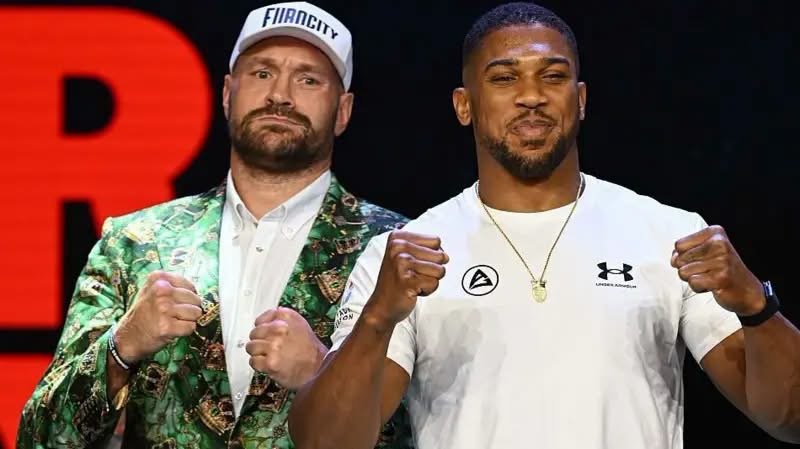
UFC chief executive Dana White has predicted that the highly anticipated heavyweight boxing contest between Anthony Joshua and Tyson Fury will end in a knockout, expressing confidence that the long-awaited showdown will not go the full distance.
White made the prediction in an interview with Sun Boxing ahead of the scheduled December 11, 2026, fight between the two former heavyweight champions at the Principality Stadium in Cardiff, Wales. He expects an exciting contest but stopped short of identifying which fighter he believes will emerge victorious.
The fight represents one of the most anticipated matchups in modern British heavyweight boxing, bringing together two fighters whose careers have been defined by world championship success, powerful punching and years of speculation about a potential meeting.
Joshua, a British boxer of Nigerian heritage, and Fury have spent much of their careers competing at the highest level of the heavyweight division. Despite their prominence, the pair have never previously faced each other in a professional boxing match.
White’s prediction adds to the growing discussion surrounding the contest, which has attracted international attention because of the fighters’ reputations and the commercial significance of their long-awaited meeting.
Dana White Expects an Early Finish
White made it clear that he does not expect the heavyweight contest to last through all the scheduled rounds.
Speaking to Sun Boxing, he said: “Going to be a great heavyweight fight. I do not see it going the distance. And I am happy that I get to be there live.”
His assessment suggests that he expects the power and offensive abilities of the two heavyweights to produce a decisive finish.
However, White did not predict whether Joshua or Fury would win by knockout. His comments were a forecast about the likely duration and nature of the fight rather than an endorsement of either boxer’s chances of victory.
Both fighters have demonstrated knockout ability throughout their careers. Joshua has built much of his reputation around his punching power and ability to finish opponents, while Fury has combined heavyweight strength with movement, adaptability and a range of tactical approaches.
Those contrasting attributes make the matchup difficult to predict with certainty.
A knockout remains one possible outcome, but heavyweight boxing can also produce tactical contests in which fighters use distance, movement and defensive discipline to avoid dangerous exchanges.
White’s prediction is therefore best understood as his personal assessment of the contest, not a confirmed indication of how the fight will unfold.
Joshua and Fury Finally Prepare to Meet
The proposed meeting between Joshua and Fury has been discussed for years, with negotiations and changing circumstances repeatedly preventing the fight from taking place.
Both boxers have held major heavyweight championships and established themselves among the leading figures of their generation.
Joshua rose to international prominence after winning Olympic gold in the super-heavyweight division at the London 2012 Olympic Games. He subsequently became a two-time unified heavyweight world champion, earning victories over several prominent opponents during his professional career.
Fury, meanwhile, became a world heavyweight champion after defeating Wladimir Klitschko in 2015. He later returned to the top of the division through his rivalry with Deontay Wilder, including two victories and a draw across their three-fight series.
Their achievements helped establish the possibility of a major all-British heavyweight contest as one of boxing’s most commercially attractive matchups.
The fight was also widely discussed because the two boxers have followed different career paths and developed distinct styles.
Joshua is known for his combination of punching power, athleticism and offensive pressure. Fury has often relied on his height, reach, movement and ability to adapt his approach to different opponents.
A meeting between them presents questions about whether Joshua can impose his power and whether Fury can use his size, experience and tactical skills to control the contest.
Neither fighter can be considered certain to win on the basis of reputation alone. Their performances on the night will determine which approach proves more effective.
Cardiff Selected as the Venue
The scheduled fight is set to take place at the Principality Stadium in Cardiff, Wales, on December 11, 2026.
The venue provides a major British setting for a contest that has attracted considerable interest from boxing fans in the United Kingdom and abroad.
The announcement of Cardiff as the location followed discussions about where the fight should be staged. Other possible locations had been considered during the process, including New York.
The decision to hold the contest in Wales places the fight within reach of British supporters and gives the event a setting connected to the fighters’ home market.
According to reporting by Reuters, the proposed event is expected to take place late at night in Cardiff to accommodate television audiences in the United States. The planned timing reflects the international commercial considerations surrounding a contest involving two globally recognised heavyweights.
The fight is scheduled to be broadcast globally on Netflix, giving the event access to an international streaming audience.
Its commercial reach is expected to be an important part of the event’s significance, particularly because Joshua and Fury have attracted audiences well beyond the traditional boxing market.
For Nigerian boxing fans, Joshua’s heritage adds another dimension to the matchup. Although he represents Britain professionally, his Nigerian family background has contributed to his popularity among audiences in Nigeria and across the African continent.
The contest could therefore attract attention from viewers who follow Joshua’s career as both a British sporting figure and a boxer with Nigerian roots.
Why the Fight Matters for Heavyweight Boxing
The Joshua-Fury contest carries significance beyond the immediate question of who will win.
For years, boxing supporters have debated how the two fighters would match up against each other. The absence of a direct contest has left room for competing assessments of their abilities and legacies.
A professional meeting would provide a direct sporting comparison between two heavyweight champions who have occupied prominent positions in the division.
The outcome could also affect their standing in future discussions about the leading heavyweights of their era.
A convincing victory would strengthen the winner’s position in the public debate, while a defeat could prompt questions about the loser’s remaining ambitions at the highest level of the sport.
However, the significance of the result will depend on the circumstances of the contest, the manner of victory and the fighters’ plans afterward.
The event also illustrates the commercial power of major heavyweight matchups. Boxing promoters and broadcasters have increasingly sought contests involving recognised names capable of attracting audiences across different markets.
Joshua and Fury both possess established international profiles, making their meeting attractive to broadcasters, sponsors and supporters.
For the sport, the event offers an opportunity to turn years of anticipation into an actual contest inside the ring.
Its success will ultimately depend on the quality of the fight, the organisation of the event and the audience’s response.
Dana White’s Role in the Event
White’s prediction has drawn additional attention because of his involvement in the wider event.
Best known as the UFC’s chief executive and a central figure in the development of mixed martial arts as a major commercial sport, White has also expanded his involvement in professional boxing through Zuffa Boxing.
His participation in the Joshua-Fury event has been the subject of public disagreement with British boxing promoter Eddie Hearn, who has questioned the extent of White’s formal role.
White has maintained that he is involved in promoting and producing the event, while reporting has highlighted disagreements over contractual arrangements and promotional responsibilities.
The dispute reflects wider questions about how boxing events are organised and who controls the commercial and promotional decisions surrounding major fights.
Unlike the UFC’s relatively centralised promotional structure, professional boxing often involves separate promoters, management teams, broadcasters and other stakeholders negotiating the terms of individual contests.
That structure can create disagreements over venue selection, contractual rights, promotional responsibilities and the distribution of revenue.
White’s involvement brings experience from the UFC’s approach to event production, but the extent of his responsibilities must be distinguished from the broader contractual arrangements governing the fight.
His prediction about the likely knockout finish is separate from those organisational issues. The outcome of the contest will depend on the fighters’ performances rather than the identity of the executives involved in arranging it.
What Could Determine the Outcome?
Although White expects a knockout, several factors could determine whether the fight ends early or continues into the later rounds.
Joshua’s punching power makes him dangerous when he can land clean combinations. His success will depend partly on his ability to create openings, manage distance and avoid being drawn into exchanges that favour Fury.
Fury’s height and reach could help him control the range of the contest. His movement and ability to change tactics may also influence whether Joshua can consistently deliver his strongest punches.
Conditioning will be another important factor. Heavyweight contests can change significantly as fighters tire, particularly when they are forced to defend against sustained pressure or repeatedly move to avoid attacks.
Defensive discipline will matter for both men. A single clean punch can change a heavyweight fight, but careless exchanges can also leave a fighter vulnerable to counters.
The boxers’ preparation, tactical decisions and ability to respond to changing circumstances will be crucial.
Their previous performances provide useful background, but they cannot establish the result in advance.
White’s prediction reflects the expectation that the fighters’ offensive capabilities will produce a decisive ending. Whether that happens will only become clear once the contest begins.
What Happens Next?
The next major development is the scheduled December 11 meeting at the Principality Stadium in Cardiff.
Attention is expected to focus on the fighters’ preparations, public appearances and any further announcements concerning the event.
Supporters will also be watching for developments involving the undercard, broadcast arrangements and the final details of the fight programme.
As the contest approaches, predictions from promoters, former fighters and boxing analysts are likely to remain part of the discussion. Such assessments can provide insight into how observers view the matchup, but they should not be confused with confirmed outcomes.
White has made his expectation clear: he believes the contest will end before the final bell.
He has not, however, named a winner.
For Joshua and Fury, the immediate challenge will be to translate their experience and preparation into a performance capable of securing victory in one of the most closely watched heavyweight contests of the year.
For fans, the central question remains whether Joshua’s power, Fury’s tactical ability or another factor will ultimately decide the fight.
Weng Global – stories beyond borders
Sources
- PUNCH Sports Extra — reporting on Dana White’s knockout prediction.
- Sun Boxing — interview with Dana White about the Joshua-Fury contest.
- Reuters — reporting on the scheduled fight, venue and event arrangements.
- Netflix Tudum — official event information and broadcast details.
- MMA Fighting — reporting on Dana White’s involvement and promotional disagreements surrounding the fight.