Reported by Simon Daniel Yusuph l Journalist at Weng Global
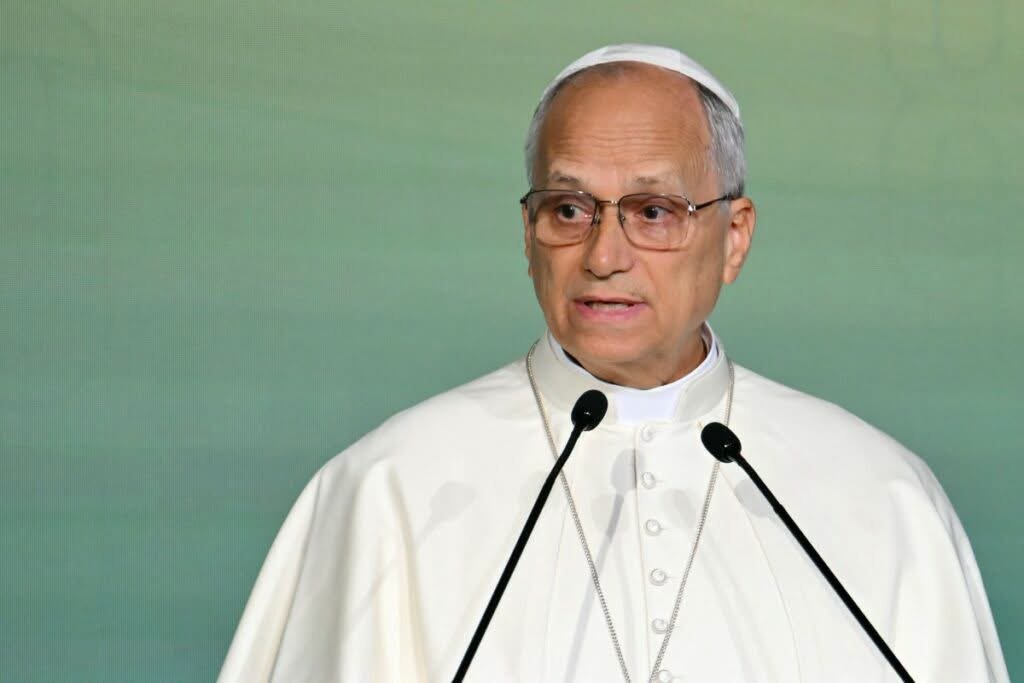
Pope Leo XIV has successfully undergone surgery to remove a small nodule from his lung at Rome’s Agostino Gemelli University Hospital, the Vatican confirmed on Tuesday, October 13, 2026, providing an update on the health of the 71-year-old pontiff after the discovery of the growth during recent medical examinations.
The Vatican Press Office announced that the operation had concluded successfully. The procedure, which took approximately two hours, was performed by a thoracic surgery team led by Professor Stefano Margaritora, according to Italian news agency ANSA.
The surgery followed the Pope’s announcement on Sunday, October 11, that doctors had discovered a localised lung nodule and recommended its removal. He said the growth had been detected at an early stage and was confined to a limited area.
The operation marks a significant medical development during Leo XIV’s papacy, which began in May 2025 following his election as the 267th pope of the Catholic Church.
Although the Vatican has confirmed the successful completion of the procedure, the precise nature of the nodule has not been established publicly. Further medical assessment will be necessary to determine whether the growth is benign or malignant.
The Pope is expected to remain in hospital for approximately one week while he recovers. His public engagements have been suspended through October 20, according to reports citing the Vatican.
The announcement has drawn international attention because of the Pope’s position as leader of the Catholic Church, which has approximately 1.4 billion members worldwide, as well as the importance of his health to the institution’s leadership and global activities.
Vatican Confirms Successful Operation
The Vatican’s confirmation of the successful operation followed several days of public updates about the Pope’s condition and medical plans.
According to Vatican News, Leo disclosed the discovery during his Sunday Angelus address on October 11. He explained that recent medical examinations had identified a localised nodule in his lung and that his doctors considered surgery appropriate.
The Pope said he had decided to follow the medical advice he received.
The announcement offered an initial explanation of the condition without disclosing a definitive diagnosis. It also established that the decision to operate followed medical examinations rather than a publicly reported emergency.
On Tuesday, the Pope was admitted to Rome’s Gemelli University Hospital, a major medical facility that has treated several recent pontiffs.
The Holy See Press Office confirmed that the procedure would be undertaken by the hospital’s thoracic surgery team, led by Professor Margaritora.
Following the operation, the Vatican announced that the surgery had concluded successfully.
ANSA subsequently reported that the procedure took approximately two hours.
However, a successful operation does not necessarily establish the final diagnosis. The medical team may need to examine the removed tissue to determine the characteristics of the nodule and whether additional treatment or monitoring is required.
As of Tuesday, October 13, the publicly available information did not establish whether the growth was cancerous.
The distinction is important because the term lung nodule describes an abnormal area of tissue in the lung rather than a specific disease.
Until further medical information becomes available, conclusions about the Pope’s long-term health would be premature.
What Is a Lung Nodule?
A lung nodule is a small area of abnormal tissue that appears in the lung and can be identified through medical imaging.
Such nodules may develop for several reasons, including previous infections, inflammation, scar tissue or cancer.
Many lung nodules are benign, meaning they are not cancerous. Others require closer examination because their appearance, growth pattern or other characteristics may indicate a greater risk of malignancy.
Doctors assess lung nodules by considering factors such as their size, location, appearance on scans, changes over time and the patient’s medical history.
Depending on those findings, a medical team may recommend monitoring, further imaging, a biopsy or surgical removal.
In some cases, surgery allows doctors to remove the growth and obtain tissue for a more definitive examination.
The Vatican has not released enough clinical information to determine precisely why surgery was selected in the Pope’s case beyond confirming that his doctors recommended the procedure.
It would therefore be inappropriate to infer a cancer diagnosis from the operation itself.
Similarly, the fact that the nodule was detected early does not, on its own, establish its nature or guarantee a particular outcome.
The next important medical information will concern the Pope’s recovery and any further findings disclosed by the Vatican.
The Holy See has so far provided information about the discovery, the recommended operation and its successful completion, but has not publicly confirmed a definitive diagnosis.
Pope Leo XIV Expected to Remain in Hospital for About a Week
The Vatican has indicated that the Pope is expected to spend approximately one week at Gemelli Hospital following the operation.
The period will allow the medical team to monitor his recovery and determine when he can safely resume his normal activities.
The duration of hospitalisation after surgery can depend on several factors, including the procedure performed, the patient’s response to treatment and whether complications arise.
No complications were identified in the Vatican’s initial announcement confirming the successful operation. However, the absence of a reported complication should not be interpreted as a complete medical assessment of the Pope’s condition.
The Vatican’s public updates remain the primary source of information about his recovery.
The Pope’s scheduled public engagements have been suspended through October 20, according to reports published on Tuesday.
The adjustment allows time for recovery and reduces the demands associated with public appearances, travel and official duties.
For the Catholic Church, the announcement provides a clear indication that the Pope’s immediate priority is recuperation.
It also demonstrates the importance of managing public expectations when the head of a global religious institution undergoes medical treatment.
The Vatican has not announced a definitive date for the Pope’s return to his full public schedule beyond the reported suspension of engagements through October 20.
Any further adjustment will depend on medical advice and official announcements.
Medical Transparency and the Pope’s Decision to Announce His Condition
Leo XIV’s decision to disclose the lung nodule before undergoing surgery gave the public an opportunity to understand why he would temporarily withdraw from his normal schedule.
During his October 11 Angelus address, the Pope explained that doctors had found the nodule during recent medical examinations and recommended its removal.
He also thanked people for their spiritual support and asked for their prayers.
The announcement provided information about the condition without disclosing detailed medical records.
For a public figure whose responsibilities extend across continents, communication about health can help distinguish confirmed medical developments from speculation.
The Pope’s announcement also placed the upcoming absence from public engagements in context before the operation took place.
However, the Vatican has not released a comprehensive medical report, and the information available to the public remains limited to the statements and updates issued by the Holy See.
That means claims about the severity of the condition, the possibility of cancer or the need for additional treatment should be treated cautiously.
Responsible reporting requires a clear distinction between the confirmed facts of the operation and questions that remain unanswered.
The confirmed facts are that doctors discovered a localised lung nodule, recommended surgery, and that the procedure was completed successfully on October 13.
The final diagnosis and the longer-term implications for the Pope’s health remain matters for further medical assessment and official communication.
International Prayers and Messages of Support
The announcement of the planned operation prompted expressions of concern and support from Catholic communities and Christian leaders.
Vatican News reported that bishops, clergy and faithful across different countries had offered prayers for the Pope’s recovery after his announcement.
The report also described efforts by religious communities to organise prayers ahead of the operation.
Such responses reflect the spiritual significance of the papacy for Catholics, many of whom regard the Pope as a central figure in the Church’s religious life and worldwide mission.
The Pope’s health is also followed closely by people outside the Catholic Church because of the Vatican’s diplomatic role and its involvement in international discussions about peace, poverty, migration, social justice and humanitarian issues.
Nevertheless, expressions of support should be distinguished from medical information.
Prayers, public messages and statements of goodwill demonstrate concern for the Pope but do not provide evidence about his clinical condition.
The Vatican’s medical updates and any information released by the treating hospital remain the appropriate basis for reporting on his recovery.
Who Is Pope Leo XIV?
Pope Leo XIV, born Robert Francis Prevost on September 14, 1955, in Chicago, Illinois, in the United States, was elected pope on May 8, 2025.
He became the 267th successor to Saint Peter and the first pope born in the United States.
Before his election, Prevost served as a member of the Augustinian religious order and spent many years working in Peru, where he undertook pastoral and church leadership responsibilities.
He later served as the head of the Augustinian order before being appointed to senior positions within the Vatican under Pope Francis.
In 2023, Pope Francis appointed him prefect of the Dicastery for Bishops, a Vatican department responsible for matters concerning the appointment of bishops in territories under its jurisdiction.
Prevost was made a cardinal in September 2023.
His election in May 2025 brought him to the leadership of the Catholic Church, an institution with a worldwide presence and a central role in the religious lives of millions of people.
As pope, Leo XIV is responsible for the Church’s spiritual leadership, its central governance and its engagement with religious communities, governments and international organisations.
His responsibilities include leading major liturgical celebrations, appointing church officials, issuing teaching documents and representing the Holy See in international affairs.
The temporary interruption of his public schedule therefore has implications beyond the cancellation of individual appearances.
It affects the timing of engagements involving church leaders, visiting delegations and other people who regularly meet the pontiff.
However, the Pope’s hospitalisation does not automatically mean that the Catholic Church has entered a leadership vacancy.
The papacy remains occupied unless a pope dies or resigns. Medical treatment or temporary incapacity does not, by itself, terminate the office.
Vatican officials and senior church leaders continue to handle their respective responsibilities during a pope’s medical absence, although matters requiring the Pope’s personal decision may be affected by his condition and availability.
Implications for the Catholic Church’s Activities
The Pope’s recovery will be closely monitored because of the demands associated with his position.
The pontiff’s schedule typically includes meetings with church officials, public audiences, religious celebrations, diplomatic engagements and international travel.
A medical procedure requiring approximately one week in hospital means that some activities must be postponed or adjusted.
The immediate implications are primarily logistical, with the Vatican needing to manage the schedule while allowing the Pope sufficient time to recover.
The longer-term impact will depend on the medical findings and the speed of his recovery.
There is currently no confirmed evidence that the operation will lead to a prolonged interruption of the Pope’s responsibilities.
Equally, it would be premature to assume that he will resume every planned activity immediately after leaving hospital.
His medical team will be best placed to assess when he can safely return to a full programme.
The Vatican’s approach to communicating developments will remain important for the Church’s leadership, its members and the wider international public.
Clear updates can help prevent speculation from replacing verified information, particularly when the subject concerns the health of a prominent global figure.
November Latin America Visit Remains an Important Question
Before the operation, Pope Leo XIV was expected to undertake an 11-day visit to Uruguay, Argentina and Peru beginning on November 6, according to Reuters.
The planned journey would take the Pope to Latin America, a region of particular significance to the Catholic Church because of its large Catholic population and its longstanding religious traditions.
Peru also holds personal significance for Leo XIV because he spent many years there in pastoral and church leadership roles before returning to Rome for senior Vatican responsibilities.
However, the medical procedure has introduced uncertainty about the practical arrangements for the trip.
As of October 13, the successful completion of the operation did not, by itself, confirm whether the itinerary would proceed unchanged.
Any decision would depend on the Pope’s recovery, medical advice and subsequent announcements from the Vatican.
It is therefore important not to describe the trip as cancelled or guaranteed to proceed without an official update.
The November visit will be one of the developments to watch as information about the Pope’s recovery becomes available.
What Happens Next?
The immediate priority is the Pope’s recovery at Gemelli Hospital.
The medical team will continue monitoring his condition following the operation, while further examination of the removed nodule may provide information about its nature.
The Vatican has confirmed that the procedure was successful but has not publicly established whether the growth was benign or malignant.
The Pope is expected to remain in hospital for about one week, and his public engagements have been suspended through October 20, according to reports citing the Vatican.
Further announcements will be important in clarifying his recovery, the timing of his return to public duties and the status of his planned November visit to Latin America.
For now, the successful operation is a positive immediate development, but it should not be confused with a definitive statement about the Pope’s long-term health.
The most reliable assessment will depend on further medical information and official updates.
For Catholics and other observers around the world, the coming days will bring attention to both the Pope’s recovery and the Vatican’s communication about his condition.
The central facts remain clear: Pope Leo XIV underwent surgery to remove a lung nodule on October 13, 2026, and the Vatican confirmed that the procedure was successful. The final diagnosis and the longer-term outlook have not yet been publicly established.
Weng Global – stories beyond borders
Sources
- Vatican Press Office — Official updates on Pope Leo XIV’s surgery and recovery.
- Vatican News — Reports on the discovery of the lung nodule, the planned operation and international prayers for the Pope.
- ANSA — Report on the successful completion and approximate duration of the operation.
- Reuters — Reporting on the surgery, expected hospital stay and planned Latin America visit.
- The Holy See — Official biography of Pope Leo XIV.