Reported by Simon Daniel Yusuph l Journalist at Weng Global
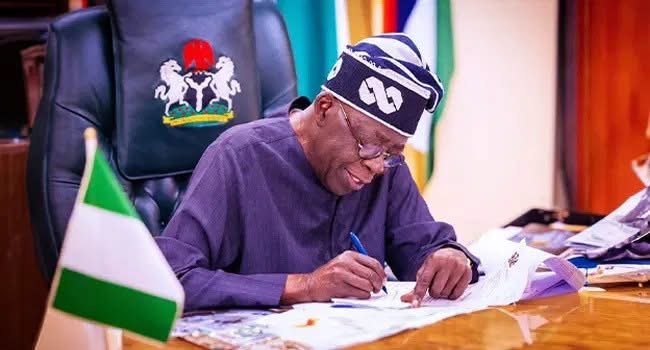
President Bola Ahmed Tinubu has transmitted five legislative proposals to the Nigerian Senate for consideration, seeking reforms to drug law enforcement, transportation safety investigations, public-sector training and the implementation of international laws on armed conflict and serious international crimes.
The proposals were conveyed to the Senate through separate executive communications read by Senate President Godswill Akpabio during plenary on Tuesday, October 13, 2026.
The bills include the National Drug Law Enforcement Agency (NDLEA) Bill 2026, the Nigerian Safety Investigation Bureau (NSIB) Amendment Bill 2026, the National School of Government Bill 2026, the Geneva Conventions and Additional Protocols Bill, and the Rome Statute of the International Criminal Court (Enforcement) Bill.
According to reports by Premium Times, Punch Newspapers and Channels Television, the proposals seek to consolidate Nigeria’s legal framework for combating illicit drugs, expand the scope of independent transportation accident investigations, establish a new institution for governance training and strengthen the domestic legal framework for addressing international crimes.
The proposals have been submitted for legislative consideration. They are not yet laws merely because the President has transmitted them to the Senate. Their eventual status will depend on the legislative process and the applicable constitutional requirements.
The developments place several areas of public policy before lawmakers, including the powers of law enforcement agencies, institutional independence, public administration and Nigeria’s obligations under international law.
NDLEA Bill Seeks to Consolidate Nigeria’s Drug Laws
One of the major proposals is the National Drug Law Enforcement Agency Bill 2026, which seeks to repeal the existing NDLEA Act and the Indian Hemp Act and replace them with a consolidated legal framework for addressing illicit drug-related activities.
In the executive communication presented to the Senate, Tinubu said the proposed legislation was intended to strengthen the legal foundation for combating the cultivation, processing, sale, trafficking and use of illicit drugs.
The bill also seeks to strengthen the NDLEA’s investigative powers, including its capacity to investigate people suspected of involvement in drug-related offences.
The proposed changes would bring existing legal provisions into a consolidated framework, potentially making it easier for the agency to apply the law to different aspects of the illicit drug trade.
Nigeria faces challenges involving the production, trafficking and distribution of controlled substances. Drug-related offences can affect public health, community safety, young people and the wider economy.
Trafficking networks may also operate across national borders, creating challenges for investigators who must coordinate with other agencies and international partners.
A consolidated legal framework could provide a clearer statutory basis for enforcement. However, the practical impact would depend on the final provisions approved by lawmakers, the resources available to investigators and prosecutors, and the effectiveness of the justice system.
The proposal should not be interpreted as automatically establishing new offences or penalties beyond those contained in the legislation eventually enacted.
Its precise legal consequences will depend on the bill’s final wording, including its definitions, investigative provisions, safeguards and relationship with other laws.
The Senate’s consideration will therefore be important in determining how the proposed framework balances effective enforcement with due process and the rights of individuals under investigation.
Why the Proposed Drug Law Reform Matters
Drug enforcement requires more than the seizure of prohibited substances or the arrest of suspects.
Investigators must establish evidence, trace supply networks, identify the individuals responsible for offences and prepare cases that can withstand judicial scrutiny.
A consolidated statute could help clarify the agency’s responsibilities and the legal provisions governing its operations.
However, the success of any reform will also depend on institutional capacity, forensic resources, border controls, inter-agency cooperation and the ability of courts to handle cases fairly and efficiently.
The rights of suspects must remain protected throughout investigations and prosecution. Allegations of involvement in drug-related activities do not, by themselves, establish guilt.
Lawmakers will therefore need to examine whether the proposed powers are clearly defined and accompanied by appropriate legal safeguards.
The Senate’s legislative scrutiny provides an opportunity to consider those questions before the proposal advances through the lawmaking process.
NSIB Amendment Bill Proposes Wider Transport Safety Investigations
Another proposal submitted by Tinubu seeks to amend the Nigerian Safety Investigation Bureau (Establishment) Act 2022.
The Nigerian Safety Investigation Bureau investigates transportation accidents and incidents to establish their circumstances and probable causes and recommend measures to prevent similar occurrences.
The proposed amendment seeks to reposition the bureau as an independent, multimodal safety investigation authority, extending its responsibilities beyond aviation to cover maritime, rail and other transportation-related occurrences.
According to reports by Premium Times and Punch Newspapers, the bill also proposes transferring supervisory oversight of the bureau to the Presidency and strengthening its institutional, operational and administrative framework.
The proposal could have implications for how Nigeria investigates serious transportation incidents involving different modes of travel.
Nigeria depends on road, rail, air and maritime transportation to move people and goods. Accidents in these sectors can result in loss of life, economic disruption, damage to infrastructure and loss of public confidence.
A specialised investigation system can help identify the circumstances that contributed to an accident and recommend changes to prevent a recurrence.
For example, an investigation may identify weaknesses in maintenance procedures, operational practices, equipment, safety management or regulatory compliance.
The purpose of a safety investigation is to understand what happened and how similar incidents can be prevented. It is distinct from a criminal investigation, which may seek to establish whether an offence occurred and who may be legally responsible.
That distinction is important because identifying the causes of an accident does not automatically determine criminal liability.
Questions About Institutional Independence
The proposed repositioning of the NSIB raises questions about the safeguards needed to ensure credible and independent investigations.
Moving supervisory oversight to the Presidency would change the bureau’s administrative arrangements, but the practical meaning of independence would depend on the final legislation.
Important considerations include how the bureau’s leadership is appointed, how it receives funding, whether investigators can access relevant evidence and whether findings can be published without improper interference.
The law would also need to clarify how the bureau’s work relates to the responsibilities of transportation regulators, operators, law enforcement agencies and other public institutions.
An independent investigation authority can contribute to public confidence by producing findings based on evidence rather than political or commercial considerations.
However, independence alone cannot guarantee improved safety. Authorities and operators must also act on investigation findings and implement recommendations where appropriate.
The proposed amendment will therefore require careful legislative examination to determine whether its institutional arrangements can support credible investigations across multiple transport sectors.
National School of Government Bill Targets Public-Sector Training
Tinubu has also transmitted the National School of Government Bill 2026, which seeks to repeal the Administrative Staff College of Nigeria Act and establish a National School of Government.
The proposed institution is intended to serve as a national centre for governance training, leadership development, policy delivery and public-sector capacity building.
The proposal reflects the importance of professional development within government institutions.
Public officials are responsible for implementing policies, managing public resources, delivering services and translating government decisions into practical outcomes.
Their ability to perform these responsibilities can influence the quality of public administration and the effectiveness of government programmes.
A dedicated national institution for governance training could provide a framework for developing leadership skills, strengthening administrative competence and improving policy implementation.
However, the creation of a new institution would not automatically guarantee better governance.
Its effectiveness would depend on the quality of its programmes, the standards applied to training, the relevance of its curriculum and the extent to which government agencies use the skills developed by participants.
The proposed legislation would also need to establish the institution’s administrative structure and clarify its relationship with existing public-sector training arrangements.
The Senate’s review will determine the framework lawmakers are prepared to support.
If enacted, the legislation’s practical value would ultimately be measured by whether it contributes to more capable public institutions and better services for citizens.
Bills Seek to Strengthen Nigeria’s Domestic Framework for International Law
Two other proposals concern international humanitarian law and the prosecution of serious international crimes.
The first seeks to give domestic effect to the four Geneva Conventions of 1949 and their two Additional Protocols of 1977.
The Geneva Conventions form a central part of international humanitarian law, establishing protections for people affected by armed conflict. These protections include provisions relating to wounded and sick members of armed forces, prisoners of war and civilians.
The Additional Protocols expand and clarify protections under international humanitarian law.
The proposed Nigerian legislation seeks to repeal the existing Geneva Conventions Act and establish a revised framework for implementing the conventions and protocols in domestic law.
The second proposal is the Rome Statute of the International Criminal Court (Enforcement) Bill.
The Rome Statute established the International Criminal Court and provides the framework for its jurisdiction over genocide, crimes against humanity, war crimes and the crime of aggression, subject to the statute’s applicable conditions.
The proposed Nigerian bill seeks to domesticate the Rome Statute and establish a framework for enforcing and punishing the relevant international crimes under domestic law.
It also addresses cooperation between Nigeria and the International Criminal Court.
The precise scope of the proposed domestic framework will depend on the legislation’s final provisions and their relationship with Nigeria’s existing laws.
Why These International Law Proposals Matter
Nigeria’s legal framework for addressing serious international crimes has implications for accountability, the protection of civilians and the country’s cooperation with international justice institutions.
Domestic legislation can help clarify how international obligations are implemented within the national legal system.
It can also establish procedures and responsibilities for relevant authorities, subject to constitutional requirements and applicable international law.
However, the introduction of a bill does not establish that the proposed provisions have already taken effect.
Lawmakers will need to examine the wording, enforcement mechanisms, institutional responsibilities and safeguards contained in the proposals.
The process is particularly important because legislation dealing with serious crimes must define offences and procedures clearly while respecting the rights of accused persons and the requirements of a fair trial.
The Senate’s consideration will determine how the proposals proceed through the legislative process.
Senate Refers Proposals for Further Legislative Action
Following the presentation of the executive communications, Akpabio referred the proposals to the Senate Committee on Rules and Business for further legislative action, according to reports by Punch Newspapers and Premium Times.
The referral marks a step in the legislative process but does not mean that the Senate has passed the bills.
Further action will depend on the applicable procedures, including how the proposals are scheduled, considered and processed by lawmakers.
The proposals may undergo additional scrutiny before the Senate takes further decisions.
That process is important because legislation can affect the powers of public agencies, the rights of individuals, the operation of institutions and the implementation of Nigeria’s international obligations.
The distinction between a bill and an enacted law is also important for public understanding. Until a proposal completes the required legislative process and receives presidential assent where constitutionally required, it should not be treated as an operative law.
Tinubu Also Notifies Senate of Two University Amendment Laws
During the same plenary proceedings, the Senate received notification that Tinubu had assented to two amendment bills relating to federal universities of technology.
According to Vanguard Newspapers, the amendments provide for the inclusion of the Federal University of Technology and Vocational Studies in Yaba, Lagos, and a corresponding institution in Kaduna in the relevant legislation governing federal universities of technology.
The notification was separate from the five legislative proposals transmitted for consideration.
The distinction is significant: the five newly transmitted bills remain subject to the legislative process, while the two university amendments had received presidential assent.
The amendments concern the statutory framework governing the named institutions. Their practical effects will depend on the final laws and the relevant administrative steps required for implementation.
The Senate President subsequently referred the documents to the Clerk of the National Assembly for further action, according to the report.
What the Proposed Reforms Could Mean for Nigerians
Taken together, the proposals cover several areas of government responsibility: drug enforcement, transportation safety, public administration and the domestic implementation of international law.
Their potential effects differ by sector.
For communities affected by illicit drugs, the NDLEA proposal could change the legal framework governing investigations and enforcement.
For transport users, operators and regulators, the NSIB amendment could reshape how serious accidents and incidents are investigated across different modes of transportation.
For public servants, the National School of Government proposal could establish a new structure for leadership training and professional development.
For the justice system, the international law bills could affect how Nigeria implements obligations relating to armed conflict and serious international crimes.
Nevertheless, the impact of these proposals cannot be determined solely from their titles or stated objectives.
The final wording, institutional arrangements, funding, enforcement capacity and oversight mechanisms will all matter.
Lawmakers also have a responsibility to examine whether the proposed reforms are consistent with the Constitution, complement existing laws and provide adequate safeguards against misuse of power.
For citizens, following the legislative process is important because the outcome could influence how public institutions operate and how certain legal responsibilities are enforced.
What Happens Next?
The five bills have been transmitted to the Senate for consideration, and the proposals have been referred for further legislative action.
The next steps will depend on the Senate’s procedures and decisions on the bills.
The central issues to watch include the scope of the NDLEA’s proposed investigative powers, the safeguards governing the NSIB’s independence, the structure of the proposed National School of Government and the precise domestic legal mechanisms contained in the international law proposals.
The university amendment laws are a separate matter because the Senate has been notified of presidential assent.
Until further legislative decisions are announced, the five proposals should be described as bills awaiting consideration rather than enacted laws.
Their progress will provide a clearer indication of which changes lawmakers are prepared to approve and what legal framework will eventually govern their implementation.
Sources
- Premium Times — Reporting on the NDLEA and NSIB bills transmitted to the Senate, October 13, 2026.
- Punch Newspapers — Reporting on the NDLEA Bill 2026 and NSIB Amendment Bill 2026, October 13, 2026.
- Channels Television — Reporting on the executive bills transmitted to the Senate, October 13, 2026.
- Vanguard Newspapers — Reporting on the five bills and the university amendment laws, October 13, 2026.