Reported by Simon Daniel Yusuph l Journalist at Weng Global
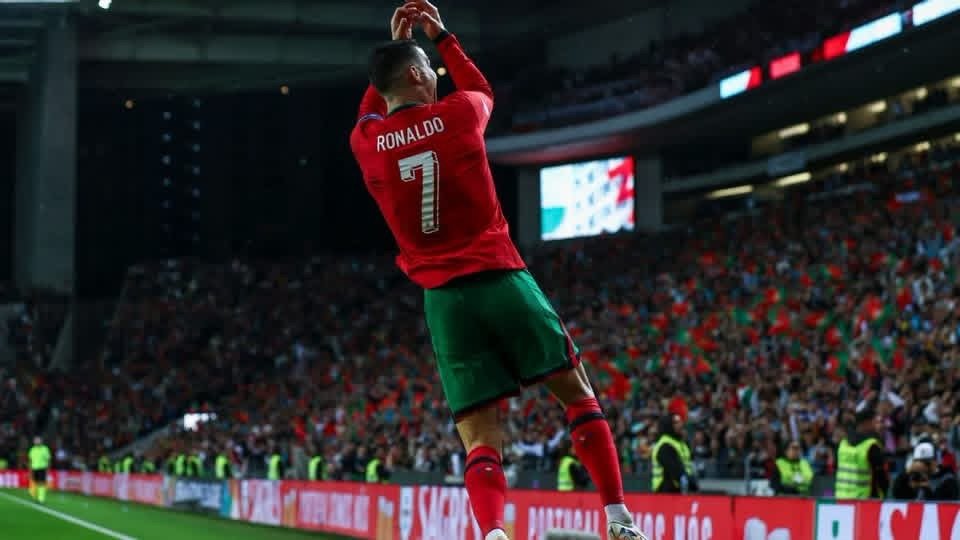
Portugal’s football authorities have provisionally suspended Cristiano Ronaldo after opening a disciplinary investigation into his departure from the national team’s training camp in Copenhagen, Denmark, on September 30, 2026, following a reported disagreement with head coach Jorge Jesus.
The Portuguese Football Federation (FPF) announced the disciplinary proceedings on Saturday, October 10, placing the 41-year-old forward under a preventive suspension while investigators examine whether his departure breached the rules governing national team players. The case has been classified as urgent and referred to the federation’s disciplinary investigation committee.
The decision marks a significant development in a dispute involving Portugal’s captain and one of the most influential figures in the country’s football history. Ronaldo had left the national team’s camp ahead of its Nations League fixture against Denmark after expressing dissatisfaction with developments surrounding his role in the squad.
Although the federation has imposed a provisional suspension, the investigation is ongoing. The decision should not be interpreted as a final determination of the player’s disciplinary responsibility or the length of any eventual punishment.
The case has attracted international attention because of Ronaldo’s standing in Portuguese football and the questions it raises about player discipline, leadership and the relationship between senior players and national team management.
Why Portugal Suspended Cristiano Ronaldo
The Portuguese Football Federation’s disciplinary council opened proceedings to establish whether the circumstances surrounding Ronaldo’s departure from the national team’s camp warranted disciplinary action.
In its statement, the federation said the proceedings followed a decision by its Non-Professional Section on October 9. The investigation concerns facts reported to the disciplinary authorities on October 7.
The federation also confirmed that Ronaldo’s case had been assigned urgent status and referred to the Disciplinary Investigation Committee on October 10.
As part of the process, the authorities imposed a preventive suspension that is not automatic. The federation’s statement also indicated that the proceedings would remain confidential until the investigation had been completed.
The distinction between a provisional suspension and a final disciplinary decision is important.
A provisional measure restricts a player’s participation while the relevant authorities examine the circumstances of a case. It does not, by itself, establish that every allegation or reported account of the incident has been proven.
The investigation must therefore determine the disciplinary significance of Ronaldo’s actions before the federation reaches a final decision.
Neither the precise duration of the provisional suspension nor the eventual outcome of the investigation should be treated as settled at this stage.
For Portugal, the immediate priority is to establish the facts and apply the federation’s rules through its disciplinary procedures.
What Happened Between Ronaldo and Jorge Jesus?
The dispute developed during Portugal’s preparations for its Nations League fixtures against Norway and Denmark.
Ronaldo had remained on the bench throughout Portugal’s 2-1 victory over Norway in Oslo on September 27. Reports subsequently indicated that the forward was frustrated after warming up during the match but not being introduced.
According to reporting by Agence France-Presse, the disagreement intensified after Jesus indicated at a press conference that Ronaldo would not start Portugal’s next match against Denmark. Ronaldo subsequently left the team’s training camp in Copenhagen on September 30.
The departure brought an unexpected controversy into Portugal’s international preparations.
Ronaldo later explained his decision publicly, saying that he had discussed the situation with the president of the Portuguese Football Federation before leaving the camp.
In his account of the disagreement, Ronaldo said there had been an understanding about managing his involvement in the two fixtures. He maintained that the arrangement had changed during the preparations for the Norway match and expressed dissatisfaction with how the situation had been handled.
His explanation is central to understanding the dispute, but it does not independently establish whether any agreement was formally binding or whether his departure breached the federation’s rules.
Those questions fall within the scope of the disciplinary investigation.
The federation initially confirmed Ronaldo’s departure without publicly detailing the reasons behind it. Its statement at the time said preparations for the scheduled matches would continue with the remaining members of the squad.
The subsequent disciplinary action has moved the matter beyond a disagreement over team selection and into a formal examination of player conduct.
Ronaldo Apologises and Accepts Possible Punishment
Ronaldo has publicly acknowledged the controversy surrounding his departure and expressed a willingness to accept any punishment imposed by the authorities.
According to The Guardian, the Portugal captain apologised to supporters and said he would serve any suspension imposed on him. He also criticised Jesus over the handling of the disagreement that preceded his departure.
His response indicates that the player recognises the seriousness of the situation, even as questions remain about the circumstances that led to his decision.
For a national team captain, leaving a training camp shortly before an international fixture can have implications beyond an individual disagreement with the coach.
National team preparations involve coordinated training sessions, tactical planning, travel arrangements and collective responsibilities. A player’s unexpected departure can disrupt those preparations and create uncertainty within the squad.
At the same time, Ronaldo’s account suggests that he believed the disagreement involved an understanding about his role and playing time.
The investigation will need to consider the relevant circumstances rather than rely solely on public interpretations of the dispute.
Ronaldo’s stated willingness to accept disciplinary consequences does not predetermine the outcome. The federation must still assess the case under its rules and determine what action, if any, is justified.
His apology may become part of the wider public discussion about the incident, but it should not be confused with a final disciplinary ruling.
Why the Decision Matters for Portugal
The case presents a challenge for Portuguese football authorities because it involves a player whose importance to the national team extends beyond his performances on the pitch.
Ronaldo has spent more than two decades representing Portugal and has become one of the defining figures in the country’s football history.
His international career has included major tournament victories, individual records and a long-standing role as captain.
That status makes the current dispute particularly sensitive. Any disciplinary decision involving him is likely to attract scrutiny from supporters, commentators and the international football community.
However, a player’s reputation does not remove the need for established disciplinary procedures.
National teams depend on players accepting selection decisions, following team protocols and respecting the responsibilities attached to representing their country. Those expectations apply even when the player involved is a globally recognised star.
For the FPF, the challenge is to handle the case fairly and consistently while protecting the integrity of the national team.
The authorities must establish the relevant facts, consider Ronaldo’s explanation and determine whether the circumstances justify further punishment.
A transparent and procedurally sound decision would help demonstrate that disciplinary rules are applied according to evidence rather than a player’s reputation or public profile.
The case also highlights the importance of communication between coaches and senior players.
Disagreements over selection, playing time and fitness management are common in elite football. They can become more difficult to manage when expectations are not clearly understood or when decisions affect established leaders within a squad.
Effective communication cannot eliminate every disagreement, but it can reduce the risk of disputes escalating into public controversies.
Portugal’s experience may therefore provide a wider lesson for national teams about the need to balance coaching authority, player expectations and collective responsibility.
The Role of Jorge Jesus in the Dispute
Jesus has become central to the controversy because his selection decisions preceded Ronaldo’s departure from the camp.
The coach had left Ronaldo out of the starting line-up against Norway and subsequently indicated that the forward would not start against Denmark.
Those decisions formed the immediate background to the disagreement, although the precise details of any understanding between the two men remain matters that must be assessed carefully.
A national team coach is responsible for selecting the starting line-up, determining tactical approaches and managing players’ fitness. Those responsibilities include deciding whether experienced players should start, remain on the bench or be rested.
Players, meanwhile, may have their own expectations about their involvement, particularly when they have held leading roles for many years.
A disagreement does not automatically amount to a disciplinary offence. The relevant issue is whether a player’s conduct in response to that disagreement breached applicable rules.
The FPF’s investigation is intended to examine that question in Ronaldo’s case.
It is important not to treat reports about a breakdown in trust as proof of misconduct by either party. Ronaldo has presented his account of the dispute, while the disciplinary authorities have not yet announced a final determination.
The outcome will help clarify how the federation interprets the circumstances surrounding the departure and whether it considers further sanctions necessary.
Possible Consequences for Ronaldo’s International Career
The provisional suspension creates uncertainty about Ronaldo’s immediate availability for Portugal.
While the measure remains in force, his participation in the national team is subject to the restrictions imposed by the federation’s disciplinary process.
The final consequences will depend on the investigation’s findings and any subsequent decision by the relevant authorities.
Reports have discussed the possibility of a longer suspension, but the final punishment has not been established. Any specific prediction about the number of matches Ronaldo could miss should therefore be treated cautiously.
A disciplinary sanction could affect Portugal’s selection options in future international fixtures, depending on its duration and scope.
For Ronaldo, the situation also raises questions about how he will resume his relationship with the national team following the investigation.
His public expression of willingness to accept a punishment and remain available for Portugal suggests that he has not announced an intention to retire from international football because of the dispute.
Nevertheless, his eventual return will depend on the disciplinary outcome and the decisions of the national team management.
The case should not be taken as evidence that Ronaldo’s international career has ended. No such conclusion follows from the provisional suspension alone.
At 41, Ronaldo remains a prominent figure in international football, but his immediate position with Portugal will depend on the resolution of the disciplinary proceedings.
What Happens Next?
The next major development will be the outcome of the investigation conducted by the Portuguese Football Federation’s disciplinary authorities.
The case has been referred to the federation’s Disciplinary Investigation Committee and given urgent status. The FPF has also indicated that the proceedings will remain confidential until the investigation is completed.
The investigation will determine the disciplinary significance of the circumstances surrounding Ronaldo’s departure from the training camp.
Until a final decision is announced, it remains premature to state what punishment he will receive or when he will be eligible to return to Portugal’s squad.
The federation’s handling of the case will also be watched closely because of the player’s standing and the potential implications for the national team.
For Ronaldo, the immediate task is to await the outcome of the proceedings while his provisional suspension remains in place.
For Portugal, the priority is to resolve the dispute through the established disciplinary process and maintain preparations for future international commitments.
The case ultimately places the balance between individual status and collective responsibility at the centre of the discussion.
Ronaldo’s contribution to Portuguese football is well established, but the disciplinary investigation concerns a specific incident and must be assessed on its own facts.
The final decision will determine whether further sanctions are warranted and help establish the next stage of the relationship between Portugal’s captain and the national team.
For now, Cristiano Ronaldo remains provisionally suspended while the Portuguese Football Federation investigates his departure from the national team’s training camp. No final disciplinary punishment has been announced.
Weng Global – stories beyond borders
Sources
- Portuguese Football Federation (FPF) — Disciplinary proceedings and provisional suspension announcement.
- Reuters — Reporting on Ronaldo’s provisional suspension and the circumstances surrounding his departure.
- Agence France-Presse (AFP) — Reporting on Ronaldo’s departure from Portugal’s training camp.
- The Guardian — Reporting on the suspension, disciplinary investigation and Ronaldo’s response.
- Rádio e Televisão de Portugal (RTP) — Coverage of the federation’s disciplinary decision.