Reported by Weng Patrick Atokor l Journalist at Weng Global
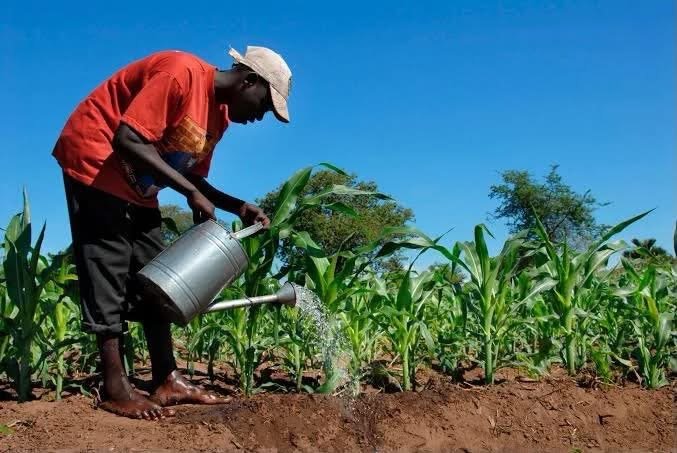
Akwa Ibom State is positioning agriculture beyond food production, with the state government increasingly presenting the sector as a pathway to employment, rural development and wealth creation.
The Commissioner for Agriculture and Rural Development, Dr Offiong Offor, has said the state is repositioning agriculture to strengthen food security while creating opportunities for employment and income generation.
The position comes as the administration of Governor Umo Eno continues to promote agricultural interventions ranging from farmer grants and equipment support to improved seedlings, model farms and tree-crop development.
But what does it actually mean to describe agriculture as a tool for jobs and wealth creation?
The answer goes beyond putting more people on farms.
For agriculture to become a significant economic engine, farmers need access to land, inputs, machinery, finance, technical knowledge and reliable markets. Processing, transportation, storage, packaging and distribution also create economic opportunities beyond primary farming.
That broader agricultural value chain is increasingly becoming part of the conversation around Akwa Ibom’s economic development.
From Food Production to Agricultural Business
Agriculture is often discussed primarily in terms of food production. However, a modern agricultural economy can generate income at several stages.
A farmer growing cassava, for example, is only one part of the value chain. Other businesses may be involved in supplying inputs, transporting the harvest, processing cassava into different products, packaging the finished goods and taking them to consumers.
The same principle applies to oil palm, vegetables, livestock, fisheries and other agricultural activities.
This is why the state government’s current approach includes not only production but also equipment, investment and value-chain development.
In June 2026, the Raw Materials Research and Development Council said value-chain development was an important pathway to wealth creation and food security in the Niger Delta. The council made the point during the Niger Delta Food Security Summit in Uyo, where stakeholders discussed agricultural productivity, youth participation, agro-processing and sustainable farming.
For Akwa Ibom, the implication is that the economic value of agriculture could extend from the farm to processing centres, markets and businesses serving farmers.
Why Jobs Are Central to the Strategy
Agriculture has the potential to create both direct and indirect employment.
Direct jobs include farmers, farm workers, livestock producers and fish farmers. Indirect opportunities can emerge in agricultural equipment services, input distribution, transportation, processing, storage, marketing, financial services and agricultural technology.
This is particularly relevant to young people.
The state government’s recent emphasis on agriculture has included efforts to make farming more commercially attractive rather than presenting it only as subsistence activity.
In his September 2026 anniversary broadcast, Governor Umo Eno said the state was supporting farmers through agricultural grants, equipment support, farm inputs and model farms. He also said 1,700 farmers had received grants and that the government had approved the acquisition of hundreds of thousands of oil-palm seedlings as part of its tree-crop programme.
The government’s broader youth strategy has also included entrepreneurship and skills-development programmes. The governor said more than 4,000 youths had received training through IBOM-LED and related programmes, while more than ₦2 billion in grants had been disbursed for youth empowerment initiatives.
These figures cover broader government programmes rather than agriculture alone, but they show how the administration is linking skills, entrepreneurship and economic participation.
The Oil Palm Strategy
One of the clearest examples of Akwa Ibom’s agricultural strategy is its renewed emphasis on tree crops, particularly oil palm.
In May 2026, the state launched a programme involving 620,000 oil-palm seedlings for distribution to farmers. The initiative was presented as part of the state’s agricultural revolution and its effort to improve food security, rural prosperity and economic empowerment.
Oil palm is particularly significant because its economic value extends beyond the production of fresh fruit.
The crop can support activities involving palm oil, kernels, processing, transportation, trading and other related businesses.
That means a successful tree-crop programme could create opportunities for people who are not themselves primary producers.
The state’s partnership with the Nigerian Institute for Oil Palm Research also points to the importance of improved planting materials and technical support in achieving higher productivity.
Government Support and the Cost of Farming
One of the major challenges facing farmers is the cost of production.
Machinery, labour, improved seedlings, fertiliser, transportation and other inputs can make commercial farming expensive, particularly for small-scale producers.
The Akwa Ibom government has therefore introduced interventions aimed at reducing some of these barriers.
A recent report by Independent Newspaper quoted Commissioner Offor as saying the state had supported agriculture through mechanisation, farmer grants, improved seedlings, rural roads and extension services.
The report also said the state’s Equipment Leasing Company provides tractors and other farm implements to farmers at a 50 per cent subsidy.
Such interventions matter because access to machinery can affect how much land a farmer can cultivate and how quickly agricultural operations can be completed.
However, government support alone does not automatically make farming profitable.
Farmers still need functioning markets and predictable demand.
The Importance of Markets
Producing more food is only one part of agricultural development.
If farmers cannot sell their produce at sustainable prices, increased production may not translate into higher household incomes.
This makes market access an important part of the wealth-creation argument.
Akwa Ibom’s recent agribusiness discussions have increasingly focused on value chains and market opportunities.
A September 2026 report by BusinessDay on the state’s forthcoming agribusiness conference said organisers expected discussions around agro-allied value chains, market opportunities, processing hubs and access to international trade corridors.
This illustrates the difference between subsistence farming and an agricultural business model.
Under the latter, the farmer is not viewed simply as someone producing food but as a participant in a larger commercial system.
Infrastructure Can Determine Whether Agriculture Pays
Roads, electricity, storage facilities and processing infrastructure can significantly influence agricultural profitability.
A farmer may produce a large harvest, but poor roads can increase transportation costs. Without adequate storage, perishable products may deteriorate before reaching buyers. Without electricity or suitable processing equipment, farmers may be forced to sell raw products rather than capture additional value through processing.
Akwa Ibom’s government has therefore linked agricultural development with broader rural infrastructure and investment.
The state’s September 2026 anniversary broadcast said its development strategy included opening up rural communities while moving from agriculture towards agro-industrialisation.
That distinction is important.
Agricultural development is largely about increasing productive capacity.
Agro-industrialisation goes further by connecting production to processing, manufacturing, logistics and markets.
What Agriculture Could Mean for Young People
For young people, the agricultural opportunity does not necessarily mean becoming traditional farmers.
The sector increasingly requires people with skills in areas such as agricultural technology, machinery operation, farm management, logistics, marketing, food processing, accounting, digital commerce and agribusiness management.
A young person could therefore participate in agriculture without personally owning a large farm.
For example, agricultural businesses require people to manage equipment, transport produce, develop markets, operate processing facilities and connect farmers with buyers.
This is one reason the conversation about agriculture is increasingly shifting from farming alone to the broader agricultural economy.
The Food Security Connection
The employment argument is closely connected to food security.
When local agricultural production increases, states can potentially reduce their dependence on supplies coming from outside the state or region.
Higher production can also strengthen local food markets, although food prices are influenced by many factors beyond production, including transportation, input costs, weather, storage and national economic conditions.
Akwa Ibom’s agricultural policies have consequently combined food production with commercial agriculture.
The state’s Ministry of Agriculture has previously promoted improved crop varieties and agricultural inputs as part of efforts to increase productivity and food sufficiency.
What Still Needs to Happen
The success of Akwa Ibom’s agricultural ambitions will ultimately depend on implementation.
Providing seedlings or farm equipment is an important starting point, but farmers need sustained technical support, access to finance, markets and infrastructure.
Tree crops such as oil palm also require patience because they do not produce commercial returns immediately.
There is therefore a difference between announcing an agricultural programme and demonstrating its long-term economic impact.
The key measures to watch include how many farmers remain active, whether yields improve, whether agricultural businesses expand, whether processing capacity increases, how many sustainable jobs are created and whether participating households experience higher incomes.
Those indicators will provide a clearer picture of whether agriculture is becoming a durable economic engine for the state.
Why It Matters
Akwa Ibom’s agricultural strategy matters because agriculture sits at the intersection of several major economic issues: food security, employment, rural development and household income.
If production is connected successfully to processing and markets, the economic benefits can extend beyond farmers to traders, transport operators, processors, equipment providers and other businesses.
For young people, the expansion of agribusiness could also provide alternatives to dependence on limited formal-sector employment.
But the transformation will require more than government intervention.
Private investment, farmer participation, technical expertise, reliable markets and infrastructure will also be necessary to build an agricultural economy that can operate sustainably.
The state’s current programmes therefore represent an ongoing process rather than a completed transformation.
What Readers Should Know Next
The important developments to watch include the implementation of the state’s tree-crop programme, expansion of agricultural mechanisation, farmer-support schemes, agro-processing investments and efforts to connect producers with larger markets.
The central question is whether these initiatives can move agriculture from primarily a source of food production to a stronger commercial sector capable of generating sustained jobs and income.
For Akwa Ibom, that would mean turning agricultural potential into measurable economic activity — from the farm, through processing and distribution, to the final market.
Weng Global – Stories beyond borders
Sources
- Akwa Ibom State Government — information on planned agricultural investment partnerships involving green agriculture, fertilizer production and related projects.
- Akwa Ibom State Government — Governor Umo Eno’s September 2026 anniversary broadcast on agriculture, farmer grants, oil-palm seedlings and economic development.
- Independent Newspaper Nigeria — report on Commissioner Offiong Offor’s briefing on agricultural investment, mechanisation and farmer support.
- Raw Materials Research and Development Council — report on agricultural value-chain development and wealth creation in the Niger Delta.
- BusinessDay — report on Akwa Ibom’s agribusiness conference and value-chain opportunities.