Reported by Simon Daniel Yusuph l Journalist at Weng Global
Nigeria’s Federal Government is developing a military-backed security framework to protect agricultural investments, restore farmlands abandoned because of insecurity and attract domestic and foreign capital into large-scale food production.
The initiative, announced in Abuja on Tuesday, October 27, 2026, involves the Ministry of Finance Incorporated (MOFI), its agricultural investment vehicle, Integrainium Holdings Limited, and the Defence Agricultural Assets and Projects Development Company Limited (DAPCO), with support from Defence Holdings Company Limited.
The partnership is designed to address one of the major obstacles facing Nigerian agriculture: the difficulty of sustaining farming operations and protecting investments in areas affected by insecurity.
Under the proposed arrangement, the defence establishment will support security planning and agricultural project development, while financial and investment partners work to mobilise capital and identify commercially viable opportunities across the agricultural value chain.
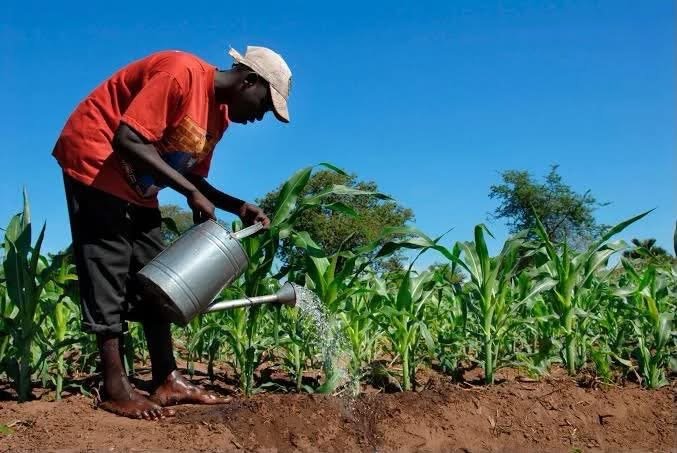
The agreement is also intended to encourage farmers to return to productive land, increase domestic food production and strengthen confidence among investors considering large-scale agricultural projects in Nigeria.
However, the announcement represents the beginning of a partnership framework rather than evidence that all proposed projects have commenced. Individual investments will still require appropriate assessments, approvals and project-specific arrangements before implementation.
FG Targets Agricultural Investment Through Security Partnership
The agreement brings together public-sector investment institutions and defence-related companies to address the relationship between insecurity, agricultural productivity and investment.
According to reporting by The Punch, MOFI’s Chief Investment Officer, Dr Femi Ogunseinde, explained that insecurity had discouraged investment and contributed to the abandonment of productive farmland.
The partnership is intended to provide investors with greater confidence that agricultural projects can operate under appropriate security arrangements, regardless of their location within Nigeria.
Ogunseinde said the initiative would draw on the capabilities of Defence Holdings Company Limited and DAPCO to establish security arrangements for agricultural investments.
He also highlighted the extent of Nigeria’s agricultural potential, noting that the country has an estimated 30 million to 35 million hectares of potentially farmable land.
Despite this potential, the ability to cultivate and utilise agricultural land remains affected by security challenges, infrastructure limitations, financing constraints and other barriers to commercial farming.
The government-backed initiative seeks to connect agricultural opportunities with financing, technology, risk management and security support.
MOFI is expected to play a central role in mobilising domestic and international investment, while Integrainium Holdings Limited will coordinate investment and commercial activities.
DAPCO, meanwhile, is expected to contribute to project development, operational support, site protection and security arrangements.
Defence Holdings Company Limited will support the broader partnership through its role within the defence-related investment structure.
The effectiveness of the arrangement will ultimately depend on how these responsibilities are translated into practical operations and whether the participating institutions can provide the support required by farmers and investors.
Yobe Soybean and Jigawa Sugarcane Projects Identified
Among the agricultural opportunities identified by the government are large-scale soybean production in Yobe State and sugarcane cultivation in Jigawa State.
Ogunseinde described the opportunities as potentially worth billions of dollars, although the announcement did not establish that corresponding investment funds had been committed or disbursed.
The distinction is important because identifying an investment opportunity does not necessarily mean that a project has secured financing, completed feasibility studies or received the approvals required to begin operations.
The proposed projects nevertheless indicate the government’s interest in expanding commercial agriculture in states with opportunities for large-scale crop production.
Soybean cultivation can support food processing, animal feed production and other industrial uses. Increased domestic production could help strengthen local supply chains, provided farmers and processors have access to reliable inputs, infrastructure, markets and financing.
Sugarcane production can also support domestic sugar processing and related agricultural businesses. Its commercial viability, however, depends on factors such as suitable land, water availability, processing capacity, transport infrastructure and dependable access to markets.
Security will be a significant consideration for both projects, particularly where agricultural operations involve large areas of land, expensive equipment, seasonal labour and long-term investment commitments.
The government has indicated that at least one identified project could move towards implementation before the end of 2026.
That target remains an intended milestone rather than confirmation that construction, cultivation or commercial production has started.
Further details about financing arrangements, project locations, implementation schedules and the number of farmers expected to participate will be important in assessing progress.
Proposed Projects Extend Beyond Soybean and Sugarcane
The partnership is not limited to the proposed soybean and sugarcane projects.
According to The Punch, a statement on the agreement identified six initial agricultural opportunities involving fertiliser distribution, farm rehabilitation, agro-processing, greenhouse restoration, integrated farming and agricultural risk management.
One of the proposals involves nano-fertiliser distribution, while another concerns the rehabilitation of BARC Farms in Jos.
The proposed restoration of greenhouse facilities across four locations in Plateau State is also among the opportunities identified.
Greenhouse farming can support controlled crop production and improve the management of growing conditions. However, the benefits depend on functioning facilities, suitable technology, reliable water and electricity supplies, trained workers and access to buyers.
The rehabilitation project would therefore need to address both the physical condition of the facilities and their long-term commercial sustainability.
Another proposed investment is an integrated crop, livestock and aquaculture project covering 1,000 hectares in Namtari, Adamawa State.
Integrated farming combines different agricultural activities within a coordinated production system. When properly planned, such systems can improve resource utilisation, diversify income and create opportunities for processing and distribution.
However, a project of this scale requires careful planning, adequate financing, environmental assessment, access to water, appropriate infrastructure and reliable security arrangements.
The proposed portfolio also includes an agro-processing and supply-chain security project at Giri, as well as an agricultural risk management system intended to support the monitoring of farming activities and security threats.
These projects remain subject to further assessment and implementation decisions.
Their eventual contribution to agricultural production will depend on whether they move beyond the planning stage and establish viable operating systems.
Technology to Support Agricultural Risk Management
Technology is another component of the proposed framework.
The planned agricultural risk management system is expected to use remote sensing, artificial intelligence and data analytics to monitor agricultural operations and identify potential risks.
Remote sensing can help monitor land use, crop conditions and changes in the agricultural environment. Data analytics can also assist project managers in identifying patterns that may affect production, logistics or operational security.
Artificial intelligence may support the analysis of large amounts of information, helping operators identify emerging problems and make more informed decisions.
For agricultural investors, these tools could provide better visibility into farm operations, particularly where projects cover extensive areas or involve several locations.
Technology may also help identify disruptions to supply chains and improve the monitoring of project performance.
However, digital systems cannot independently resolve the security challenges confronting farming communities. Their effectiveness will depend on the quality of available data, reliable infrastructure, skilled personnel and the ability of relevant institutions to respond to identified risks.
The government and its partners will also need to establish appropriate safeguards for information collected through the proposed system.
The practical value of the technology will therefore depend on how it is integrated with on-the-ground security arrangements, agricultural management and community engagement.
MOFI Says Partnership Will Support Food Security and Investment
The Managing Director and Chief Executive Officer of MOFI, Dr Armstrong Takang, said the partnership was intended to increase domestic food production, strengthen food security and help address food inflation.
According to his remarks reported by The Punch, the government expects increased agricultural output to contribute to improved food availability and reduced pressure on food prices.
Takang also explained that the next stage would involve converting identified agricultural opportunities into commercially viable projects capable of attracting public and private investment.
The proposed expansion of agricultural production could create additional demand for locally manufactured fertilisers and support businesses involved in food processing, storage, transportation and exports.
Such outcomes would depend on the scale of investment secured, the number of projects implemented and their ability to produce commercially viable results.
Increased production alone does not automatically translate into lower retail food prices. Transport costs, storage capacity, processing expenses, market access, distribution networks and other economic conditions also influence what consumers pay.
Nevertheless, improving agricultural output and strengthening supply chains could contribute to reducing some of the pressures affecting food availability and affordability.
For Nigeria, the challenge is to ensure that investments generate measurable improvements in production and that the resulting benefits reach farmers, businesses and consumers.
Defence Establishment Expected to Support Rural Agricultural Operations
The Chairman and Chief Executive Officer of DAPCO, Aliyu Abdulhameed, said the defence establishment would help create the security conditions needed to attract investment into rural communities.
He explained that the partnership would seek to connect financing with agricultural opportunities in a more secure operating environment.
The arrangement also envisages the participation of serving military personnel, veterans and surrounding communities in agricultural activities.
This approach could create opportunities for employment and economic participation while supporting the development of agricultural businesses in participating locations.
For veterans and local residents, opportunities may arise in farming, logistics, maintenance, processing and other activities associated with commercial agricultural operations. The actual roles and employment numbers, however, have not been established in the publicly reported announcement.
Abdulhameed also indicated that individual projects would undergo due diligence, investment appraisal and value-for-money assessments before implementation.
These checks are important because agricultural investments can involve substantial financial commitments, land-use considerations and operational risks.
Feasibility studies and commercial assessments can help determine whether a proposed project has sufficient market demand, suitable infrastructure and a realistic path to financial sustainability.
Security assessments are equally important in determining the measures required to protect workers, equipment, farmland and investment capital.
The partnership’s success will therefore depend not only on the availability of security support but also on the quality of project selection, financial oversight and implementation.
Why Farmland Insecurity Matters to Nigeria’s Economy
Agricultural insecurity has implications beyond the immediate safety of farmers and rural communities.
When farmers cannot safely access their land, cultivation may decline, harvests may be disrupted and local food supply chains may weaken.
Disruptions can affect farm workers, produce traders, transport operators, processors and other businesses that depend on agricultural production.
Where production falls short of demand, food prices may come under additional pressure, particularly when supply chains are already affected by high transport costs, inadequate storage and other operational constraints.
Insecurity can also discourage investors from committing capital to projects that require several seasons to become commercially productive.
Large-scale agriculture frequently involves spending on land preparation, seeds, fertilisers, machinery, irrigation, storage and processing before revenue is generated. Investors need reasonable confidence that these investments can operate without persistent disruption.
A credible security framework could help reduce some of these concerns and encourage financing for projects that might otherwise struggle to attract capital.
However, the broader economic benefits will depend on whether the arrangements improve conditions for farmers and agricultural businesses beyond a limited number of investment sites.
Smallholder farmers, who play an important role in Nigeria’s food production, also need access to secure farmland, agricultural inputs, extension services, financing, storage and markets.
A framework that focuses primarily on large commercial investments may increase production in selected areas, but its wider contribution to national food security will depend on how effectively it complements existing farming communities and local agricultural systems.
Food Security Requires More Than Military Protection
The proposed partnership addresses security as a barrier to agricultural investment, but long-term improvements in food production require a broader set of interventions.
In an October 16, 2026, statement marking World Food Day, the Federal Ministry of Information and National Orientation reported that the Federal Government was pursuing measures involving irrigation, climate-smart agriculture, agricultural financing, storage and stronger farming support systems.
The government’s stated approach also includes the use of agro-rangers to protect farmland in affected areas and improved collaboration between security agencies and farming communities.
These measures reflect the importance of combining security interventions with agricultural development.
Farmers need to be able to reach their land safely, obtain inputs when required, harvest crops and transport produce to markets.
They also need reliable roads, access to water, suitable storage facilities and buyers willing to purchase their produce at commercially viable prices.
For larger agricultural investments, the availability of processing facilities and dependable supply chains can be just as important as physical security.
Coordination between federal institutions, state governments, local authorities, farmers’ organisations and private investors will therefore be essential.
Local communities should also have meaningful opportunities to participate in decisions affecting their land and livelihoods.
Clear arrangements for land access, employment, environmental protection and the resolution of disputes can help reduce tensions and support the sustainability of agricultural projects.
The military-backed framework could form part of this wider effort, but it should not be viewed as a complete solution to Nigeria’s agricultural challenges.
Accountability Will Be Important as Projects Advance
The proposed partnership raises questions that will become increasingly important as implementation progresses.
These include the amount of capital ultimately committed, the cost of security arrangements, the number of agricultural projects approved and the timelines established for bringing them into operation.
Investors and the public will also need clear information about the responsibilities of participating institutions and the mechanisms for monitoring expenditure and project performance.
Although the partnership is intended to attract private capital, its success should be assessed through measurable outcomes rather than the number of agreements signed or opportunities announced.
Relevant indicators could include the amount of investment secured, hectares of farmland returned to production, the number of farmers benefiting, jobs created, changes in agricultural output and the operational status of proposed processing facilities.
Information about the performance of participating projects would also help establish whether the framework can be replicated in other locations.
Transparent reporting would allow policymakers and investors to identify what is working, address implementation challenges and determine whether the initiative is delivering value for money.
The government will also need to ensure that security support is proportionate to project requirements and coordinated with the wider responsibilities of relevant security agencies.
Maintaining public confidence will require effective oversight, clear communication and respect for the rights and interests of affected communities.
What Happens Next?
The next stage is expected to focus on assessing the identified opportunities, determining their commercial viability and developing individual projects for implementation.
According to The Punch, the master memorandum of understanding establishes an initial 10-year cooperation framework and provides for a joint steering committee to coordinate implementation.
The proposed projects will require further work, including feasibility studies, security assessments, environmental and social reviews, regulatory approvals and separate project-specific agreements.
The partners have indicated an ambition to begin work on at least one identified project before the end of 2026.
Whether that target is achieved will depend on the pace of project preparation, financing decisions, the completion of required assessments and the establishment of appropriate operating arrangements.
Details of the investment values, financing commitments and final implementation schedules will be important in determining the scale of the initiative.
For farmers and rural communities, the central question is whether the framework will translate into safer access to farmland, more reliable agricultural production and sustainable economic opportunities.
For investors, the test will be whether the proposed security arrangements and investment structures provide sufficient confidence to commit capital over the long term.
For consumers, the broader measure of success will be whether improved agricultural production and distribution contribute to more reliable food supplies and greater affordability.
Nigeria has substantial agricultural potential, but unlocking it requires more than identifying available land or announcing investment opportunities.
The Federal Government’s partnership with MOFI, Integrainium Holdings Limited, DAPCO and Defence Holdings Company Limited represents an attempt to address the security barrier to agricultural investment.
Its long-term significance will depend on whether the agreement produces functioning projects, restores productive farmland and delivers tangible benefits to farmers, investors and the wider economy.
Weng Global – stories beyond borders
Sources
- The Punch — reporting on the Federal Government’s proposed military-backed agricultural investment security framework, published October 27–28, 2026.
- Federal Ministry of Information and National Orientation — Federal Government statement on agricultural development and food security, published October 16, 2026.