Reported by Weng Patrick Atokor l Journalist at Weng Global
The Bank of Agriculture (BOA) has partnered with the All-Farmers Association of Nigeria (AFAN) to provide financing for 400,000 farmers participating in the 2026 dry-season farming programme.
The initiative is aimed at supporting farmers with access to agricultural finance, inputs and irrigation equipment as part of efforts to sustain food production beyond Nigeria’s main rainy season.
Under the partnership, AFAN will identify and present eligible farmers from its nationwide network for consideration under BOA’s agricultural financing programme.
The association is expected to provide details including farmers’ locations, commodities, farm sizes and proposed acreage for the dry-season cultivation.
How the BOA-AFAN Programme Will Work
The partnership is being implemented through BOA’s Renewed Hope Smallholder Support and Value-Chain Fund, which is designed to improve access to financing and production support for smallholder farmers.
AFAN will also identify suitable Farmer Aggregation Companies (FACs) with established farmer networks and the capacity to coordinate participating farmers.
The aggregation companies will play a role in organising farmers and facilitating the implementation of the financing and agricultural support.
According to BOA, participating farmers and aggregation companies will be subjected to verification, due diligence and credit assessment before financing is approved.
This means that inclusion in the 400,000-farmer target does not automatically guarantee funding to every farmer, as individual participation will depend on meeting the bank’s requirements.
Irrigation Equipment Included
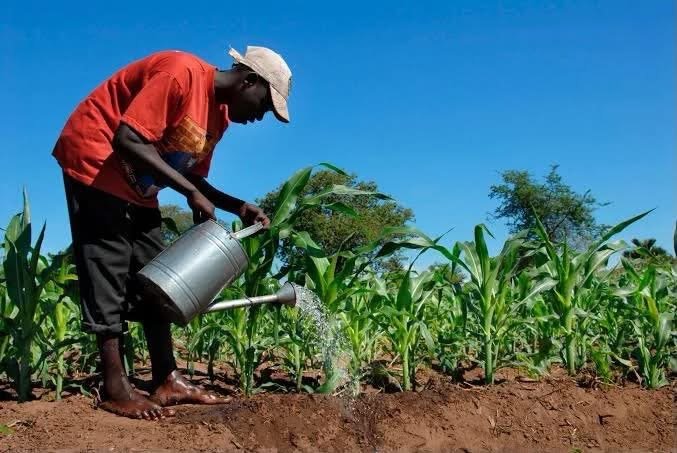
A major component of the programme is the provision of irrigation support for farmers engaged in dry-season cultivation.
Dry-season farming depends heavily on access to reliable water sources because farmers cannot rely on regular rainfall during the period.
BOA said the programme will therefore include irrigation toolkits and other equipment to help farmers maintain agricultural production during the dry season.
The combination of financing, agricultural inputs and irrigation support is intended to help farmers continue cultivation beyond the main rainy season.
BOA Explains the Initiative
BOA Managing Director and Chief Executive Officer, Ayo Sotinrin, said dry-season agriculture provides an opportunity to sustain production beyond the main farming season.
Sotinrin said the bank’s responsibility was to ensure that farmers who were ready and capable of producing could access the financing, inputs and irrigation equipment needed for dry-season operations.
He also highlighted the importance of working with AFAN to reach farmers across the country through an organised structure.
The partnership is expected to strengthen the connection between agricultural finance providers, farmer organisations and farmers operating at different stages of the agricultural value chain.
Why the Programme Matters
Dry-season farming is an important part of Nigeria’s efforts to increase agricultural production throughout the year.
While rain-fed agriculture remains central to food production, irrigation allows farmers to cultivate crops when rainfall is limited or unavailable.
Access to finance is another major consideration, particularly for smallholder farmers who require funding for seeds, fertiliser, labour, irrigation, equipment and other production costs.
By combining financing with irrigation and input support, the BOA-AFAN initiative is designed to address several of these challenges simultaneously.
If effectively implemented, the programme could enable participating farmers to maintain production during the dry season and potentially generate additional income from another agricultural cycle.
Programme Linked to Wider BOA Agricultural Support
The financing arrangement is part of BOA’s broader efforts to expand agricultural support for smallholder farmers.
The bank’s Renewed Hope Smallholder Support and Value-Chain Fund is designed to provide farmers with financing, agricultural inputs, extension services and market-related support.
BOA has said the wider programme is targeting millions of smallholder farmers across Nigeria through partnerships with accredited organisations and agricultural value-chain operators.
The bank has also introduced other initiatives aimed at improving farmer access to markets and supporting agricultural commodity production.
These programmes form part of wider efforts to strengthen Nigeria’s agricultural sector and improve food production.
What Farmers Should Know
Farmers interested in the dry-season financing will need to participate through the structures established under the programme.
AFAN will identify farmers and provide information about their proposed agricultural activities, while suitable Farmer Aggregation Companies will help coordinate participating farmers.
BOA will subsequently conduct the required verification and credit assessment before financing is approved.
Farmers should therefore distinguish between the announced target of 400,000 beneficiaries and actual individual approval for financing.
The final number of farmers who receive financing will depend on the implementation process and the bank’s assessment of eligible participants.
Potential Impact on Food Production
The expansion of dry-season farming could contribute to year-round agricultural production and provide farmers with additional opportunities to cultivate crops outside the main rainy season.
Increased production could also contribute to food supply and agricultural market activity, although the overall impact will depend on implementation, access to irrigation and farmers’ ability to successfully cultivate and market their produce.
For farmers, timely access to finance and irrigation equipment will remain important factors in determining the success of the initiative.
The BOA-AFAN partnership therefore places emphasis not only on providing credit but also on connecting farmers with the resources required to undertake productive dry-season farming.
What Happens Next
AFAN is expected to identify participating farmers and suitable Farmer Aggregation Companies and submit the relevant information to BOA.
The bank will then conduct verification, due diligence and credit assessments before approving eligible participants.
Approved farmers and aggregation companies will subsequently receive the financing and other support provided under the programme.
The initiative represents another effort to expand agricultural financing and encourage year-round farming in Nigeria as the country continues to seek ways to strengthen domestic food production.
Weng Global – Stories beyond borders
Sources
Bank of Agriculture (BOA) — Renewed Hope Smallholder Support and Value-Chain Fund
https://boanig.com/rh-shf/
Punch — BOA, AFAN to finance 400,000 dry-season farmers
https://punchng.com/boa-afan-to-finance-400000-dry-season-farmers/
Tribune Online — BOA, AFAN partner to finance 400,000 farmers for dry-season farming
https://tribuneonlineng.com/boa-afan-partner-to-finance-400000-farmers-for-dry-season-farming/
Bank of Agriculture — BOA/Japtini flag-off Renewed Hope Smallholder Support Programme
https://boanig.com/boa-japtini-flag-off-renewed-hope-smallholder-support-programme-in-adamawa/
Bank of Agriculture — Guaranteed Minimum Price Programme
https://boanig.com/boa-launches-guaranteed-minimum-price-programme/