Reported by Weng Patrick Atokor l Journalist at Weng Global
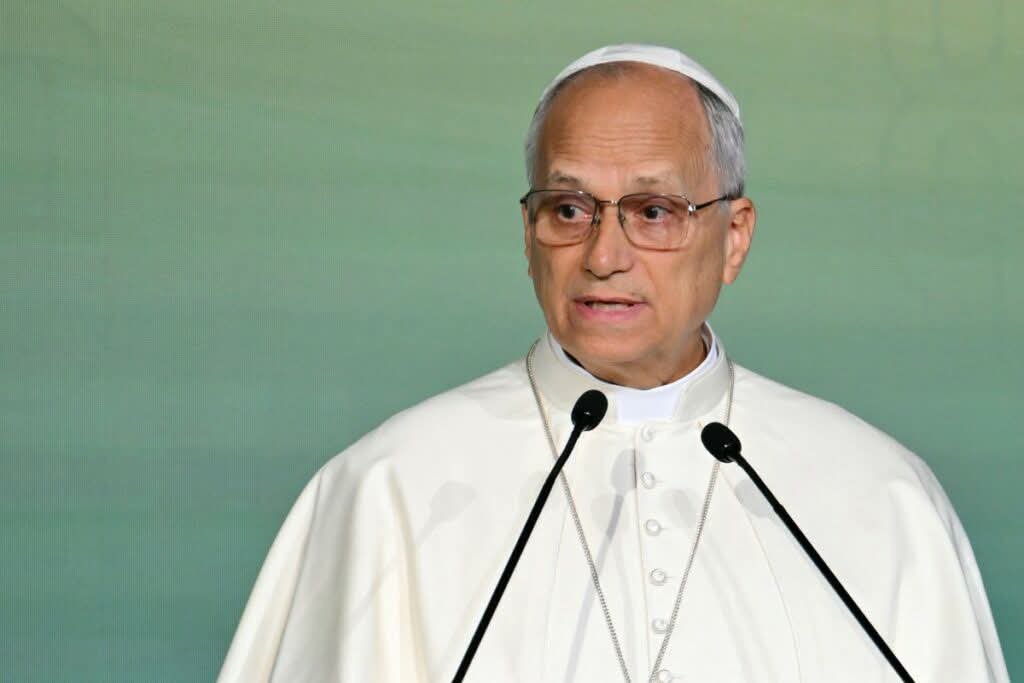
Pope Leo XIV has criticised France’s decision to introduce a legal framework for assisted dying, using his visit to the Catholic pilgrimage site of Lourdes to reinforce the Church’s teaching on the dignity and protection of human life.
The Pope’s intervention comes only weeks after France promulgated a new law creating a legal right to “assistance in dying” under specific medical and legal conditions. The legislation was adopted by Parliament in July, approved by France’s Constitutional Council in August and promulgated by President Emmanuel Macron on August 18, 2026.
The issue has become one of the most significant points of tension between France’s increasingly secular public policy and the Catholic Church’s traditional position on the deliberate ending of human life.
But what exactly has France changed, and why is Pope Leo speaking about it during his Lourdes visit?
What France’s New Assisted-Dying Law Says
France’s new law is formally known as the law relating to the “right to assistance in dying”.
It establishes a legal framework allowing certain adults with serious and incurable illnesses to request assistance to end their lives.
The law does not make assisted dying available to everyone who simply wishes to die. It establishes a number of cumulative conditions that must be satisfied before the procedure can take place.
According to the French government, a person must be at least 18 years old and either be a French national or a stable and lawful resident of France.
The person must also have a serious and incurable illness that is life-threatening and in an advanced or terminal stage.
In addition, the illness must cause suffering that is either resistant to treatment or considered unbearable. Psychological suffering on its own does not qualify under the law.
The individual must also be capable of expressing a free and informed decision.
These conditions are important because the law establishes assisted dying as a regulated medical and legal process rather than an unrestricted right to end one’s life.
How the Procedure Works
The French system includes several procedural safeguards.
A doctor must examine the request through a collegial process, with a maximum period of 15 days for the assessment.
If the person meets the legal requirements, the request must subsequently be confirmed after a reflection period of at least two days.
The individual can then choose a date for the procedure.
Normally, the person administers the lethal substance themselves. Where a person is physically incapable of doing so, a doctor or nurse may administer the substance at the person’s request.
The medical professional must remain present at least to monitor the administration.
The law also allows a person to withdraw their request at any point.
Healthcare professionals are given a conscience clause, meaning they can refuse to participate in the procedure.
The Constitutional Council also established that private institutions may refuse to have assisted-dying procedures carried out on their premises.
The law therefore creates a carefully regulated framework, with eligibility requirements, medical assessment, confirmation of consent and provisions for healthcare workers who object to participation.
Why Pope Leo XIV Is Opposed
Pope Leo XIV’s criticism reflects the Catholic Church’s longstanding teaching that human life possesses inherent dignity and should not be deliberately ended.
During his visit to France, the Pope has repeatedly emphasised the protection of human life.
At the Élysée Palace on September 25, while addressing French political authorities and civil society, Leo expressed concern about social trends involving developments such as genetic manipulation, surrogacy, organ trafficking and what he described as the possibility of arranging one’s own death.
He also stressed that respect for people and the protection of every human life are responsibilities shared by everyone.
His remarks came as he began a four-day visit to France from September 25 to 28.
The issue became even more prominent when the Pope reached Lourdes, one of the world’s best-known Catholic pilgrimage destinations.
Why Lourdes Matters to the Debate
Lourdes has a particular significance for the discussion because the shrine is closely associated with illness, suffering, healing and the care of sick people.
On September 27, Pope Leo celebrated Mass at the Prairie of the Shrine of Our Lady of Lourdes.
In his homily, he spoke extensively about human suffering, illness, old age and the value of life.
He said current trends were seeking to redefine the value of human life in circumstances involving illness, suffering and old age. He presented Lourdes as a place where vulnerable people are welcomed and treated with dignity rather than rejected because of their physical condition.
The Pope’s message therefore connected directly with the central question behind the assisted-dying debate: how should society respond when a person is experiencing severe illness, suffering or approaching the end of life?
For the Catholic Church, the answer cannot involve intentionally ending that person’s life.
Instead, Catholic teaching emphasises accompanying the person, providing care and protecting human dignity until natural death.
What Supporters of the French Law Argue
The debate in France is not simply about religion.
Supporters of the legislation have argued that people facing certain incurable and life-threatening illnesses should have greater autonomy over how they experience the final stage of their lives.
The French parliamentary process considered the issue over several years.
The Senate and National Assembly disagreed repeatedly over aspects of the legislation before the National Assembly ultimately adopted the final text on July 15, 2026.
The Constitutional Council subsequently ruled the legislation constitutional, with reservations, on August 14. President Macron promulgated it four days later.
The law therefore represents the outcome of a lengthy democratic and legislative process rather than a sudden policy change.
Its supporters see regulated assistance at the end of life as a question involving personal autonomy, relief from severe suffering and the ability of individuals facing terminal or advanced incurable illness to make decisions about their final stage of life.
Why the Church Rejects That Approach
The Catholic position starts from a different understanding of human dignity.
For the Church, a person’s value does not disappear because they are seriously ill, disabled, elderly or experiencing intense suffering.
That position was visible throughout Pope Leo’s Lourdes homily.
He pointed to the sick people gathered at the shrine and argued that their vulnerability should not reduce their dignity. Instead, he described suffering people as occupying an important place within the Christian community.
This is why the Pope’s criticism is broader than a disagreement over one French law.
It reflects a fundamental disagreement about whether intentionally causing death can ever be considered an appropriate response to human suffering.
France’s legislation approaches the question primarily through legal safeguards, individual consent and medical eligibility.
The Catholic Church approaches it through moral theology and the belief that human life should be protected even when a person is approaching death.
Assisted Dying and Euthanasia: Are They the Same?
The terminology surrounding end-of-life legislation can be confusing.
“Assisted dying”, “assisted suicide” and “euthanasia” are sometimes used interchangeably in public discussion, but they can describe different procedures depending on the country’s legal framework.
Under France’s new law, the person normally administers the lethal substance themselves.
Where the person is physically unable to do so, a doctor or nurse can administer it.
The French legislation itself uses the expression “assistance in dying” and establishes its own legal definition and procedure.
This distinction matters when reporting the issue because different countries use different terminology and legal definitions.
For readers outside Europe, particularly in Africa, it is therefore important not to assume that every country’s end-of-life legislation operates in exactly the same way.
The Wider European Context
France’s decision also forms part of a wider European debate over end-of-life care.
Several European countries have introduced different forms of legislation concerning assisted dying or euthanasia, while others continue to prohibit practices that intentionally hasten death.
The legal differences reflect significant disagreements among European societies over autonomy, medical ethics, religion, human rights and the role of the state.
France’s law is therefore likely to remain part of a broader international discussion about how modern health systems should respond to terminal illness and severe suffering.
Why This Matters Beyond France
The French debate has implications beyond the country’s borders.
African countries are also confronting questions surrounding palliative care, access to healthcare, ageing populations, chronic illness and the rights of patients at the end of life.
However, the legal and cultural circumstances differ considerably from those in France.
Many African societies have strong religious traditions, while healthcare systems in different countries face major challenges involving access to medicines, specialist treatment, pain management and hospice services.
This makes the question of end-of-life care particularly complex.
Before societies debate whether assisted dying should be legal, another important question is whether patients have adequate access to high-quality palliative care, pain management, psychological support and family support.
The French law itself is accompanied by broader discussions about end-of-life care and support, while the government has stated that the implementation of the assisted-dying framework will depend on further application measures.
What Happens Next in France?
Although the law has been promulgated, its practical implementation still requires application decrees.
The French government’s official explanation states that these decrees will allow the new framework to be put into practice.
That means the next stage will involve translating the legislation into operational procedures for healthcare professionals and institutions.
The government will also have to establish how the safeguards will function in practice, including medical assessments, procedures for requests, professional participation and oversight.
For the Catholic Church, meanwhile, the debate is likely to continue through public advocacy, pastoral work and engagement with French society.
Pope Leo’s meeting with French bishops at Lourdes on September 27 reinforced that message.
During the meeting, he referred to the recent debates over end-of-life issues and encouraged the French bishops to continue defending the values they believe are at stake.
The Bigger Question
At the centre of the controversy is a difficult question with no simple answer: how should a society balance an individual’s autonomy and suffering against its responsibility to protect human life?
France has chosen a legal framework that permits assistance in dying under defined circumstances and safeguards.
The Catholic Church rejects that approach and argues that suffering should be met with care, solidarity and protection rather than intentional death.
Pope Leo XIV’s visit to Lourdes has brought that disagreement into sharp focus.
His message is rooted in Catholic teaching, while France’s new law reflects a decision made through the country’s constitutional and parliamentary institutions.
For readers, understanding the distinction is essential.
The issue is not simply a disagreement between a Pope and a government. It is part of a much wider debate about medicine, morality, individual freedom, human dignity, religion and the responsibilities of modern societies toward people facing serious illness and the end of life.
As France begins implementing its new framework, the practical operation of the law—and its continuing ethical debate—will remain closely watched in France and internationally.
Weng Global – Stories beyond borders
Sources
- French Government, Aide à mourir: ce que dit la loi — official explanation of France’s new assisted-dying legislation.
- Légifrance, Loi n° 2026-794 du 18 août 2026 relative au droit à l’aide à mourir — official text of the law.
- French Senate, legislative dossier on the right to assistance in dying — parliamentary history and final adoption.
- Vatican, Pope Leo XIV’s September 27, 2026 homily at Lourdes.
- Vatican, Pope Leo XIV’s September 27, 2026 address to the French bishops.
- Associated Press, reporting on Pope Leo XIV’s France visit and the country’s changing end-of-life legislation.