Reported Simon Daniel Yusuph l journalist at wengglobal
At least nine people, including a child, have died after a fire swept through a budget hotel in central Kolkata, India, in the early hours of Wednesday, August 19, 2026, trapping guests inside the building as thick smoke rapidly filled the premises.
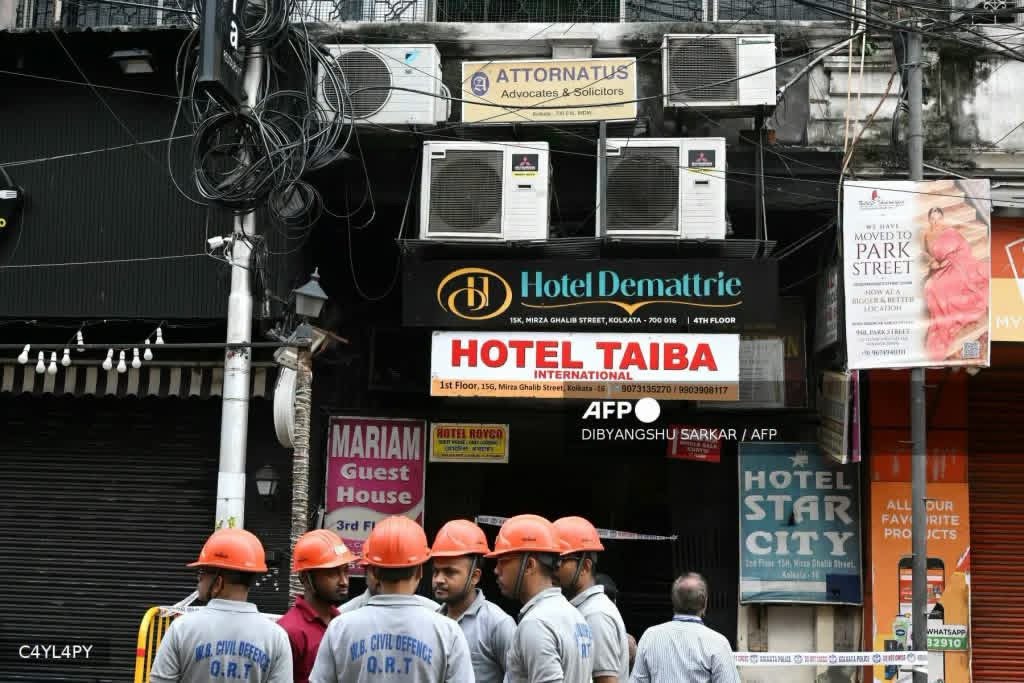
The incident occurred in the Free School Street area of central Kolkata, close to the city’s New Market district. Emergency responders rushed to the scene after the blaze broke out at about 2 a.m., launching rescue operations as smoke severely restricted visibility inside the hotel.
Indian and international media reports said several people were rescued and taken to hospital, while authorities began investigating what caused the fire and whether shortcomings in the building’s fire-safety arrangements contributed to the deaths.
Initial information from fire officials suggested that an air-conditioning unit may have exploded and triggered the blaze. However, the cause had not been conclusively established at the time of reporting, making it important to treat the suspected AC explosion as a preliminary finding rather than a confirmed cause.
The Associated Press reported that the fire began around 1:45 a.m. and that five fire engines, alongside police and disaster-management personnel, were deployed to the scene. Six people were reported injured and taken to hospital. (AP News)
Thick Smoke Hampers Rescue Efforts
The rapid spread of smoke appears to have been a major factor in the tragedy.
Reports from the scene described a building in which guests were confronted with thick smoke as the fire spread through the hotel. Firefighters had to work in difficult conditions to reach people trapped on the upper floors.
The South China Morning Post, citing Reuters, reported that nine people died in the fire and that some of the victims were believed to be Bangladeshi nationals who had travelled to Kolkata for medical treatment. (South China Morning Post)
The Straits Times also reported that nine people — six men, two women and a child — were rescued and taken to hospital. The report said preliminary information pointed to a possible air-conditioner explosion at the budget hotel. (The Straits Times)
The details highlight the particular danger posed by smoke in hotel fires, where sleeping occupants may have little warning before escape routes become difficult or impossible to use.
For people unfamiliar with the building, evacuation can be even more challenging because guests may not know the location of emergency exits or alternative escape routes.
Authorities Investigate Cause of Fire
Fire and police authorities have begun examining the circumstances surrounding the blaze.
While an exploding air-conditioning unit has been cited as a possible trigger, investigators will need to establish whether the equipment malfunctioned, whether electrical wiring played a role or whether other factors contributed to the outbreak and subsequent spread of the fire.
The distinction is significant because identifying the precise cause will help authorities determine whether the incident was the result of an isolated equipment failure or whether wider safety deficiencies were involved.
The Indian Express reported that the hotel was located in a congested part of central Kolkata and that questions had emerged over emergency exits, ventilation and fire-safety arrangements. Its report said the building had narrow stairways and lacked adequate emergency evacuation facilities. (Indian Express – Bangla)
The Times of India similarly reported that preliminary investigations were examining the possible role of a short circuit, while poor ventilation and narrow exits may have worsened the consequences of the fire. (The Times of India)
These reports underline why fire investigations typically examine not only where a fire began but also how quickly it spread, whether warning systems functioned and whether occupants had viable escape routes.
Some Victims Reportedly Bangladeshi Nationals
The tragedy has also attracted attention in neighbouring Bangladesh after reports indicated that some, and according to Bangladeshi media reports all, of the victims may have been Bangladeshi nationals.
The South China Morning Post reported that some victims appeared to be Bangladeshi citizens who had travelled to Kolkata for medical treatment. (South China Morning Post)
Bangladesh-based bdnews24.com, citing Indian media reports, reported that the nine victims had been identified as Bangladeshi nationals and had travelled to Kolkata for medical care. (bdnews24.com)
However, because victim identification and nationality confirmation can evolve during an emergency response, Wengglobal considers the nationality details subject to official confirmation by the relevant Indian and Bangladeshi authorities.
Kolkata is a major medical destination for patients from Bangladesh, with the city’s hospitals and specialist healthcare facilities attracting patients from across the border. The presence of foreign medical visitors in the city therefore adds an international dimension to incidents involving hotels and other accommodation facilities.
Fire Safety Under Scrutiny
The latest incident is expected to renew questions about fire-safety compliance in Kolkata’s densely populated commercial districts.
The city contains numerous older buildings, hotels, guesthouses and commercial establishments operating in congested neighbourhoods where narrow roads and closely packed structures can complicate emergency response.
The Indian Express report raised concerns about the absence of emergency exits and the adequacy of firefighting equipment at the hotel involved in Wednesday’s incident. (Indian Express – Bangla)
Such concerns are significant because the survival rate in a building fire can depend heavily on the availability of functioning alarms, clearly marked exits, fire extinguishers, sprinklers, emergency lighting and unobstructed evacuation routes.
A fire that might otherwise be contained can become far more dangerous when smoke accumulates in enclosed spaces and occupants cannot quickly reach a safe exit.
The Times of India also reported that the building housed multiple hotels and had poor ventilation and narrow exits, conditions that may have contributed to the spread of smoke and made evacuation more difficult. (The Times of India)
Authorities will therefore face pressure to establish whether the hotel met applicable safety requirements and whether inspections had been conducted as required.
A Recurring Challenge in India’s Hospitality Sector
Hotel fires are not unusual in India, particularly in densely populated urban centres where older buildings may have been converted into accommodation facilities.
The issue is not limited to Kolkata. Fire incidents in hotels and other commercial buildings have repeatedly raised questions about electrical systems, emergency exits, building alterations, occupancy limits and enforcement of safety regulations.
Kolkata itself witnessed another major hotel fire in April 2025, when 14 people were killed at the Rituraj Hotel. Investigations into that incident highlighted serious concerns about emergency exits, firefighting equipment and other safety deficiencies. The Indian Express reported that the hotel lacked functioning firefighting systems and that combustible materials and blocked exits had complicated the rescue effort. (The Indian Express)
The 2025 tragedy demonstrates why the latest incident is likely to attract renewed scrutiny from civic authorities, fire officials and the hospitality industry.
However, the circumstances of the two fires are different and should not be conflated. Investigators must establish the specific causes and contributing factors in the latest case before responsibility can be determined.
Emergency Response and Medical Care
Firefighters, police officers and disaster-management personnel were deployed to rescue guests and control the blaze.
The Associated Press reported that five fire engines responded, while injured victims were transported to a nearby hospital. (AP News)
Kuwait Times, citing a senior fire department official, reported that nine additional people were rescued and taken to hospital. (Kuwait Times)
The number of survivors requiring medical attention underscores the physical dangers created by smoke inhalation and burns during enclosed-building fires.
Medical teams are expected to assess injured survivors for smoke inhalation and other fire-related injuries, while authorities work to identify the deceased and notify their families.
For families of foreign nationals, including possible Bangladeshi victims, coordination between Indian authorities and diplomatic officials may also be required as identification and repatriation procedures progress.
Questions Beyond the Immediate Death Toll
While the nine confirmed deaths represent the immediate human cost, the tragedy raises wider questions about how urban accommodation facilities are regulated and monitored.
The central issue for authorities will be whether the hotel had adequate fire-safety measures and whether those measures were functional at the time of the incident.
Investigators are also likely to examine the building’s electrical installations, air-conditioning systems, emergency exits, ventilation, fire alarms and firefighting equipment.
If deficiencies are established, the investigation could lead to enforcement action against responsible individuals or institutions.
For Kolkata’s hospitality sector, the incident provides another reminder that compliance cannot be treated as a paperwork exercise. Fire-safety equipment must be functional, evacuation routes must remain accessible and staff must know how to respond when an emergency occurs.
Guests, meanwhile, often have limited knowledge of the safety arrangements inside hotels, making regulatory oversight particularly important.
Wengglobal Perspective
The Kolkata hotel fire is a tragic reminder that the safety of people staying in commercial accommodation depends on more than the quality or affordability of a room.
Nine lives have been lost, including that of a child, while several other people were injured. The circumstances surrounding the fire remain under investigation, and the suspected air-conditioning explosion should not be regarded as the definitive cause until investigators complete their work.
At the same time, reports raising questions about emergency exits, ventilation and fire-safety arrangements deserve careful examination by authorities.
The appropriate response should extend beyond assigning blame after the tragedy. If investigators identify systemic shortcomings, regulators should ensure that lessons are translated into stronger inspections, effective enforcement and improved emergency preparedness.
Hotels and guesthouses operate in environments where a small equipment failure can become deadly if fire protection and evacuation systems are inadequate.
For Kolkata, the immediate priority remains supporting survivors, identifying the deceased, assisting affected families and determining exactly what happened.
For the wider hospitality industry, the incident should reinforce a basic principle: fire safety is not an optional facility but a fundamental responsibility.
As investigations continue, Wengglobal will continue to monitor developments, including official findings on the cause of the fire, the identities and nationalities of victims, the condition of those injured and any regulatory or legal action arising from the tragedy.
Sources:
- Associated Press (AP) — Reported that at least nine people died and six were injured in the Kolkata hotel fire, with emergency responders deployed and the cause under investigation. (AP News)
- Reuters / South China Morning Post — Reported nine deaths and said a suspected air-conditioner explosion was being investigated, while noting that some victims were believed to be Bangladeshi nationals. (South China Morning Post)
- Reuters / The Straits Times — Reported nine deaths, including a child, and said preliminary information pointed to an air-conditioner explosion. (The Straits Times)
- Indian Express — Reported concerns surrounding emergency exits, ventilation and fire-safety arrangements at the hotel. (Indian Express – Bangla)
- Times of India — Reported that investigators were examining possible short-circuit involvement and safety conditions including narrow exits and poor ventilation. (The Times of India)
- bdnews24.com — Reported claims that the victims were Bangladeshi nationals who had travelled to Kolkata for medical treatment. (bdnews24.com)