Reported by Weng Patrick Atokor | Journalist at Weng Global
Nigeria’s livestock sector is entering a period that could determine whether its enormous economic potential remains largely untapped or becomes a major engine of food security, employment, industrialisation and rural development.
The sector is currently valued at about $32 billion, according to government figures, with the Federal Government targeting growth to between $74 billion and $90 billion by 2035 under its National Livestock Growth Acceleration Strategy (NL-GAS). The strategy also seeks to increase Nigeria’s livestock herd to two or three times its 2025 level.
But turning those ambitions into reality will require more than political speeches and policy announcements. Nigeria will need a fundamental shift in how animals are bred, raised, tracked, treated, processed and brought to market.
At the heart of that transformation is the push towards modern ranching, improved animal genetics, stronger veterinary services, better feed systems, digital technology and private-sector investment.
For decades, livestock production in Nigeria has been heavily associated with open grazing and traditional pastoral systems. While pastoralism remains an important source of livelihood, the country’s growing population and rising demand for meat and dairy products are creating pressure for more productive and organised systems.
The Federal Ministry of Livestock Development has increasingly promoted ranching as one of the approaches capable of improving productivity while creating more predictable production systems.
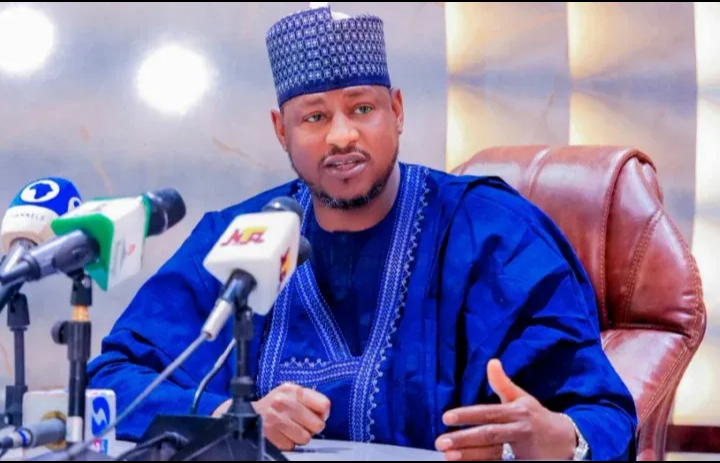
A visit by Livestock Development Minister Idi Mukhtar Maiha to Katsina State in June 2026 provided a practical example of what modern ranching could look like.
The minister inspected a privately owned ranch in Charanchi Local Government Area covering about 150 hectares, with more than 50 hectares devoted to pasture cultivation and an earth dam supporting dry-season irrigation. The ranch was also using improved cattle genetics, including Gudali-Holstein crosses, for dairy production.
It demonstrates that ranching can be adapted to Nigeria’s environmental and economic conditions when supported by land, water, pasture, animal health services, appropriate genetics and investment.
A modern ranch is not simply a fenced piece of land where cattle are kept. It is an integrated production system involving feed, water, breeding, veterinary care, record keeping, disease prevention and access to markets.
Increasing the number of animals alone will not automatically produce a livestock revolution. Nigeria must also improve the quality and productivity of its herds.
The Federal Government has intensified work on animal genetic resources, including the development of harmonised national protocols for the characterisation, inventory and monitoring of livestock genetic resources.
The initiative is intended to strengthen breeding systems, protect valuable genetic resources and provide better information for future livestock policies. The government has also been working towards establishing a national gene bank.
The importance of genetics is straightforward: healthier and better-adapted animals can produce more meat, milk and offspring when combined with proper nutrition and healthcare.
Nigeria therefore has an opportunity to develop a stronger “Bred in Nigeria” identity rather than depending heavily on imported breeding materials.
The country’s National Livestock Growth Acceleration Strategy specifically identifies the development of quality livestock and improved breeding as part of its long-term transformation agenda
The Federal Government has been exploring identification and tracking systems, including Radio Frequency Identification technology, as part of efforts to improve livestock management.
The Ministry of Livestock Development said in April 2026 that Nigeria was considering technology capable of improving the identification and tracking of animals, arguing that poor breeding and maintenance systems have made livestock management more difficult.
Farmers could maintain better records of individual animals. Veterinary authorities could improve disease surveillance. Breeders could track genetic performance. Buyers could have greater confidence in the origin and health status of animals, while authorities could have better data for planning.
A livestock farmer with access to reliable information about animal health, market prices, weather conditions, feed availability and transportation could make better commercial decisions than one operating almost entirely through informal networks.
The Nigeria Livestock Master Plan identifies feed and fodder development, animal breeding and genetics, health and biosecurity, infrastructure and markets, youth and gender inclusion, and policy coordination as key areas requiring intervention.
A farmer may have good land and improved animals, but poor-quality feed can undermine productivity. Similarly, improved feed will have limited impact if animals are affected by preventable diseases or cannot access profitable markets.
Nigeria therefore needs an integrated livestock ecosystem in which pasture producers, feed manufacturers, veterinarians, breeders, ranchers, processors, transporters, financial institutions and retailers all form part of the same value chain.
The Federal Government’s livestock strategy places emphasis on animal health, veterinary services and biosecurity. In Katsina, state authorities reported the rehabilitation and equipping of seven veterinary clinics and intensified vaccination campaigns against transboundary animal diseases.
The Federal Ministry has also stressed the importance of stronger veterinary and genetic services as part of efforts to protect animal health, food safety and market stability.
For Nigeria to expand domestic meat and dairy production, veterinary services must move closer to producers.
That means adequately equipped clinics, laboratories, trained professionals, vaccination programmes and effective disease surveillance systems.
The processing industry must grow with production
Increasing livestock production without developing processing capacity could create another bottleneck.
Nigeria needs modern abattoirs, cold-chain systems, meat-processing facilities, dairy processing plants and efficient transportation networks capable of moving products from farms to consumers.
Recent investments suggest that this is beginning to receive greater attention.
In Edo State, the Federal and state governments moved forward with livestock infrastructure projects, including an ultramodern livestock processing facility under the World Bank-supported Livestock Productivity and Resilience Support Project.
Such infrastructure can help Nigeria move away from a predominantly raw livestock economy towards a value-added industry.
Instead of simply selling live animals, businesses can create additional economic value through processed beef, dairy products, leather, packaged meat and other livestock-derived products.
That transition could create jobs far beyond the farm.
Private investment will be decisive
The scale of Nigeria’s livestock ambitions means government cannot finance or operate the entire transformation alone.
The Federal Government has repeatedly identified the private sector as a critical driver of livestock investment.
In March 2026, the Ministry of Livestock Development said a private-sector-led initiative valued at $50 billion had been proposed to help drive the sector towards the government’s $74 billion growth target. The proposed investment areas included ranching, animal health, agro-processing, cold-chain logistics and digital innovation.
Government’s role should therefore increasingly focus on creating the conditions in which private capital can flourish.
Those conditions include clear land policies, predictable regulations, reliable infrastructure, accessible financing, transparent markets and effective security.
Investors need confidence that capital placed into a ranch, processing facility or feed factory will remain viable over the long term
Livestock products contribute significantly to the country’s supply of animal protein, while millions of Nigerians depend directly or indirectly on livestock for their livelihoods.
Research from the International Food Policy Research Institute notes that livestock supports the livelihoods of about 30 million Nigerians and contributes approximately $32 billion to the economy. The sector also faces major constraints including feed shortages, animal disease, herder-farmer conflict, low genetic potential and inadequate processing and cold-chain infrastructure.
More productive farms could produce more meat and milk. Better processing could reduce waste. Improved logistics could make products available across more markets. Stronger disease control could protect farmers from devastating losses
The National Livestock Growth Acceleration Strategy provides a long-term framework for increasing the value of the sector. The Nigeria Livestock Master Plan also provides a detailed roadmap covering livestock development and investment.
A livestock revolution will ultimately be measured by whether farmers can access improved breeds, affordable feed, veterinary care, financing, land, water, technology and reliable markets.
It will also be measured by whether young Nigerians see livestock not simply as subsistence farming but as an attractive commercial industry.
The opportunity is enormous, but the transformation will require consistency, science, investment and practical implementation.
Modern ranching can improve production systems. Better genetics can raise productivity. Technology can improve tracking and data. Veterinary services can protect animal health. Processing infrastructure can create additional value. Private investment can provide the capital required to scale the industry.
Sources
. Punch newspapers.
. vanguard.
. Daily trust.
. TVC News.