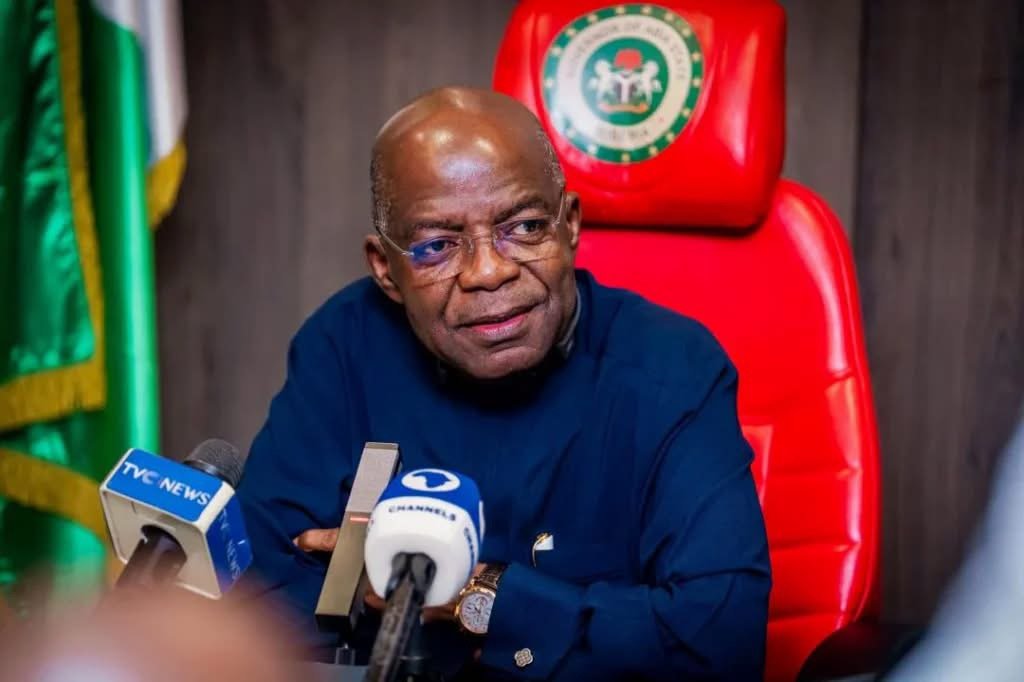
Otti Clarifies Enyimba Economic City Position, Demands Transparency Before Abia Commits to Project
Abia State Governor Alex Otti has clarified his position on the controversial Enyimba Economic City project, saying his reservations are not rooted in opposition to the development itself but in concerns about transparency, accountability, proper documentation and the manner in which the project should be implemented.
Otti’s clarification comes amid renewed public debate over the future of the proposed economic city, a major development initiative conceived to transform parts of Abia State into an integrated industrial, commercial and residential hub.
The project has remained politically and legally contentious since Otti assumed office in 2023, with the governor’s administration questioning aspects of the arrangement inherited from the previous government and subsequently pursuing the Abia Industrial and Innovation Park as an alternative industrial development initiative.
The governor’s latest position seeks to draw a distinction between opposition to economic development and his demand that major public-private projects involving state assets and public interest should be subjected to appropriate scrutiny.
The dispute has attracted significant attention because Enyimba Economic City was originally promoted as a transformational project with the potential to attract billions of dollars in investment, create large-scale employment and establish Abia as a major industrial and logistics centre in the South-East.
However, disagreements over the project’s land, legal structure, financial commitments and implementation have persisted.
Otti: Development Is Not the Problem
The governor’s position, as reported in discussions surrounding the project, is that his administration is not opposed to the idea of developing an economic city in Abia.
Rather, Otti has questioned whether the project, in its previous form, was structured and implemented in a manner that adequately protected the interests of the state and its people.
That distinction is central to understanding the latest controversy.
For Otti’s administration, the issue is not simply whether Abia should have an economic city. The broader question is whether the project should proceed under arrangements that are financially sustainable, legally sound and transparent to citizens.
The governor has repeatedly argued that his administration inherited projects and commitments that required detailed examination before additional public resources could be committed.
The Enyimba Economic City controversy consequently became part of the wider debate over how successive Nigerian governments handle large-scale public-private partnerships.
From Enyimba Economic City to Abia Industrial and Innovation Park
One of the most visible consequences of the dispute was the Otti administration’s decision to develop the Abia Industrial and Innovation Park, commonly known as AIIP, in the state’s Ukwa area.
When the administration announced the industrial park, government officials sought to distinguish it from the earlier Enyimba Economic City project.
In September 2023, Vanguard reported comments by then Abia Commissioner for Information and Culture, Okey Kanu, who said the new industrial park had no connection with Enyimba Economic City.
The commissioner described the two initiatives as fundamentally different, arguing that the earlier project involved the acquisition of a much larger area of land while the new industrial park was being developed on a smaller footprint. (Vanguard News)
The Abia government has also promoted the AIIP as part of its strategy to attract industrial investment, create employment and diversify the state’s economy.
The governor’s administration has maintained that its industrial development agenda is intended to move Abia away from dependence on government spending and towards productive investment, manufacturing, exports and private-sector growth.
Why the Enyimba Project Became Controversial
Enyimba Economic City was initially conceived as an ambitious public-private development project designed to establish an integrated economic zone capable of attracting domestic and international investors.
The initiative was expected to combine industrial facilities, commercial activities, housing, logistics and other supporting infrastructure.
Former Governor Okezie Ikpeazu, who championed the project before leaving office, had described it as one of the most important long-term economic initiatives in the state.
In a 2022 interview reported by The Nation, Ikpeazu said the project had been designed to generate hundreds of thousands of jobs over several decades and create a manufacturing platform capable of serving markets across Africa. He also argued that legal protections were intended to give private investors confidence that the project would survive changes in political leadership. (The Nation Newspaper)
The project was therefore presented as more than a conventional government construction scheme. Its promoters envisaged an economic ecosystem that would combine infrastructure, manufacturing, investment and employment.
That scale explains why questions over its ownership, land arrangements and financing have generated such intense debate.
Arbitration Adds a New Dimension
The dispute took a significant legal turn in 2026 following arbitration proceedings involving the Abia State Government and promoters of the Enyimba Economic City.
In March, The Punch reported that the Abia State Government rejected what it described as a misleading account of an arbitral ruling concerning the project.
According to the report, the state government’s Office of the Attorney-General and Commissioner for Justice said a publication attributed to the project’s promoters had misrepresented the findings and legal effect of a majority award delivered by an arbitral tribunal on February 13, 2026. (Punch Newspapers)
The development illustrates the extent to which the disagreement has moved beyond political statements into legal and commercial territory.
The government has maintained that the arbitration outcome should be interpreted accurately and in its entirety rather than through selective descriptions of the tribunal’s findings.
Meanwhile, material published by BusinessDay and Nairametrics in March presented details of the promoters’ account of their dealings with the state government, including claims concerning financial commitments, land and the proposed development. Those accounts were presented from the perspective of the project promoters and should therefore be distinguished from independently established findings. (Business Day)
For Wengglobal, the competing accounts reinforce the importance of relying on documentary evidence and verified legal findings when reporting the dispute.
Land Remains at the Heart of the Dispute
One of the most sensitive issues surrounding Enyimba Economic City has been land.
The project involves a substantial area of land in Abia, particularly around Ukwa West and neighbouring areas. Questions surrounding the acquisition, use and control of the land have consequently become central to the disagreement between the state government and the project’s promoters.
The Otti administration has argued that previous land arrangements required scrutiny and that government had a responsibility to protect the interests of communities and the state.
A statement published on Otti’s official website in March 2025 said the governor’s administration had recovered more than 10,000 hectares of land previously taken over by the former administration for what the state government described as the Enyimba Economic City project. (Alex Otti)
That assertion remains part of the government’s position and should be considered alongside the promoters’ competing claims regarding the project’s legal status and investment commitments.
The disagreement demonstrates why transparency is crucial when governments enter large-scale land-based development partnerships.
Economic Stakes for Abia
Despite the controversy, few stakeholders dispute the economic potential of large-scale industrial development in Abia.
The state is home to Aba, one of Nigeria’s most important commercial and manufacturing centres, with established clusters in leather goods, garments, machinery, fabrication and other small-scale industries.
A properly executed economic city could potentially connect these existing industrial capabilities to larger markets, provide modern infrastructure and attract additional investment.
In March 2026, THISDAY reported comments from former Nigerian Sovereign Investment Authority Managing Director Uche Orji describing Abia as strategically positioned for investment, particularly as African supply chains deepen under the African Continental Free Trade Area.
Orji specifically referenced the proposed Enyimba Economic City and improving infrastructure as factors that could strengthen Abia’s position as an investment destination. (ThisDayLive)
That assessment underscores the wider economic argument: regardless of the political disagreement surrounding the project’s previous structure, the underlying demand for industrial infrastructure in Abia remains substantial.
Transparency as the Central Question
Otti’s latest clarification therefore shifts attention from whether the governor supports the concept of an economic city to how such a project should be structured and executed.
For a project involving substantial land, public institutions, private investors and potentially billions of dollars in investment, transparency is critical.
Key questions include who owns what, who finances the infrastructure, what obligations belong to the state, what commitments have been made to private investors, how landowners are compensated and what mechanisms exist to protect the public interest.
These questions are particularly important in Nigeria, where ambitious development projects have frequently faced delays, funding problems, changes in political leadership and disputes over contractual obligations.
A sustainable economic city would require more than political announcements. It would need credible financing, enforceable agreements, environmental and planning approvals, infrastructure and long-term investor confidence.
Beyond Political Differences
The Enyimba Economic City controversy has also become entangled with the political transition between the Ikpeazu and Otti administrations.
Such transitions can create challenges when an incoming government inherits major projects initiated by its predecessor.
While continuity is often necessary to protect public investment, a new administration also has a responsibility to scrutinise inherited contracts and financial commitments.
The challenge is finding a balance between accountability and continuity.
Cancelling or restructuring a project without adequate justification can undermine investor confidence, while blindly continuing an arrangement that contains serious financial or legal weaknesses can expose the public to unnecessary risks.
Otti’s argument, therefore, places emphasis on scrutiny before commitment.
For Abia residents, however, the ultimate measure will be whether the state’s industrial ambitions translate into tangible jobs, investment, infrastructure and economic opportunities.
What the Dispute Means for Abia’s Future
The renewed debate over Enyimba Economic City presents an important test for Abia’s broader economic strategy.
Whether the original project survives in its previous form, is substantially redesigned or is replaced by another development model, the economic objectives remain significant.
Abia needs investment that can support manufacturing, improve logistics, expand exports and create opportunities for its growing population.
The state also needs development projects that are transparent enough to command public confidence and commercially credible enough to attract serious investors.
Otti’s declaration that he is not against the Enyimba Economic City concept, while insisting on transparency and proper execution, could therefore provide room for a broader conversation about the project’s future.
But resolving the dispute will require more than political statements.
It will require clarity on the arbitration proceedings, land ownership, contractual obligations, financing arrangements, regulatory approvals and the respective responsibilities of government and private investors.
For Wengglobal, the central issue is not which political administration receives credit for the project. The more important question is whether Abia can secure an industrial development framework that is legally sound, financially responsible, transparent and capable of delivering measurable economic benefits to its citizens.
As the legal and political discussions continue, stakeholders will be watching closely to determine whether the competing interests can find common ground.
If that happens, the Enyimba Economic City concept could yet contribute to Abia’s long-term industrial ambitions. If disagreements remain unresolved, however, the project risks becoming another example of how political transitions, legal disputes and questions over accountability can delay major development initiatives.
The responsibility now lies with all parties to provide verifiable information, respect due process and place the long-term economic interests of Abia above political competition.
Sources
- The Punch — Report on the Abia Government’s response to claims concerning the 2026 arbitration over Enyimba Economic City. (Punch Newspapers)
- BusinessDay — Report detailing the Enyimba Economic City promoters’ account of their dispute with the Abia Government. (Business Day)
- Nairametrics — Report on the arbitration dispute and financial/accountability issues surrounding the project. (Nairametrics)
- Vanguard — Report on the Abia Industrial and Innovation Park and the Otti administration’s position distinguishing it from Enyimba Economic City. (Vanguard News)
- The Nation — Interview coverage of former Governor Okezie Ikpeazu’s vision and expectations for Enyimba Economic City. (The Nation Newspaper)
- THISDAY — Report on Abia’s investment prospects and references to Enyimba Economic City. (ThisDayLive)
- Official Alex Otti website — Statement outlining the Abia Government’s position on land associated with the project. (Alex Otti)