Reported by Simon yusuph,| Journalist at wengglobal
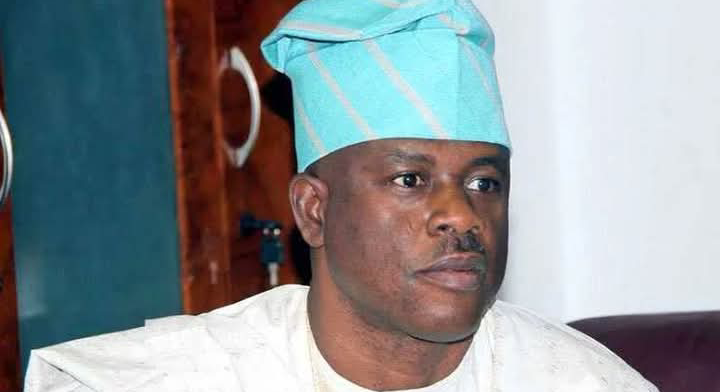
Former Nigerian Minister of State for Defence and one-time Lagos governorship aspirant, Musiliu Obanikoro, has reiterated his long-held belief that he emerged victorious in the 2007 Lagos State governorship election, despite the official declaration of another candidate as the winner.
Speaking during a recent interview, Obanikoro maintained that while he remains convinced he secured the mandate of Lagos voters in the keenly contested election, he has accepted that his political journey toward becoming governor of Nigeria’s commercial capital has come to an end.
His remarks have reignited discussions about one of Lagos State’s most closely scrutinized gubernatorial elections, while also providing fresh insight into his current political outlook and his reflections on Nigeria’s democratic evolution.
Obanikoro Reaffirms Claim Over 2007 Election
Obanikoro, who contested the 2007 Lagos governorship election under the Peoples Democratic Party (PDP), stated that he still believes he won the election based on the support he received from voters across the state.
Although the Independent National Electoral Commission (INEC) declared Babatunde Raji Fashola of the then Action Congress (AC) as the winner, Obanikoro insisted that his conviction regarding the outcome has never changed.
However, the veteran politician emphasized that he no longer harbours any ambition to govern Lagos State, noting that the chapter has effectively closed in his political career.
According to him, while political contests often leave lasting memories, there comes a time when leaders must accept reality and focus on contributing to national development in other capacities.
A Defining Moment in Lagos Politics
The 2007 Lagos governorship election remains one of the landmark contests in the state’s democratic history.
Held at a critical period in Nigeria’s Fourth Republic, the election attracted national attention as it pitched the ruling PDP at the federal level against the opposition Action Congress, which had firmly established itself in Lagos under the political leadership of former Governor Bola Ahmed Tinubu.
Babatunde Fashola eventually assumed office and served two terms as governor between 2007 and 2015, earning recognition for infrastructure renewal, judicial reforms, transportation initiatives, and improvements in public administration.
Obanikoro’s renewed comments revisit debates that have lingered for nearly two decades, although the legal and constitutional processes surrounding the election have long been concluded.
Political Ambition Now Behind Him
Despite reaffirming his position on the election, Obanikoro made it clear that he is no longer interested in contesting for the governorship of Lagos State.
His statement reflects a notable shift from previous years, when he remained active in frontline politics and held several strategic public offices.
Over the course of his career, Obanikoro served as a senator representing Lagos Central, Nigeria’s High Commissioner to Ghana, Minister of State for Defence, and Minister of State for Foreign Affairs.
His declaration suggests that he now views his governorship aspiration as part of his political history rather than an unfinished mission.
Political observers note that such reflections are not uncommon among veteran politicians who seek to document their perspectives on significant moments in Nigeria’s democratic journey.
Legacy Beyond Electoral Contests
Analysts say Obanikoro’s comments underscore the enduring impact of electoral contests on Nigeria’s political landscape.
While election outcomes are determined through constitutional institutions, candidates often retain personal interpretations of events, particularly where they believe the official results did not reflect the will of the electorate.
Such positions, however, do not alter legally recognised outcomes once electoral disputes have been resolved through the judicial process.
For many political historians, the significance of the 2007 Lagos election extends beyond the competing claims. The election marked another consolidation of opposition politics in Lagos, strengthening the state’s reputation as a stronghold of progressive political movements that later evolved into the All Progressives Congress (APC).
Lagos Politics Continues to Shape National Leadership
Lagos remains Nigeria’s economic nerve centre and one of Africa’s largest metropolitan economies. Consequently, elections in the state often attract national and international attention because of their broader political implications.
Many political figures who have governed or occupied influential offices in Lagos have gone on to play major roles in national governance.
The state’s political history has therefore become a subject of continued analysis among scholars, journalists, and policy experts seeking to understand Nigeria’s democratic development.
Obanikoro’s latest remarks contribute another perspective to that evolving narrative, even as they revisit events that have largely become part of Nigeria’s political history.
Democratic Institutions and Electoral Lessons
Nigeria’s democratic experience has continued to evolve since 2007, with successive electoral reforms aimed at improving transparency, credibility, and public confidence.
Recent elections have witnessed increased deployment of technology, expanded voter education campaigns, and renewed calls for stronger electoral accountability.
Experts argue that reflections from experienced political actors such as Obanikoro can provide historical context for discussions on electoral reforms, even when their views remain matters of personal conviction rather than legally established fact.
Ultimately, Nigeria’s democratic institutions rely on constitutional processes, judicial review, and the authority of the electoral commission in determining official election outcomes.
Looking Ahead
Although Musiliu Obanikoro maintains that he believes he won the 2007 Lagos governorship election, his declaration that his governorship ambition is over signals a desire to close a significant chapter in his political career.
His comments offer insight into how political figures often reconcile personal convictions with the realities of democratic institutions and the passage of time.
As Nigeria continues to strengthen its democratic framework, historical reflections from key participants remain valuable in understanding both the achievements and challenges of the country’s electoral journey.
For Lagos, the 2007 governorship election remains a defining moment in its political history—one that continues to generate discussion years after the ballots were counted, while reminding Nigerians of the importance of credible elections, institutional integrity, and peaceful democratic transitions.
Sources
- Channels Television
- Punch Newspapers
- TheCable
- Premium Times
- Vanguard Nigeria
- Daily Trust