Peter Obi Denies Urging Nigerian Soldiers to Reject Tinubu’s Pay Rise, Says Military Welfare Must Be Protected!
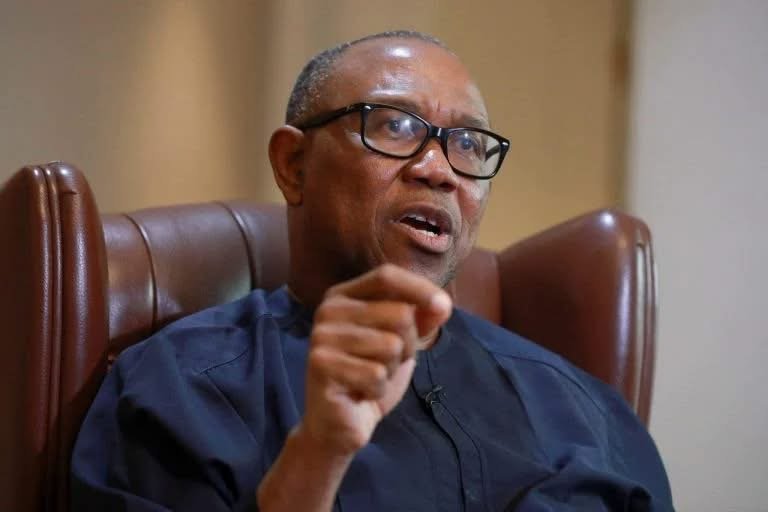
ABUJA, Nigeria — Former Anambra State governor and 2023 Labour Party presidential candidate Peter Obi has rejected claims that he urged Nigerian soldiers to reject salary increases approved or proposed by President Bola Ahmed Tinubu’s administration, saying his position has consistently been centred on improving the welfare of Nigeria’s security personnel and other public servants.
The clarification comes amid renewed public discussion over the remuneration of members of the Nigerian Armed Forces, following the Federal Government’s announcement that additional salary improvements are being considered for military personnel.
Obi’s position has also become the subject of renewed political debate because of his previous criticism of proposed salary increases for political officeholders. In August 2025, Obi criticised a proposal by the Revenue Mobilisation Allocation and Fiscal Commission (RMAFC) to substantially increase the salaries of political leaders, arguing that the government should prioritise the welfare of ordinary Nigerians and public servants facing difficult economic conditions. (Punch Newspapers)
However, that position was directed at political officeholders, not soldiers.
Recent reports have separately highlighted efforts by the Tinubu administration to improve military remuneration. Defence Minister Christopher Musa said in July 2026 that President Tinubu was expected to announce another salary increase for Armed Forces personnel, describing the measure as part of broader efforts to improve troop welfare and recognise the sacrifices of military personnel. (The Nation)
The distinction is important as public debate over military pay becomes increasingly intertwined with political arguments about government spending, security and the welfare of Nigerians.
Obi draws distinction between political salaries and military welfare
Obi’s earlier criticism of salary increases for political officeholders did not amount to opposition to better remuneration for security personnel.
In August 2025, the former governor expressed concern that the proposed increase for political leaders was coming at a time when Nigerians were dealing with significant economic pressures.
In a statement published by PUNCH, Obi described the proposed increase of more than 100 per cent for political officeholders as unjustifiable under the prevailing economic circumstances. He argued that political office should be treated as public service rather than an avenue for accumulating wealth. (Punch Newspapers)
Crucially, Obi’s statement also raised the welfare of security personnel.
He said it was disturbing that the welfare of political officeholders could receive attention while security personnel, particularly police officers, remained underpaid and overworked.
That position provides context for his current rejection of claims that he wants soldiers to turn down improved pay.
Rather than opposing salary increases for members of the Armed Forces, his publicly reported position has been that the welfare of those serving the country should receive greater attention.
Military pay becomes a fresh national issue
The controversy comes at a time when the welfare of Nigeria’s Armed Forces has again moved to the centre of national discussion.
On July 28, 2026, Defence Minister Christopher Musa said another salary increase for military personnel was expected to be announced by President Tinubu.
According to The Nation, Musa said soldiers’ monthly remuneration had previously increased from N49,000 to N100,000 during the period when he served as Chief of Defence Staff. He said the government was working towards another increase because of the sacrifices made by military personnel. (The Nation)
The announcement followed a financial empowerment programme for widows and wives of service personnel at Lungi Barracks in Abuja.
Musa’s comments indicate that the government considers improved remuneration an important component of military welfare.
The Defence Minister’s remarks also place salary within a wider framework that includes the welfare of military families, recruitment, equipment and efforts to improve operational effectiveness.
For soldiers deployed in conflict-affected parts of the country, remuneration is only one aspect of the broader conditions under which they operate.
Security personnel face demanding operational conditions
Nigeria’s military continues to play a central role in confronting terrorism, banditry, insurgency and other security threats.
Troops are deployed across different parts of the country, including areas affected by Boko Haram and Islamic State West Africa Province activity, banditry and other forms of armed violence.
The operational demands placed on personnel have consequently intensified discussions about their welfare.
The Federal Government has repeatedly linked improved military welfare with efforts to maintain morale and strengthen national security.
President Tinubu’s June 2026 Democracy Day address also placed national security at the centre of his administration’s priorities. The President cited substantial defence and security spending in the 2026 budget and said the government was strengthening military and police capacity. (Western Post)
Against that backdrop, debates over military salaries carry consequences beyond individual incomes.
A well-remunerated military can potentially contribute to morale, retention and professionalism, although salary alone cannot resolve the operational, institutional and structural challenges confronting the security sector.
Why the distinction matters
The controversy surrounding Obi’s statement illustrates how comments about public-sector remuneration can become distorted when different categories of government employees are discussed together.
Political officeholders and members of the Armed Forces occupy fundamentally different positions within Nigeria’s public administration.
Political salaries are determined within the framework governing public officeholders and judicial officers, while military personnel operate under separate service conditions and remuneration arrangements.
Obi’s 2025 intervention was specifically focused on the proposed remuneration review for political leaders.
TheCable reported at the time that RMAFC was considering a review that would affect the President, Vice-President, governors and other senior officials. Obi described the proposal as provocative and insensitive given the economic circumstances facing Nigerians. (TheCable)
THISDAY also reported that the Presidency clarified in June 2023, during an earlier salary controversy, that President Tinubu had not approved a reported 114 per cent increase for political officeholders. The newspaper reported that the Presidency said the proposal had not been presented to the President for consideration at that stage. (Thisdaylive)
The history demonstrates why precision is particularly important when discussing salary reviews in Nigeria.
A proposed increase is not necessarily an approved increase, and criticism of political salaries should not automatically be interpreted as opposition to improved remuneration for security personnel.
Obi’s broader argument on public-sector welfare
Obi has consistently framed public-sector remuneration within a wider argument about government priorities.
During the 2023 controversy over the proposed 114 per cent increase in remuneration for political officeholders, Channels Television reported that Obi urged political leaders to focus on reducing the cost of governance and addressing the economic difficulties confronting citizens. (Channel Television)
The International Centre for Investigative Reporting also reported that Obi criticised the proposed increase and argued that government should prioritise areas such as education, healthcare and poverty reduction. (ICIR News)
That position has subsequently been repeated in different forms.
In 2025, Obi again criticised the proposed increase for political leaders and specifically drew attention to the condition of security personnel.
His argument, as reported by Tribune, was that the government should prioritise the welfare of public workers, including security personnel, rather than placing political remuneration ahead of broader public welfare. (Tribune Online)
The latest clarification is therefore consistent with the broader distinction he has previously made between the welfare of public servants and remuneration for political officeholders.
Government says more military pay is coming
The Federal Government’s latest position appears to move in the direction of higher military remuneration.
Musa said the government was making further efforts to improve the financial conditions of Armed Forces personnel and expressed confidence that President Tinubu would soon announce another salary increase.
The minister’s comments suggest that the administration sees improved compensation as part of its responsibility to recognise the risks and sacrifices associated with military service.
The announcement has also generated public discussion about the adequacy of current military salaries.
While the government has pointed to increases already implemented, some commentators and military personnel have argued that rising living costs continue to put pressure on household incomes.
That debate is not unique to the Armed Forces.
Across Nigeria’s public sector, wage increases have been examined against inflation, food prices, housing costs and the declining purchasing power of incomes.
The question for policymakers is therefore not simply whether salaries should increase, but whether remuneration remains adequate to sustain workers and attract and retain competent personnel.
Military welfare extends beyond salary
Experts and stakeholders have long argued that improving military welfare requires more than salary adjustments.
Service personnel require appropriate housing, healthcare, insurance, pensions, equipment, operational allowances and adequate support for their families.
For troops serving in dangerous environments, the quality and availability of equipment can be as important as financial compensation.
Families of fallen soldiers also require sustained institutional support.
The Defence Ministry’s recent empowerment programme for widows and wives of service personnel illustrates the government’s attempt to address some of those wider welfare concerns. (The Nation)
A comprehensive military welfare strategy would therefore need to address the conditions under which personnel serve, the risks they face and the support available to their dependants.
Political controversy should not obscure security needs
As Nigeria approaches another election cycle, security is likely to remain one of the most important issues in national politics.
Political parties and candidates will debate the government’s security record, defence spending and the welfare of security personnel.
The opposition will also scrutinise government decisions on salaries and public expenditure.
Within that environment, statements about military welfare can easily become politicised.
For WengGlobal, the central responsibility is therefore to distinguish political claims from verified government policy and established facts.
If President Tinubu approves another salary increase for Armed Forces personnel, the policy should be evaluated on its financial sustainability, adequacy and impact on military morale.
Similarly, criticisms of political remuneration should be evaluated according to their actual targets rather than being extended to unrelated categories of public servants.
The bigger question: how should Nigeria reward those who serve?
The controversy ultimately raises a broader question about how Nigeria values public service.
Soldiers and other security personnel undertake some of the country’s most dangerous duties. Their work involves risks that most citizens will never encounter.
Ensuring adequate compensation is therefore not merely a political favour; it is part of maintaining a professional security institution.
At the same time, Nigeria faces significant fiscal constraints and competing demands for public resources.
Government must balance personnel costs against spending on equipment, infrastructure, healthcare, education, poverty reduction and economic development.
That makes transparency particularly important.
Citizens deserve to know what salary increases will cost, how they will be funded and whether they are sufficient to address the conditions facing service personnel.
Military personnel, in turn, deserve clear information about changes to their remuneration and service conditions.
A clarification amid a wider debate
Peter Obi’s denial should therefore be understood in the context of the broader debate over government spending and public-sector welfare.
Available reporting shows that his previous criticism was directed at proposed salary increases for political officeholders. His statements also explicitly raised concerns about the welfare of security personnel.
Meanwhile, the Federal Government has announced that another increase in military remuneration is being considered, with Defence Minister Christopher Musa saying President Tinubu is expected to make the announcement.
The two positions are not necessarily contradictory.
One concerns the remuneration of political leaders; the other concerns the welfare of personnel responsible for national security.
As Nigeria continues to confront terrorism, banditry and other security threats, the welfare of its Armed Forces will remain an important national policy issue.
For WengGlobal, the essential question is not whether military personnel should receive improved pay — there is a broad public and policy case for properly compensating those who risk their lives in national service.
The more important questions are whether the increases are adequate, sustainable, transparently implemented and accompanied by improvements in equipment, housing, healthcare, pensions and family support.
Likewise, political debates over public officials’ remuneration should be based on accurate distinctions and verifiable facts.
Obi’s clarification is a reminder of that need for precision.
His criticism of political salary increases should not automatically be recast as opposition to military welfare, just as government plans to improve soldiers’ pay should not be confused with remuneration arrangements for political officeholders.
At a time when public trust remains central to Nigeria’s political and security discourse, accurate reporting of those distinctions is essential.
Sources and Further Reading
- PUNCH Nigeria — Reporting on Peter Obi’s criticism of proposed salary increases for political officeholders in August 2025. (Punch Newspapers)
- TheCable — Reporting on Obi’s criticism of the proposed salary review for political officeholders. (TheCable)
- Tribune Online — Reporting on Obi’s call to prioritise Nigerians’ welfare and his concerns about security personnel. (Tribune Online)
- Channels Television — Reporting on Obi’s earlier opposition to the proposed 114 per cent salary increase for political officeholders. (Channel Television)
- The ICIR — Background reporting on Obi’s 2023 criticism of the proposed political-office salary increase. (ICIR News)
- THISDAY — Reporting on the Presidency’s clarification regarding the proposed salary increase for political officeholders in 2023. (Thisdaylive)
- The Nation — Reporting on Defence Minister Christopher Musa’s July 2026 statement that another military salary increase is expected. (The Nation)
- Vanguard — Reporting on the Defence Minister’s announcement of an expected fresh salary increase for Armed Forces personnel. (Vanguard News)