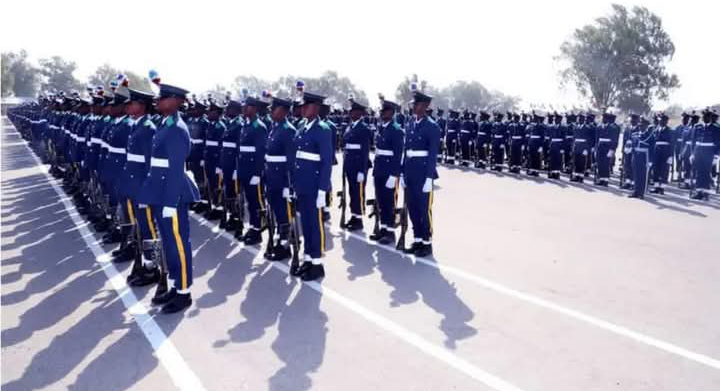
Jigawa Police Intensify Intelligence-Led Security Drive as 2027 Elections Approach, Target Political Thugs and Drug Networks!
DUTSE, Jigawa State, Nigeria — The Jigawa State Police Command is stepping up intelligence-led and community-oriented security operations as political activities begin to intensify ahead of Nigeria’s 2027 general elections, with political thuggery, illicit drug networks and other criminal activities identified among the threats requiring sustained attention.
The renewed security posture comes as political parties and aspirants gradually position themselves for the next electoral cycle, increasing the importance of preventive policing, intelligence gathering and collaboration between security agencies and communities across the state.
The command has repeatedly emphasised proactive policing rather than waiting for criminal incidents to occur before responding. Recent engagements involving senior police authorities and Jigawa stakeholders have focused on strengthening intelligence gathering, improving community participation and reinforcing security arrangements across the state as political activities gather momentum.
Deputy Commissioner of Police Tijjani Murtala, who has represented the Jigawa Commissioner of Police at official engagements, has reaffirmed the command’s commitment to implementing the Nigeria Police Force’s policing strategy, with emphasis on intelligence-driven and community-oriented operations. Recent reporting by PUNCH said the command was engaging stakeholders to strengthen security and curb cross-border crimes as the 2027 elections draw closer. (Punch Newspapers)
The development places Jigawa among states where law enforcement authorities are seeking to get ahead of possible electoral violence rather than waiting until campaigns, rallies and party contests reach their peak.
Police focus on prevention as political activity increases
Election-related insecurity in Nigeria has historically involved several interconnected factors, including political thuggery, mobilisation of violent groups, illicit drugs, weapons proliferation, hate speech, vote buying and disputes among political actors.
Jigawa is not immune to those risks.
Previous election-security assessments have identified hard drugs, vote buying and thuggery among potential threats associated with the state’s electoral environment, while political parties, armed groups and party thugs have been identified as potential actors capable of contributing to electoral insecurity. (ResearchGate)
The police command’s emphasis on intelligence gathering is therefore significant.
Intelligence-led policing enables security agencies to identify potential threats, criminal networks and emerging areas of tension before they develop into major security incidents. It also allows law enforcement agencies to deploy personnel and other resources more strategically rather than relying exclusively on conventional patrols.
For Jigawa, the approach is particularly relevant because of the state’s geographical position and its links with neighbouring states and border communities.
Recent police engagements have included discussions with local government leaders and community representatives, reflecting the growing recognition that security agencies cannot effectively combat crime without information and cooperation from residents.
During a recent operational visit to Jigawa, Deputy Inspector-General of Police Sulaiman Mohammed Abdul met police officers and community leaders as part of efforts to strengthen security across the state.
According to PUNCH, the visit was aimed at strengthening intelligence gathering, deepening community policing and reinforcing proactive security measures as the 2027 elections approach and political activities intensify. (Punch Newspapers)
Political thuggery remains a recurring election concern
Political violence remains one of the most persistent challenges associated with Nigerian elections.
In previous electoral cycles, political thugs have been accused of disrupting rallies, attacking opponents, intimidating voters, destroying campaign materials and attempting to influence electoral processes through violence.
Jigawa has experienced such incidents in the past.
During the 2018 party primaries, the Jigawa State Police Command arrested 49 suspected political thugs across several local government areas, including Birnin Kudu, Hadejia, Babura, Sule Tankarkar, Taura, Jahun and Gagarawa.
The suspects were reportedly arrested in connection with allegations including ballot-box snatching, thuggery and impersonation, with assorted weapons recovered during the operations. The police warned politicians and their supporters against activities capable of disrupting the electoral process. (The News)
More recently, political violence also featured during the 2023 election cycle.
In January 2023, one person was killed during a clash involving rival groups at an All Progressives Congress campaign rally in Kazaure Local Government Area. Channels Television reported that the incident occurred during a political rally and that police were pursuing a suspected killer who reportedly fled towards neighbouring Kano State. (Channel Television)
Such incidents provide context for the current emphasis on early intelligence gathering.
The objective is not merely to respond to violence after it occurs but to identify individuals, groups or circumstances that could potentially trigger conflict before they escalate.
Drug trafficking presents another security challenge
The police focus on criminal networks also intersects with Nigeria’s wider battle against illicit drugs.
Drug trafficking and abuse can compound other security challenges, particularly where criminal networks exploit vulnerable young people or use proceeds from illegal activities to finance violence and other crimes.
Jigawa has previously featured in major drug-enforcement operations.
In 2023, the National Drug Law Enforcement Agency reported the arrest of a suspect in Jigawa with 120 kilogrammes of cannabis at Sara in Gwaram Local Government Area. The arrest formed part of a wider nationwide operation involving significant seizures of illicit substances. (ICIR News)
The state’s location also makes cooperation among security agencies important in tackling the movement of illicit commodities across state and national boundaries.
Recent operations by security agencies across northern Nigeria have demonstrated the importance of intelligence sharing, surveillance and coordinated enforcement in disrupting criminal networks.
For the Jigawa Police Command, the challenge is therefore broader than simply arresting individual offenders. Intelligence-led policing requires security agencies to understand the networks behind criminal activities, identify their sources of financing and disrupt their ability to recruit, operate and move across jurisdictions.
Cross-border crime adds to security concerns
Jigawa shares an international boundary with Niger Republic, making border security a significant component of the state’s wider security architecture.
Recent police engagements have specifically highlighted cross-border crime as an area requiring increased attention.
PUNCH reported in June 2026 that the Jigawa Police Command was engaging stakeholders in an effort to curb cross-border crimes. The report said the initiative formed part of broader measures to strengthen public safety and deepen community policing. (Punch Newspapers)
The involvement of community leaders is particularly important in border and rural areas, where residents may have information about suspicious movements long before such information reaches formal security structures.
ALGON Chairman in Jigawa and Dutse Local Government Chairman Sibu Abdullahi reportedly pledged support for the police initiative and emphasised grassroots participation in security efforts. (Punch Newspapers)
This reflects a broader shift towards community-oriented policing, in which residents are expected to become partners in preventing crime rather than passive recipients of police protection.
Police-community cooperation will be critical
The effectiveness of an intelligence-led security strategy ultimately depends on the quality of information available to law enforcement agencies.
Residents must feel confident that they can report suspicious activities without exposing themselves to retaliation. At the same time, police authorities must demonstrate professionalism, confidentiality and accountability in handling information supplied by members of the public.
The police have also repeatedly urged communities not to resort to mob justice.
That message is important because public anger over crime can sometimes result in suspects being attacked or killed before they are investigated and prosecuted through the justice system.
Recent Jigawa police operations have illustrated the value of cooperation between law enforcement and local security groups.
A 2025 report on police operations in the state said officers, working with community-based security actors, dismantled several criminal networks and recovered stolen property and suspected illicit drugs. DCP Murtala Tijjani was quoted as reaffirming the command’s commitment to intelligence-led strategies and urging residents to report suspicious activities rather than taking the law into their own hands. (DDM News)
Security preparations must remain politically neutral
As the 2027 elections approach, one of the most important tests for the security agencies will be maintaining neutrality.
The police are expected to enforce the law against political violence regardless of the political identity or influence of those involved.
That means political parties and their supporters must be held to the same legal standards when allegations of violence, intimidation, possession of weapons or other electoral offences arise.
The history of Nigerian elections shows that political violence can become particularly difficult to contain when security agencies are perceived as partisan or selective.
For that reason, intelligence-led policing must be accompanied by transparency, professionalism and respect for the rights of suspects and citizens.
Arrests based on intelligence should lead to proper investigations, credible evidence and prosecution where appropriate. Allegations must not automatically be treated as proof of guilt.
This distinction will be important as political activities intensify in Jigawa.
Jigawa’s political environment begins to take shape
The security preparations are unfolding alongside an increasingly active political environment.
Jigawa has already begun to see early positioning ahead of the 2027 governorship election. The People’s Democratic Party, for instance, affirmed Mustafa Sule-Lamido as its governorship candidate in May 2026 after a primary election in Dutse. Election-monitoring reports have also identified the incumbent, Umar Namadi of the All Progressives Congress, and Bashir Muhammad Hadeja of the African Democratic Congress among the political figures associated with the emerging 2027 contest. (situationroomng.org)
As more candidates and political groups mobilise supporters, the security implications are likely to increase.
Campaign rallies, political meetings, youth mobilisation and intra-party contests can all create opportunities for confrontation if political actors fail to control their supporters.
The responsibility for preventing violence, however, does not rest with the police alone.
Political parties, candidates, community leaders, religious institutions, civil-society organisations and voters all have roles to play in maintaining a peaceful political environment.
Intelligence cannot replace community trust
The success of intelligence-led policing depends not only on technology and surveillance but also on trust.
Residents are more likely to provide useful information when they believe security agencies will act professionally and protect their identities.
That makes sustained police-community engagement essential.
Jigawa’s recent stakeholder meetings suggest that the command is attempting to build that relationship before the political environment becomes more intense.
The approach is consistent with the wider policing principle that prevention is more effective than reaction when dealing with election-related violence.
If properly implemented, early intelligence could help authorities identify emerging disputes, monitor known criminal networks, disrupt the movement of weapons and drugs, and prevent political gatherings from becoming flashpoints.
A test for Nigeria’s 2027 electoral security
Jigawa’s preparations provide an early indication of the security challenges that may confront Nigeria ahead of the 2027 general elections.
The country’s electoral cycle is already becoming politically active, and security agencies are under pressure to ensure that political competition does not translate into violence.
For Jigawa, the police command’s stated emphasis on intelligence-led operations, community engagement and proactive security offers an opportunity to prevent criminal and political threats before they become widespread.
But the success of the strategy will depend on implementation.
Authorities must ensure that intelligence operations are evidence-based, politically neutral and consistent with the law. Communities must cooperate with security agencies, while political parties must take responsibility for the conduct of their supporters.
The warning to political thugs, drug dealers and other criminal elements should therefore be understood within a broader security framework: the state intends to prevent criminal networks from exploiting the heightened political activity that accompanies an election season.
As the 2027 polls draw closer, the central objective for Jigawa should remain the protection of lives, property and the democratic rights of citizens.
For WengGlobal, the message is clear: credible elections require more than ballot papers and polling stations. They require an environment in which voters can participate without intimidation, candidates can campaign without violence and security institutions can enforce the law without fear or favour.
Jigawa’s early investment in intelligence-led and community-based policing could prove important in achieving that objective — provided the strategy remains professional, accountable and firmly focused on protecting citizens rather than serving political interests.
Sources and Further Reading
- PUNCH Nigeria — Police engage Jigawa stakeholders to curb cross-border crimes, June 26, 2026. (Punch Newspapers)
- Channels Television — One Killed As Thugs Clash At Jigawa APC Rally, January 25, 2023. (Channel Television)
- The Guardian Nigeria — Reporting on NDLEA drug seizures involving Jigawa State. (The Guardian Nigeria)
- The ICIR — Reporting on NDLEA’s nationwide drug-enforcement operations and the 120kg cannabis seizure in Jigawa. (ICIR News)
- The News Nigeria — Party primaries: Police arrest 49 suspected thugs in Jigawa, October 6, 2018. (The News)
- P.M. News — Reporting on the arrest of suspected political thugs during Jigawa party primaries. (PM News Nigeria)
- Jigawa State Government — Official record of Tijjani Murtala’s role in the state’s security task force. (Jigawa State Government)
- Daily Trust — Reporting on Tijjani Murtala’s chairmanship of a Jigawa security-related task force. (Daily Trust)