Methane Emissions: Journalists, Experts Demand Tougher Scrutiny as Niger Delta Communities Bear Environmental Cost!
ABUJA, Nigeria — Journalists, environmental experts and civil society organisations are calling for sustained investigations, stronger regulatory scrutiny and greater corporate accountability over methane emissions and gas flaring in Nigeria’s oil and gas industry, warning that weak enforcement could continue to leave communities in the Niger Delta exposed to environmental, health and economic harm.
The renewed calls emerged from a growing campaign to place the human consequences of methane emissions at the centre of Nigeria’s energy and climate debate. Stakeholders say public attention must move beyond emission targets and corporate disclosures to persistent monitoring, independent investigations and demonstrable enforcement against operators that fail to comply with applicable regulations.
The issue has assumed greater urgency as Nigeria seeks to expand gas production while simultaneously maintaining commitments to reduce methane emissions and eliminate routine gas flaring.
Recent stakeholder discussions have centred on the documentary Flaring Lives, produced by Policy Alert and We The People with support from the Natural Resource Governance Institute (NRGI), which examines the effects of gas flaring and methane emissions on oil-producing communities in the Niger Delta.
At a June 2026 webinar titled “Leveraging Media Storytelling to Strengthen Accountability and Enforcement on Methane Emissions,” stakeholders urged journalists and media organisations to investigate emissions data, examine regulatory performance and ensure that the experiences of affected communities remain part of the national conversation. PUNCH reported that the event was organised as part of an advocacy campaign surrounding the documentary and focused on the environmental, health and socio-economic consequences of decades of gas flaring and methane emissions. (Punch Newspapers)
From climate statistics to human consequences
Methane is often discussed primarily as a climate-change issue, but experts and community representatives increasingly want the conversation expanded to include its local consequences.
The gas is a powerful greenhouse pollutant, with a much greater warming effect than carbon dioxide over a 20-year period. The International Energy Agency and other international institutions have repeatedly identified reductions in methane emissions from fossil-fuel operations as among the fastest opportunities for slowing near-term warming.
In Nigeria, however, methane emissions are closely intertwined with the country’s long-running gas-flaring problem.
The Niger Delta remains at the centre of that challenge. Oil-producing communities across the region have for decades reported concerns over air pollution, damaged farmland, declining fisheries and other consequences associated with oil and gas operations.
At a January 2026 stakeholders’ dialogue and documentary screening in Abuja, experts raised concerns about the health implications of methane emissions and gas flaring for communities in the oil-producing region. TheCable reported that residents had described respiratory illnesses, degraded farmland and declining fish stocks in areas affected by prolonged pollution. (TheCable)
Those concerns underline why stakeholders argue that methane should not be treated exclusively as an abstract emissions figure.
Behind every reported leak, vent or flare are people living close to oil and gas infrastructure who may experience the consequences of pollution through their air, water, farms and livelihoods.
Accountability is becoming the central issue
Nigeria already has regulations and guidelines intended to reduce methane emissions and control gas flaring.
The Nigerian Upstream Petroleum Regulatory Commission (NUPRC) issued its Guidelines for Management of Fugitive Methane and Greenhouse Gases Emissions in the Upstream Oil and Gas Operations in Nigeria in 2022. The guidelines establish requirements intended to prevent and control greenhouse-gas emissions from upstream operations.
The International Energy Agency records the Nigerian guidelines as being in force and notes that they include targets associated with eliminating routine gas flaring by 2030 and reducing fugitive methane emissions from oil and gas operations by 60 per cent by 2031. (IEA)
The existence of regulations, however, does not necessarily guarantee compliance.
That implementation gap is precisely what civil society organisations and experts are seeking to address.
NRGI Country Manager Tengi George-Ikoli said Nigeria had made progress through methane regulations and disclosure requirements but argued that such progress must translate into measurable reductions. TheCable reported that she called for stronger enforcement and concrete action from operators. (TheCable)
Vanguard similarly reported that stakeholders were calling for stronger enforcement, credible methane measurement standards, mandatory emissions-reduction plans and improved monitoring, reporting and verification across the oil and gas value chain. (Vanguard News)
The message from the stakeholders is therefore increasingly clear: disclosure alone is not enough.
Companies need to demonstrate what they are doing to prevent leaks, reduce flaring, capture associated gas and comply with regulatory requirements.
Measurement remains a major challenge
One of the most important elements of effective methane regulation is reliable measurement.
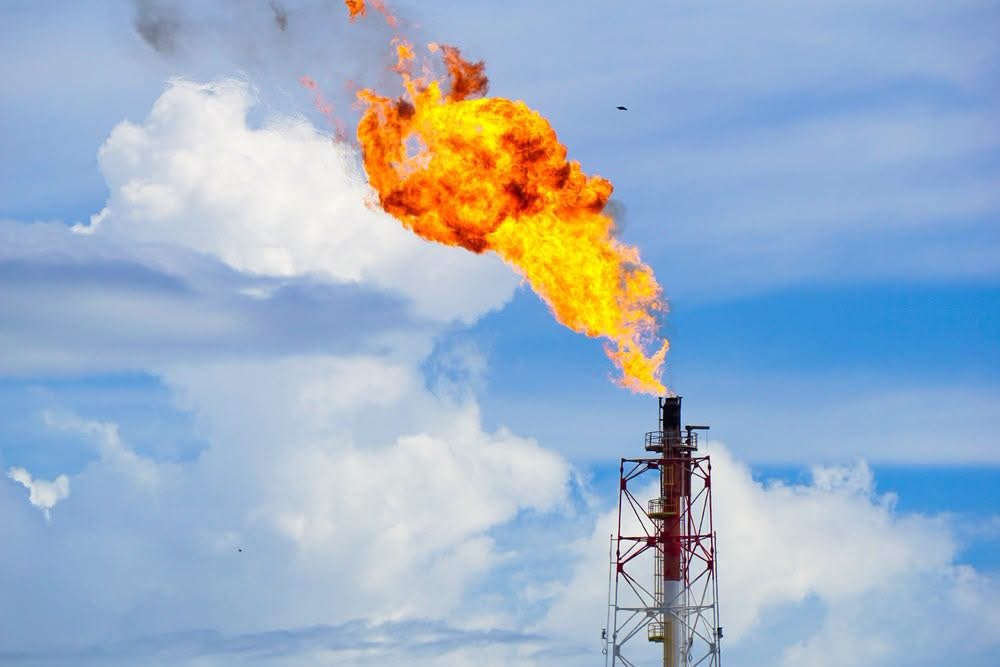
Methane is invisible and cannot always be identified through conventional observation. Unlike a large flare that can be seen from a distance, fugitive methane emissions may occur through leaks from equipment, pipelines, storage facilities and other components of oil and gas infrastructure.
This makes credible monitoring and measurement critical.
NRGI has called for a unified approach to measuring methane emissions in Nigeria, arguing that accurate data is necessary for determining whether emission-reduction commitments are actually being achieved.
The Nation reported that George-Ikoli made the call during the June 2026 webinar, stressing the importance of credible measurement to track progress and ensure effective reductions. (The Nation)
NUPRC has also moved towards more rigorous measurement-based reporting.
In an April 2026 directive, the commission instructed upstream operators to adopt standardised templates and transition towards measurement-based methane and greenhouse-gas reporting. NUPRC said the directive was intended to institutionalise credible measurement, reporting and verification practices for methane and greenhouse-gas inventories. (NURHI)
The regulator said operators had been required since 2022 to begin emissions quantification using IPCC Tier 1 methodologies, with a mandatory progression towards Tier 2 and Tier 3 approaches.
The development could improve the quality of Nigeria’s emissions data, but the effectiveness of the system will depend on how consistently operators comply and how effectively regulators verify information.
Why journalism matters
The renewed call for stronger investigations places journalists at an important point in Nigeria’s methane-accountability system.
Environmental reporting can help connect technical emissions data with the lived experiences of communities.
Investigative journalists can examine company disclosures against regulatory records, satellite observations, production data and community testimony. They can also investigate whether penalties are imposed when operators breach environmental rules and whether affected communities receive appropriate responses.
Vanguard reported that Policy Alert Executive Director Tijah Bolton-Apkan urged journalists and media organisations to deepen their coverage of methane emissions and gas flaring, investigate industry emissions data and amplify the voices of affected communities. (Vanguard News)
That role is particularly significant because methane emissions can be difficult for ordinary citizens to observe directly.
Communities may know that air quality has deteriorated or that agricultural and fishing activities have been affected, but establishing the precise source and scale of emissions often requires technical expertise and independent monitoring.
Journalistic investigations can bridge that gap by combining scientific information with documentary evidence and community testimony.
The Niger Delta cannot be reduced to an emissions statistic
The environmental debate surrounding Nigeria’s oil and gas sector has often focused on national production, revenue, energy security and foreign investment.
Those considerations remain important.
Nigeria is seeking to increase gas utilisation as part of efforts to improve domestic energy supply and generate economic value from resources that have historically been wasted through flaring.
But the economic case for gas development must be weighed against environmental and social obligations.
The World Bank’s latest Global Gas Flaring Tracker report said global gas flaring increased to a six-year high in 2025, reaching 167 billion cubic metres. It attributed continued flaring to structural problems including inadequate regulation, insufficient infrastructure, limited gas markets and a lack of prioritisation by governments and operators. (World Bank)
Reuters, reporting on the same World Bank findings, said Nigeria remained among countries where gas flaring persisted despite domestic energy needs. The report noted that global flaring reached its highest level in six years in 2025. (Reuters)
For Nigeria, reducing flaring therefore offers both an environmental and economic opportunity.
Gas that is currently released or burned can potentially be captured and used for power generation, industrial production or other economic activities, provided the necessary infrastructure and markets exist.
Nigeria’s regulatory commitments face an implementation test
Nigeria’s methane policy framework has become more developed in recent years.
The NUPRC maintains dedicated methane and greenhouse-gas emissions guidelines and has listed methane-related regulations among its gazetted upstream regulations. (NUPRC)
The country is also part of the Global Methane Pledge framework and has outlined methane-reduction ambitions across sectors.
The Global Methane Pledge’s Nigeria action update says the country’s regulatory ambitions include eliminating routine flaring and significantly reducing fugitive methane emissions, while identifying monitoring, reporting and verification, regulatory development, financing and technology transfer as important implementation areas. (globalmethanepledge.org)
The question now is whether those commitments can be translated into measurable improvements on the ground.
This is where enforcement becomes critical.
Regulations without effective monitoring can become difficult to assess. Monitoring without consequences may not produce sufficient behavioural change. And corporate reporting without independent verification can leave communities and the public uncertain about the true scale of emissions.
Communities demand more than promises
For residents of affected Niger Delta communities, the methane debate is ultimately about more than international climate targets.
It concerns health, livelihoods, environmental safety and the ability to live in communities where economic activity does not come at an unacceptable human cost.
At the June webinar, stakeholders described gas flaring as a longstanding environmental injustice affecting oil-producing communities.
The concerns are consistent with wider reporting from the region.
In July 2026, The Guardian reported on the continuing environmental and health difficulties faced by residents of Awoye in Ondo State, where an offshore oil-well fire had continued for years. Residents described respiratory problems, skin conditions, declining fishing activity and other livelihood challenges, while environmental experts called for stronger monitoring of long-term health effects. (The Guardian)
Although that incident involves a sustained oil-well fire rather than a methane-only event, it illustrates the wider environmental governance challenge facing oil-producing communities: prolonged exposure to pollution can create consequences that extend well beyond the immediate operational failure.
What stronger accountability would require
Stakeholders’ demands point towards several practical measures.
First, Nigeria needs credible and independently verifiable emissions data.
Second, regulators must have the technical and institutional capacity to inspect facilities and verify company submissions.
Third, companies should be required to maintain effective leak detection and repair programmes and demonstrate measurable progress in reducing emissions.
Fourth, penalties for non-compliance must be sufficiently clear and consistently applied to create an incentive for compliance.
Fifth, communities need meaningful access to information about pollution sources and environmental risks affecting them.
Finally, journalists and civil society organisations should have access to reliable public data that allows them to scrutinise both industry and regulators.
NUPRC’s transition towards measurement-based reporting is potentially significant in this regard because better data can make it easier to determine whether reported reductions are genuine and sustained. (NURHI)
Accountability must extend across the value chain
Nigeria’s methane challenge cannot be solved by government regulators alone.
Oil and gas operators have direct responsibility for maintaining infrastructure, preventing leaks and reducing unnecessary flaring and venting.
Regulators have responsibility for establishing and enforcing standards.
Civil society organisations can monitor implementation and represent community concerns.
Journalists can investigate discrepancies, explain complex technical information and keep public attention on issues that might otherwise disappear from the national agenda.
Communities, meanwhile, remain an essential source of information about local environmental conditions.
A credible methane-reduction strategy must therefore operate across the entire chain.
A test of Nigeria’s environmental governance
The renewed demands from journalists, experts and civil society groups come at a crucial point for Nigeria’s energy sector.
The country wants to expand gas production, attract investment and improve energy security while meeting climate commitments and reducing environmental damage.
Those goals need not necessarily be incompatible.
But achieving them will require credible measurement, transparent reporting, effective regulation and consequences for persistent non-compliance.
For WengGlobal, the central issue is therefore not whether Nigeria has methane regulations on paper. It is whether those rules are being implemented consistently, whether emissions are being measured accurately and whether companies and regulators can be held publicly accountable when commitments are not met.
The Niger Delta’s communities should not have to choose between economic development and a safe environment.
Nigeria’s energy future can only be considered sustainable if the benefits of oil and gas development are accompanied by meaningful protection for the people living closest to production sites.
The call for sustained investigations should consequently not be treated as another environmental campaign slogan. It is a demand for evidence.
Evidence of what companies are emitting. Evidence of what regulators are monitoring. Evidence of what is being reduced. Evidence of which operators are complying. And, where violations occur, evidence that enforcement follows.
As Nigeria moves towards its methane-reduction targets, those questions will become increasingly important.
The country’s credibility will ultimately be measured not by the number of policies announced, but by the quality of data produced, the strength of enforcement delivered and the tangible improvement experienced by communities that have carried the environmental burden of petroleum production for decades.
Sources and Further Reading
- TheCable — NRGI seeks stricter enforcement of methane emissions regulations in Nigeria’s oil sector, June 23, 2026. (TheCable)
- PUNCH — Stakeholders seek stronger enforcement, approach to track gas flaring, June 24, 2026. (Punch Newspapers)
- Premium Times — Natural Resources Governance Institute seeks stronger methane rules enforcement in Niger Delta, June 23, 2026. (Premium Times Nigeria)
- Vanguard — CSOs call for end to methane flaring in Nigeria, June 29, 2026. (Vanguard News)
- The Nation — NRGI seeks unified approach to measuring methane emissions, June 23, 2026. (The Nation)
- News Agency of Nigeria (NAN) — NRGI seeks stronger methane rules enforcement in Niger Delta, June 24, 2026. (News Agency of Nigeria)
- Nigerian Upstream Petroleum Regulatory Commission (NUPRC) — Directive on standardised and measurement-based methane and GHG reporting, April 2026. (NURHI)
- International Energy Agency (IEA) — Nigeria’s Guidelines for Management of Fugitive Methane and Greenhouse Gases Emissions in Upstream Oil and Gas Operations. (IEA)
- World Bank — Global Flaring Rises Three Years in a Row, Undermining Energy Security, June 23, 2026. (World Bank)
- Reuters — Reporting on the World Bank’s 2025 global gas-flaring figures and continued challenges to ending routine flaring. (Reuters)
- The Guardian — Reporting on prolonged pollution and health concerns in Awoye, Niger Delta, July 2026. (The Guardian)