2027 FIFA Women’s World Cup: 18 Nations Secure Brazil Tickets as Africa’s WAFCON Produces Four New Qualifiers!
ABUJA, Nigeria — The race for the 2027 FIFA Women’s World Cup in Brazil has entered a decisive phase, with 18 nations now assured of places at the expanded 32-team tournament following the conclusion of the quarter-finals of the 2026 Women’s Africa Cup of Nations (WAFCON).
The latest qualification surge came from Africa, where Morocco, Algeria, Cameroon and Malawi advanced to the WAFCON semi-finals and, by virtue of reaching the last four, secured automatic qualification for the 2027 FIFA Women’s World Cup.
Their advancement has taken the number of confirmed World Cup participants to 18, leaving 14 places still to be decided across Africa, Europe, North and Central America and the Caribbean, and the inter-confederation play-off pathway.
The development represents a significant milestone for the women’s game, particularly for Africa, where four nations have now guaranteed their participation in a World Cup that will be staged for the first time on South American soil.
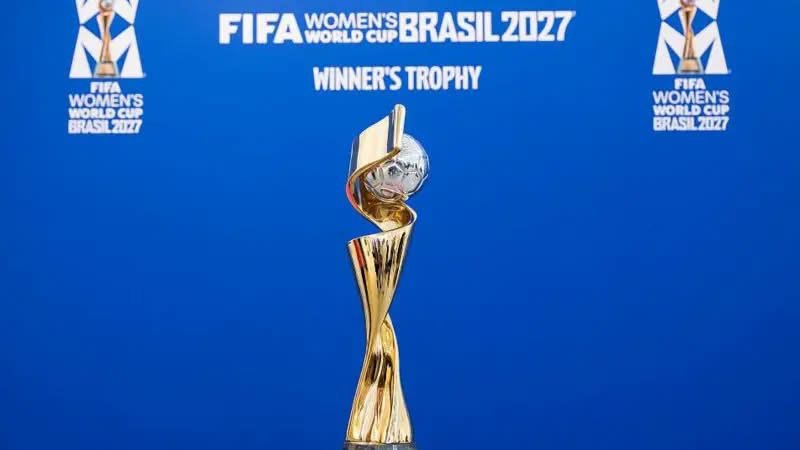
FIFA has confirmed that the 2027 Women’s World Cup will be held in Brazil from 24 June to 25 July 2027, with 32 teams competing for the global title. Brazil qualifies automatically as host. (FIFA)
Africa produces four new World Cup qualifiers
The latest four qualifiers emerged from the knockout stage of WAFCON 2026 in Morocco.
Hosts Morocco secured their place in the semi-finals, while Algeria also progressed. Cameroon caused a major upset by eliminating defending African champions Nigeria, while Malawi continued its remarkable campaign by defeating Ghana.
Under the qualification rules, the four WAFCON semi-finalists automatically qualify for the 2027 FIFA Women’s World Cup. The four teams eliminated in the quarter-finals will have another opportunity to remain in contention through a separate play-off route for two African places in the FIFA Play-Off Tournament. (Africanews)
The qualification of Morocco, Algeria, Cameroon and Malawi has particular significance because some of the four nations are either returning to the World Cup after long absences or reaching the tournament for the first time.
For Malawi, the achievement is historic. The qualification marks the country’s first appearance at the FIFA Women’s World Cup, providing a major breakthrough for a football nation that has steadily increased its profile in African women’s football.
Algeria’s qualification is similarly significant, while Cameroon returns to the global tournament after missing the previous edition. Morocco, meanwhile, will continue its rapid rise on the international stage.
The four African qualifiers will join Brazil and 13 other nations that had already secured their places through other continental qualification competitions.
The 18 teams confirmed so far
The current list of qualified teams comprises:
Host nation — South America
- Brazil
AFC — Asia
- Australia
- China PR
- Japan
- Korea DPR
- Korea Republic
- Philippines
CONMEBOL — South America
- Argentina
- Colombia
OFC — Oceania
- New Zealand
UEFA — Europe
- Denmark
- France
- Germany
- Spain
CAF — Africa
- Algeria
- Cameroon
- Malawi
- Morocco
The first 14 nations had qualified before the WAFCON knockout stage. FIFA’s official qualification tracker had previously listed Brazil, six Asian nations, Argentina, Colombia, New Zealand and four European countries as confirmed participants. (FIFA)
The European contingent includes reigning world champions Spain, who are seeking to defend the title they won in Australia and New Zealand in 2023. Denmark, France and Germany also secured direct qualification from the UEFA League A group stage. UEFA confirmed that those four teams earned the direct European places available from the first phase. (UEFA.com)
Asia sends six teams to Brazil
Asia completed its initial qualification process earlier in 2026 through the AFC Women’s Asian Cup.
Australia, China PR, Japan, Korea DPR, Korea Republic and the Philippines secured direct World Cup qualification.
The AFC qualification system awarded six direct places, while two additional Asian teams were allocated places in the FIFA Play-Off Tournament.
FIFA reported that Korea DPR and the Philippines secured their places through play-off matches after the Asian Cup quarter-final stage, joining Australia, China PR, Japan and Korea Republic. (FIFA)
The qualification of the Philippines is particularly notable because the country made its World Cup debut in 2023. Their second successive appearance underlines the rapid development of women’s football in the country.
Japan, meanwhile, will arrive in Brazil among the established global powers, having won the Women’s World Cup in 2011 and reached the final in 2015.
South America has three direct places
Brazil’s automatic qualification as host means South America has three direct World Cup places under the allocation approved by FIFA.
Argentina and Colombia secured the other two direct positions after finishing first and second respectively in the CONMEBOL Women’s Nations League.
The South American qualifying campaign ran from October 2025 to June 2026, with nine participating nations playing a single round-robin competition.
Brazil did not participate because its hosting status had already guaranteed a place in the finals.
Ecuador and Venezuela finished in the positions allocated to the FIFA Play-Off Tournament, keeping their World Cup ambitions alive through the additional qualification route. (FIFA)
Europe still has seven direct places to fill
Despite having four teams already qualified, Europe has the largest remaining allocation.
UEFA has 11 direct World Cup places, meaning seven additional European teams will emerge from the qualification play-offs later in 2026.
The European qualifying system is considerably different from the process used by most other confederations. Four League A group winners earned direct qualification, while the remaining contenders must navigate the play-off system.
UEFA confirmed that 32 teams entered the autumn play-offs after the league phase, with seven World Cup places still available and one further place leading into the FIFA Play-Off Tournament. (FIFA)
Among the nations still fighting for European qualification are England, the Netherlands, Sweden, Norway, Italy, Austria and the Republic of Ireland, alongside other contenders.
The final European picture is therefore expected to change substantially before the World Cup draw.
Africa still has two additional routes
Although Morocco, Algeria, Cameroon and Malawi have already secured four African places, the continent’s qualification campaign is not finished.
The four WAFCON quarter-final losers will compete for two places in the FIFA Play-Off Tournament.
This means the quarter-final defeats suffered by nations such as Nigeria, Ghana and other contenders do not necessarily end their World Cup ambitions.
FIFA’s qualification framework allocates Africa four direct World Cup places and two additional places in the inter-confederation play-offs. (FIFA)
The play-off system is particularly important because it gives teams that narrowly miss the WAFCON semi-finals another opportunity to reach Brazil.
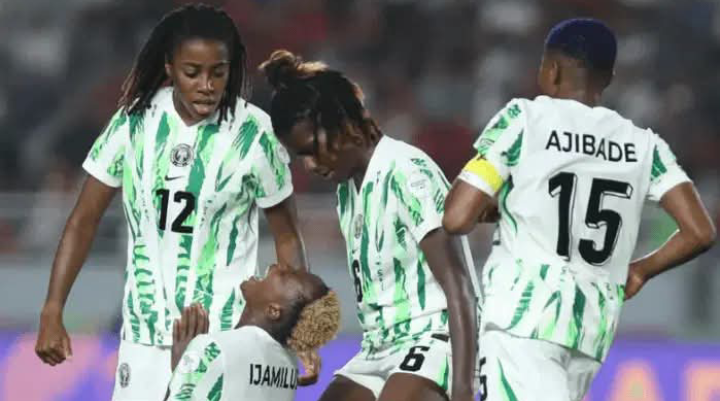
For Nigeria, the route is especially significant. The Super Falcons entered WAFCON as defending champions and one of Africa’s most successful women’s football teams, but their quarter-final elimination by Cameroon means they must now pursue the alternative qualification route rather than an automatic ticket.
The outcome also demonstrates the increasingly competitive nature of African women’s football.
Concacaf qualification is still ahead
North America, Central America and the Caribbean have yet to produce their direct qualifiers.
The 2026 Concacaf W Championship will serve as the region’s World Cup qualifying competition and is scheduled for 24 November to 5 December 2026.
Four teams will qualify directly from Concacaf, while two additional nations will receive places in the FIFA Play-Off Tournament. (FIFA)
The United States, Canada and Mexico are among the leading contenders in the region, although qualification will have to be earned through the scheduled competition.
The United States, in particular, will be seeking to return to the global summit after its disappointing early exit from the 2023 World Cup.
Three final places will be decided through playoffs
The final three World Cup places will be awarded through the FIFA Play-Off Tournament.
The tournament involves 10 nations representing the various confederations. Its first phase is scheduled for November and December 2026, while the decisive phase will take place in February 2027.
FIFA has designed the system to give teams from confederations with fewer direct places another pathway into the expanded World Cup.
The first phase will feature six teams, with the leading sides advancing to the final phase. They will then be joined by additional representatives from Concacaf, CONMEBOL and UEFA before the final three World Cup places are determined. (FIFA)
This means the composition of the 32-team field will not be complete until early 2027.
Brazil prepares for a landmark World Cup
The 2027 tournament will be historic beyond the sporting competition.
Brazil will become the first South American country to host the FIFA Women’s World Cup. The tournament will also represent the tenth edition of the women’s global championship.
Eight Brazilian host cities have been selected, with the competition scheduled to run for one month from late June to late July 2027. (FIFA)
Spain enter the tournament as reigning champions, while the United States remain the most successful nation in Women’s World Cup history with four titles.
Japan, Germany, Brazil, Norway and other former champions will also bring substantial tournament pedigree once qualification is completed.
The expansion and geographic reach of the competition are expected to further strengthen the global development of women’s football.
For Africa, however, the immediate story is the breakthrough achieved by Algeria, Cameroon, Malawi and Morocco.
Their qualification confirms that African women’s football is continuing to broaden its competitive base beyond the continent’s traditional powers.
Malawi’s historic breakthrough is particularly symbolic, while Algeria’s return to the global stage demonstrates the growing depth of the women’s game in North Africa. Cameroon’s qualification reinforces its status as one of Africa’s established contenders, and Morocco’s progress reflects the growing investment in the sport across the continent.
With 18 of the 32 places now confirmed, the qualification race enters its final stages.
The remaining months will determine which nations join Brazil in what promises to be one of the most geographically diverse editions of the FIFA Women’s World Cup.
For Wengglobal, the emerging picture is clear: Brazil 2027 is no longer a distant tournament on the calendar. With nearly three-fifths of the field still to be completed, qualification battles across Africa, Europe, Concacaf and the inter-confederation play-offs will shape the final landscape of the women’s game’s biggest global event.
Sources and related reporting
- FIFA — Official 2027 FIFA Women’s World Cup qualification tracker and confirmed teams. (FIFA)
- FIFA — Official qualification structure, dates, confederation allocations and tournament information. (FIFA)
- FIFA — AFC qualification process and the six Asian teams that secured direct qualification. (FIFA)
- FIFA — UEFA qualification process and the European teams already qualified. (FIFA)
- UEFA — Confirmation that Denmark, France, Germany and Spain qualified directly for Brazil 2027. (UEFA.com)
- Reuters — Reporting on the expanded 2026 Women’s Africa Cup of Nations and its role in 2027 World Cup qualification. (Reuters)
- ESPN — Reporting on the significance of WAFCON as Africa’s qualification pathway to the 2027 Women’s World Cup. (ESPN)
- The Guardian — Background coverage of the 2026 WAFCON, its expansion and World Cup qualification implications. (The Guardian)
- Africanews — WAFCON 2026 qualification format and the automatic World Cup places awarded to the four semi-finalists. (Africanews)
- The Punch — Reporting on FIFA’s qualification framework and the role of WAFCON in determining Africa’s World Cup qualifiers. (Punch Newspapers)