Osun 2026: Accord Dismisses Oyinlola Factor, Insists Adeleke’s Re-Election Bid Remains Strong
OSOGBO, Osun State — The political contest for Osun State’s governorship has entered another critical phase, with the Accord Party insisting that recent alignments involving former governor Olagunsoye Oyinlola will not derail Governor Ademola Adeleke’s bid for a second term.
The position comes as political parties and influential figures intensify their mobilisation ahead of the August 15, 2026 governorship election, a contest that has increasingly become a battle of political structures, endorsements, defections and competing claims of grassroots support.
Accord, which is fielding incumbent Governor Ademola Adeleke, maintains that the electorate rather than individual endorsements will ultimately determine the outcome of the election.
The party’s position comes against a rapidly changing political landscape in Osun, where former political allies have moved between parties and several influential figures have openly declared support for rival candidates.
The development has heightened attention on the role of political heavyweights, including former governors, party leaders and influential grassroots structures, in an election featuring Adeleke of Accord and Bola Oyebamiji of the All Progressives Congress (APC), alongside candidates from other parties.
However, the political narrative surrounding Oyinlola requires careful clarification.
Recent reporting by The Punch shows that a faction of the Peoples Democratic Party (PDP) led by Oyinlola endorsed the candidate of the Allied Peoples Movement (APM), Adewale Adebayo, for the Osun governorship election. Oyinlola reportedly presented the APM flag to Adebayo at a meeting in Osun. (Punch Newspapers)
That development is distinct from an endorsement of Oyebamiji.
Oyinlola’s latest political move
Oyinlola, who governed Osun between 2003 and 2010, remains one of the state’s prominent political figures and has historically played a role in the internal calculations of the PDP and broader Osun politics.
His latest political alignment emerged from the continuing crisis within the PDP and the competing political alliances taking shape ahead of the 2026 governorship poll.
According to The Punch, the faction of the PDP associated with Oyinlola adopted APM’s Adebayo and ruled out an alliance with Adeleke’s Accord Party. Oyinlola reportedly described the arrangement as an alliance between the PDP faction and APM. (Punch Newspapers)
The Nation also reported that Oyinlola’s faction endorsed APM’s governorship candidate, with the former governor presenting the party’s flag to Adebayo. The report said the move was being viewed within the context of wider political calculations ahead of the 2027 political cycle. (The Nation)
The development represents a notable change from Oyinlola’s earlier position on Adeleke.
In November 2025, The Nation reported that Oyinlola had backed Adeleke’s decision to pursue re-election through the Accord platform amid uncertainty over the PDP’s internal crisis. At the time, he described Accord as a potentially suitable platform for Adeleke and said the governor’s performance was enough to convince people to support him. (The Nation)
The subsequent realignment demonstrates how quickly political calculations have changed in Osun ahead of the election.
Accord remains confident
Despite the movement of political actors and the emergence of rival alliances, Accord has continued to project confidence in Adeleke’s chances.
The party and the governor’s campaign have pointed to endorsements from various groups and political actors as evidence of continuing grassroots support.
In April, the Osun State Government reported that traditional security outfits and ethnic groups had endorsed Adeleke for another term, with representatives pledging to support his candidacy in the August election. (Osun State Official Website)
The governor has also repeatedly declared confidence in his ability to defeat the APC candidate.
In an earlier statement, Adeleke said he was determined to defeat Oyebamiji and retain office, framing the election as a choice between continuity and a return to what his administration describes as the shortcomings of the previous APC government. (Osun State Official Website)
Such claims, however, remain campaign positions rather than predictions of the eventual result.
Under Nigeria’s electoral system, the outcome will be determined by votes cast and validly counted by the Independent National Electoral Commission (INEC), rather than endorsements alone.
APC builds its own coalition
Oyebamiji and the APC have also been working to expand their political base.
The former Osun Commissioner for Finance and former Managing Director of the National Inland Waterways Authority emerged as the APC’s consensus governorship candidate after a process that involved several aspirants.
The Nation reported that Oyebamiji became the party’s consensus candidate following intervention by President Bola Tinubu and subsequent efforts by party leaders to reconcile competing aspirants. (The Nation)
Since then, the APC has sought to consolidate its structures across Osun’s 30 local government areas and 332 wards.
The party has also received defectors from the Accord camp.
In June, The Nation reported that two aides of Governor Adeleke and several Accord Party figures defected to the APC and declared support for Oyebamiji. The defectors cited their belief in Oyebamiji’s capacity and experience to govern the state. (The Nation)
The development illustrates the fluidity of Osun’s political environment.
While defections can attract headlines, their actual electoral impact depends on whether the individuals involved can translate their political networks into votes at polling units.
Endorsements do not guarantee electoral victory
The dispute over Oyinlola’s influence highlights a broader feature of Nigerian electoral politics: endorsements can shape narratives and mobilise supporters, but they do not automatically translate into victory.
Political endorsements can matter when they are backed by established grassroots structures, ward-level organisers, financial resources, campaign networks and strong relationships with voters.
But voters may also make decisions based on personal economic circumstances, perceptions of government performance, candidate credibility, party identity and local issues.
This makes it difficult to determine the electoral value of any single endorsement before ballots are cast.
For Adeleke, the challenge is to convert his incumbency and the structures assembled under Accord into sustained voter mobilisation.
For Oyebamiji, the task is to convince voters that the APC can provide a credible alternative while overcoming the disadvantages associated with being the challenger.
For smaller parties, including APM and the African Democratic Congress (ADC), the objective is to demonstrate that they can break the traditional dominance of the two major contenders.
A competitive three-way political environment
Although Adeleke and Oyebamiji have dominated much of the political conversation, the presence of other candidates means the election cannot automatically be reduced to a simple two-party contest.
The APM’s Adebayo has gained attention following the backing from Oyinlola’s PDP faction.
The ADC is also fielding Najeem Salaam, another experienced politician with a political base in the state.
The presence of multiple candidates could affect the distribution of votes, particularly if no candidate succeeds in consolidating support across Osun’s three senatorial districts.
Osun’s political geography makes broad-based mobilisation particularly important.
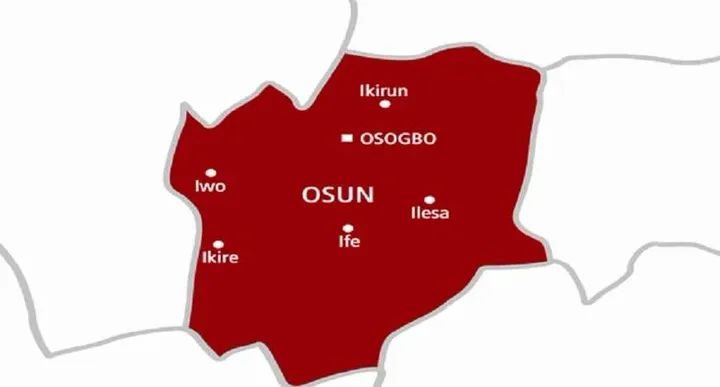
A candidate seeking victory must build support across urban centres such as Osogbo, Ile-Ife, Ilesa and Iwo, while also maintaining strong networks in smaller communities and rural areas.
The ability to organise at ward and polling-unit level could ultimately prove more decisive than high-profile endorsements.
The legacy of 2022 remains relevant
The 2026 contest is also shaped by memories of the fiercely contested 2022 election.
Adeleke defeated then-incumbent APC candidate Gboyega Oyetola in that election before a prolonged legal battle over the result.
The Supreme Court eventually affirmed Adeleke’s victory in 2023.
That history continues to influence the political calculations of both major parties.
The APC is seeking to regain control of Osun after losing the governorship in 2022, while Adeleke is seeking to become the first incumbent governor in the current contest to secure another term.
The political stakes are therefore significant beyond the personalities of the candidates.
For the APC, victory would represent a return to government in a strategically important South-West state.
For Accord, retaining Osun would strengthen the party’s position after Adeleke’s departure from the PDP and demonstrate that an incumbent can win re-election outside the traditional major-party structure.
Adeleke faces the burden of incumbency
While incumbency provides access to government visibility and an established political network, it also carries risks.
Adeleke’s administration will be judged by voters on issues including infrastructure, education, healthcare, workers’ welfare, local government administration, economic opportunities and the overall direction of the state.
The governor’s supporters have highlighted projects and policies they say demonstrate improved governance.
His opponents, however, have challenged aspects of his administration and argued that the state requires a different direction.
The APC has also attempted to portray Oyebamiji as a technically experienced alternative capable of strengthening the state’s financial management and development planning.
Ultimately, the competing claims will be tested by voters.
Oyinlola’s influence remains a political question
The former governor’s role is likely to remain a subject of debate as the election approaches.
His long political history in Osun gives him a level of recognition that few state politicians possess. Yet the extent to which that recognition translates into votes for a particular candidate cannot be established in advance.
His current support for APM’s Adebayo also means his political influence is now operating outside the two leading camps.
Whether the move damages Adeleke’s support base, weakens the PDP’s residual structure, or instead divides the opposition vote remains an open electoral question.
Accord’s confidence suggests the party does not regard the development as decisive.
The APC, meanwhile, is likely to interpret every defection and endorsement away from Adeleke as evidence of growing momentum.
Both interpretations should be treated as campaign narratives until supported by measurable electoral evidence.
Election day will provide the definitive test
With August 15 approaching, the central question for Osun voters is increasingly about performance, credibility and the ability of each candidate to govern.
Endorsements will continue.
Defections may continue.
Political alliances may change again before election day.
But the final result will depend on the voters who participate and the integrity of the electoral process.
For Wengglobal, the latest development demonstrates why Osun’s 2026 election requires careful reporting beyond political declarations.
Oyinlola’s political influence is significant, but available reputable reporting does not support the claim that he has endorsed Oyebamiji. His latest reported move is to support APM candidate Adewale Adebayo through a PDP faction.
Accord’s assertion that the development will not stop Adeleke’s re-election effort is therefore best understood as a political assessment rather than an established electoral fact.
The coming weeks will reveal whether Adeleke’s incumbency, Accord’s grassroots structure and the endorsements behind his campaign can withstand competing alliances — or whether the APC’s expanding coalition and the emergence of alternative opposition platforms will reshape the electoral map.
What is certain is that Osun’s governorship contest has become increasingly competitive, and the August election will provide the clearest measure yet of where the state’s electorate stands.
Sources and related reporting
- The Punch — Reporting on Olagunsoye Oyinlola’s PDP faction endorsing APM candidate Adewale Adebayo for the Osun governorship election. (Punch Newspapers)
- The Nation — Reporting on Oyinlola’s faction backing APM and the political implications for the Osun election. (The Nation)
- The Nation — Earlier reporting on Oyinlola’s support for Adeleke’s move to Accord in November 2025. (The Nation)
- The Nation — Background on Oyebamiji’s emergence as APC consensus candidate. (The Nation)
- The Nation — Reporting on Adeleke’s aides and Accord figures defecting to APC in support of Oyebamiji. (The Nation)
- The Guardian Nigeria — Coverage of competing APC and Accord narratives ahead of the Osun 2026 election. (The Guardian Nigeria)
- Osun State Government — Official statements on Adeleke’s re-election campaign and endorsements. (Osun State Official Website)