Mourinho Reveals He Once Agreed to Replace Ferguson at Manchester United Before Choosing Chelsea Return
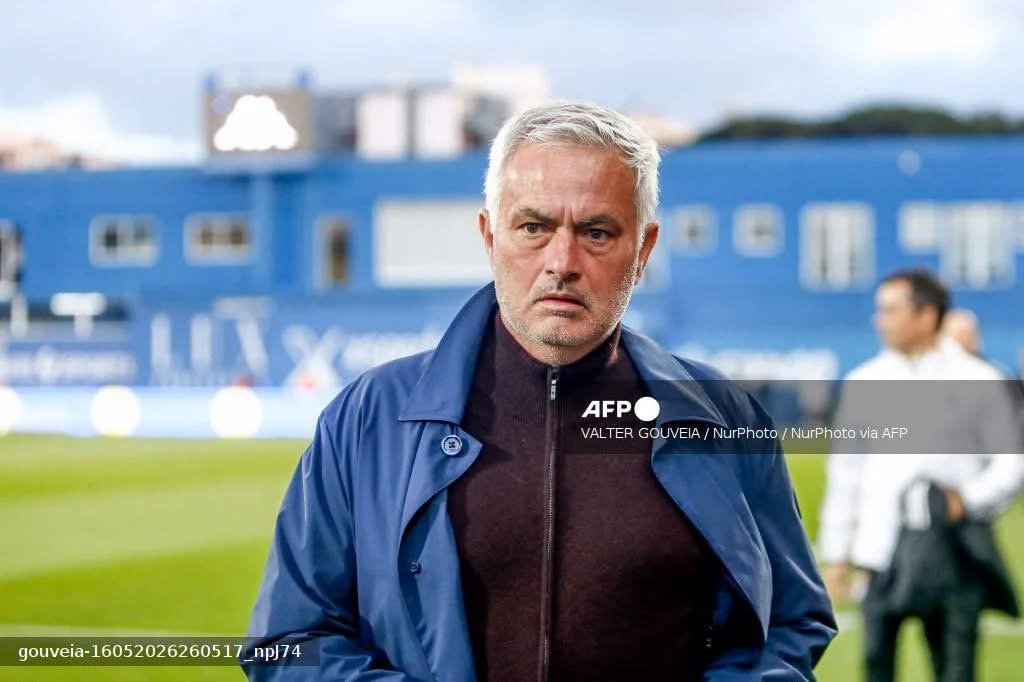
LONDON — José Mourinho has disclosed that he had agreed in principle to succeed Sir Alex Ferguson as Manchester United manager in 2013, only to reverse his decision and return to Chelsea after feeling unable to break a commitment he had already made to the London club.
The revelation, contained in a new Netflix documentary about Mourinho’s career and reported by major international media, offers fresh insight into one of the most consequential managerial decisions of the post-Ferguson era.
According to Mourinho, he had signed an agreement to take over at Old Trafford after Ferguson’s retirement, but subsequently changed his mind. The Portuguese coach said his emotional attachment to Chelsea ultimately proved stronger than the opportunity to inherit one of the most prestigious managerial positions in world football.
Ferguson, who spent 26 years at Manchester United and won 13 Premier League titles before retiring at the end of the 2012-13 season, also recounts the episode in the documentary. He said he understood Mourinho’s reasoning but was disappointed when the prospective appointment collapsed.
The account is particularly significant because Manchester United eventually appointed David Moyes as Ferguson’s successor. Moyes lasted less than a full season before being dismissed in April 2014, beginning a prolonged period of managerial instability at Old Trafford.
Mourinho would eventually become United manager in 2016, but by then the circumstances surrounding the club had changed considerably.
Mourinho says he had agreed to succeed Ferguson
Reflecting on the period following his departure from Real Madrid, Mourinho said he had initially agreed to become Ferguson’s successor.
The revelation goes beyond what Mourinho publicly stated in 2013, when he insisted that Chelsea was his preferred destination and that he would have rejected other opportunities to return to Stamford Bridge.
Ferguson’s account in the documentary appears to confirm that serious discussions about Mourinho taking over at United had taken place.
The former United manager recalled sitting down with Mourinho and explaining the situation surrounding his retirement. Ferguson said he believed Mourinho had accepted the opportunity, but the situation changed within hours.
Mourinho subsequently contacted Ferguson and told him that he could not proceed because he had already given his word to Chelsea.
The decision, according to Mourinho, was driven by a combination of professional circumstances and his emotional relationship with Chelsea.
He described Manchester United as possessing enormous appeal but distinguished between his love for football and his attachment to a particular club.
That distinction helps explain why Mourinho ultimately chose Chelsea despite the historic opportunity presented by Ferguson’s succession.
A decision rooted in Chelsea connection
Mourinho’s relationship with Chelsea had already become one of the defining elements of his managerial career.
He first arrived at Stamford Bridge in 2004 after establishing himself as one of Europe’s most respected coaches with Porto, where he had won the UEFA Champions League in 2004.
His first Chelsea spell produced two consecutive Premier League titles in 2004-05 and 2005-06, as well as domestic trophies and a transformation in the club’s status within English football.
By the time he left Real Madrid in 2013, Mourinho had developed a particularly strong connection with Chelsea supporters.
He returned to Stamford Bridge in June 2013 and subsequently guided the club to another Premier League title in the 2014-15 season.
That history gives context to his explanation that he needed to feel loved and wanted after the difficult closing stages of his Real Madrid tenure.
Rather than simply choosing between two jobs, Mourinho presented the decision as a choice between an extraordinary professional opportunity at Manchester United and an emotional commitment to a club with which he already had a deep relationship.
What Mourinho said publicly in 2013
Mourinho’s latest revelation contrasts in an important way with his public comments at the time.
In June 2013, shortly after being appointed Chelsea manager for a second spell, Mourinho said he knew Ferguson was planning to retire months before the announcement.
He nevertheless insisted that he had always wanted to return to Chelsea.
“I would have turned down every job in the world — the Manchester United job, every one — for Chelsea,” Mourinho said at the time, according to BBC Sport. (BBC)
Those comments suggested that the United job had never been a realistic alternative from Mourinho’s perspective.
The newly revealed account is more complicated.
Rather than simply rejecting Manchester United, Mourinho now says he had agreed to take the job before reconsidering his position.
That difference is significant because it suggests that the decision involved a late change of heart rather than an outright refusal from the beginning.
It also provides additional context to the competing accounts that emerged in the months following Ferguson’s retirement.
Manchester United chose David Moyes
Following Ferguson’s retirement, Manchester United appointed David Moyes as the club’s next manager.
Moyes arrived from Everton with a strong reputation as a disciplined and experienced Premier League coach, but he faced the enormous challenge of succeeding Ferguson after more than two decades of dominance.
United had won the Premier League title in Ferguson’s final season, finishing 11 points ahead of Manchester City.
The transition proved difficult.
Moyes’ team struggled to reproduce Ferguson’s results and eventually finished seventh in the Premier League, missing out on Champions League qualification.
United dismissed Moyes in April 2014, before the end of his first season.
Louis van Gaal subsequently took charge, followed by Mourinho in 2016.
Looking back, BBC Sport has described Mourinho as potentially being the “right man” for United immediately after Ferguson, while noting that his commitment to returning to Chelsea helped shape the outcome. (BBC)
That retrospective assessment does not establish that Mourinho would necessarily have succeeded at United in 2013. Football management involves numerous variables, including recruitment, squad structure, club leadership, finances, player relationships and expectations.
Nevertheless, the counterfactual remains one of the most discussed “what if” scenarios in modern Premier League history.
The Chelsea decision ultimately paid off
From Mourinho’s perspective, his decision to choose Chelsea was difficult but ultimately successful in the short term.
His second spell began with a trophyless 2013-14 season, but the following campaign produced a Premier League and League Cup double.
Chelsea won the 2014-15 Premier League title with Mourinho in charge, marking his third English top-flight championship.
The success strengthened his argument that returning to Stamford Bridge was not merely an emotional decision but also a professionally productive one.
His tenure later deteriorated, however, and Chelsea dismissed him in December 2015 after a poor start to the 2015-16 campaign.
By then, the path to Manchester United had reopened.
Mourinho eventually managed Manchester United
Mourinho finally became Manchester United manager in May 2016, three years after Ferguson’s retirement.
His appointment was widely viewed as a major statement of intent by the club.
He delivered silverware during his first season, winning the UEFA Europa League, League Cup and Community Shield.
United finished second in the Premier League in the 2017-18 season, Mourinho’s best league finish at the club.
However, his tenure eventually became increasingly strained.
United dismissed him in December 2018 following a difficult start to the campaign and amid tensions involving players, the club hierarchy and the team’s performances.
His departure meant that Mourinho’s eventual United tenure did not reproduce the sustained success associated with his first periods at Chelsea and Porto.
The sequence of events makes his latest revelation particularly intriguing.
Had he accepted the United job in 2013, his managerial history would have been dramatically different. He would have inherited a league-winning squad immediately after Ferguson, rather than arriving three years later following the managerial spells of Moyes and Van Gaal.
Whether that would have altered United’s subsequent decline, however, remains impossible to establish.
Ferguson’s role adds another dimension
The revelation also highlights the unusual relationship between Mourinho and Ferguson.
The two managers developed a close professional relationship despite being fierce competitors in the Premier League.
Ferguson had previously praised Mourinho and maintained a friendship with him.
In 2013, Mourinho publicly said that Ferguson had trusted him with advance knowledge of his retirement plans.
BBC Sport reported at the time that Mourinho knew about Ferguson’s plans months before the retirement announcement and regarded that confidence as evidence of their friendship. (BBC)
Yet the decision not to succeed Ferguson became a complicated episode.
A 2013 Guardian report, based on claims contained in a book by Spanish journalist Diego Torres, alleged that Mourinho had been deeply disappointed by the situation surrounding the United appointment. Mourinho’s adviser at the time rejected the account as false. (The Guardian)
The latest documentary account provides a substantially different explanation: Mourinho says he had the opportunity but chose Chelsea because he had already committed himself to returning to Stamford Bridge.
That distinction is important for an accurate historical record.
A revealing look at football’s biggest “what if”
Mourinho’s disclosure does not merely revisit an old managerial appointment. It highlights how personal relationships and emotional commitments can influence decisions at the highest level of professional football.
Manchester United represented the chance to inherit Ferguson’s legacy at one of the world’s biggest clubs.
Chelsea represented familiarity, affection and a promise Mourinho had already made.
He chose Chelsea.
More than a decade later, that decision remains one of the most intriguing managerial crossroads of the Premier League era.
Mourinho’s eventual career means the consequences can be viewed from both sides. He won another league title with Chelsea, later managed Manchester United and added European and domestic trophies to his record.
Manchester United, meanwhile, went through Moyes, Van Gaal and Mourinho before a succession of other managerial changes.
The latest revelation does not prove that United would have avoided its post-Ferguson difficulties had Mourinho taken charge in 2013. Nor does it diminish Mourinho’s later achievements at Chelsea.
What it does provide is a clearer account of a decision that had remained partly obscured for years.
For Wengglobal, the enduring significance of Mourinho’s revelation lies in the intersection of football ambition, loyalty and timing. A managerial appointment can reshape a club’s trajectory, but so can a single decision made before the contract is ultimately signed.
In 2013, Mourinho chose Chelsea.
Manchester United chose David Moyes.
History took the course that followed — and Mourinho now says the alternative path was once within reach.
Sources and related reporting
- BBC Sport — Contemporary 2013 reporting on Mourinho’s decision to return to Chelsea and his comments about Manchester United. (BBC)
- Sky Sports — 2013 coverage of Mourinho’s explanation that he would have rejected the Manchester United job to return to Chelsea. (Sky News)
- The Guardian — 2013 reporting on competing accounts surrounding Mourinho and the Manchester United succession. (The Guardian)
- BBC Sport — Retrospective analysis of Mourinho’s Manchester United tenure and the argument that he may have been better suited to succeed Ferguson in 2013. (BBC)
- The Times — Current reporting on Mourinho’s newly revealed account in the Netflix documentary, including Ferguson’s recollection of the episode. (The Times)