Reported by Simon yusuph, | Journalist at wengglobal
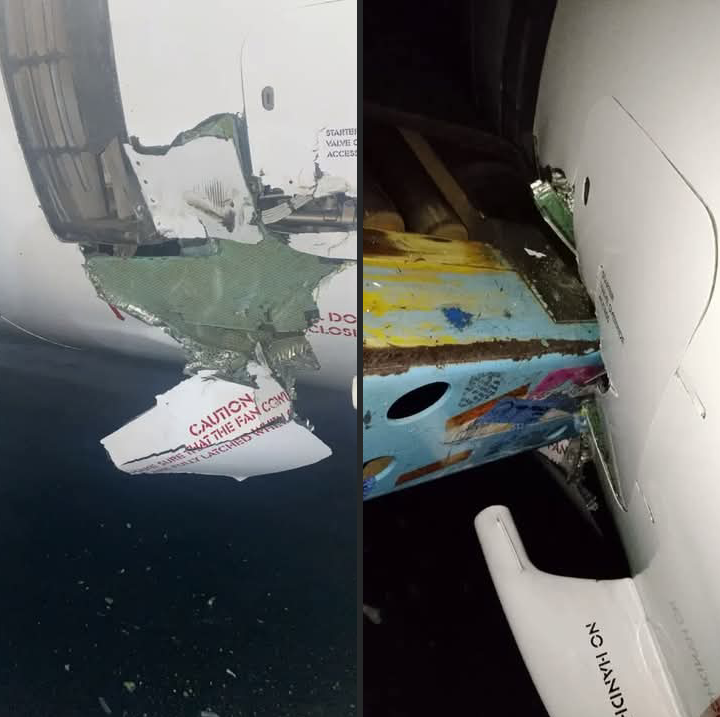
Nigeria’s largest airline, Air Peace, has warned passengers to expect disruptions across parts of its domestic and regional flight network after one of its Airbus A320 aircraft sustained significant damage during a ground handling incident at the Murtala Muhammed International Airport (MMIA), Lagos.
The airline disclosed that the incident occurred while the aircraft was being serviced on the ground, alleging that a baggage conveyor vehicle operated by the Nigerian Aviation Handling Company (NAHCO) collided with the aircraft, causing extensive structural damage.
Although no injuries were reported and the incident did not occur during flight operations, Air Peace said the damage has forced the temporary withdrawal of the aircraft from service, affecting its operational capacity and prompting schedule adjustments across its network.
Air Peace Confirms Aircraft Damage
In a statement released by the airline, Air Peace confirmed that the affected aircraft is an Airbus A320, one of the workhorses of its domestic and regional fleet.
According to the airline, the baggage conveyor vehicle struck the aircraft while ground handling activities were underway at Lagos airport. Air Peace described the impact as severe enough to require the aircraft to be removed from active service pending a comprehensive technical assessment and repairs.
The airline noted that the loss of the aircraft from its fleet would inevitably place additional pressure on its operations, particularly during periods of high passenger demand.
Air Peace expressed regret over the inconvenience the incident may cause travelers, assuring customers that every available aircraft and operational resource is being deployed to minimize delays and cancellations.
Passengers Advised to Expect Operational Adjustments
Following the incident, Air Peace advised passengers travelling on its domestic and regional routes to prepare for possible delays, flight rescheduling, or operational adjustments over the coming days.
The airline encouraged customers to closely monitor updates through its official communication channels and maintain contact with its customer service teams for the latest information regarding their scheduled flights.
It also appealed for patience and understanding from passengers as engineers work to restore the affected aircraft to service.
Industry experts note that even the temporary grounding of a single narrow-body aircraft can have a cascading impact on airline schedules, particularly for carriers operating high-frequency domestic routes.
Aircraft rotation schedules are tightly planned, and when one aircraft becomes unavailable unexpectedly, airlines often have limited spare capacity to absorb the disruption without affecting subsequent flights.
Importance of Ground Handling Safety
The incident has renewed attention on safety procedures governing airport ground operations in Nigeria.
Ground handling involves numerous activities, including baggage loading and unloading, aircraft refueling, catering services, towing operations, and passenger boarding assistance. These operations are conducted in close proximity to aircraft worth tens of millions of dollars, making strict adherence to safety protocols essential.
Industry analysts say ground support equipment, including baggage conveyor belts, pushback tractors, fuel trucks, and catering vehicles, must be operated with precision to prevent costly accidents.
While aircraft are designed to withstand the rigours of flight, damage sustained on the ground can still require extensive inspections, replacement of structural components, and certification before an aircraft is cleared to return to commercial service.
Such repairs can keep aircraft out of operation for days or even weeks depending on the extent of the damage.
Financial and Operational Implications
Beyond the immediate impact on passengers, incidents involving aircraft damage can impose significant financial costs on airlines.
Repair expenses may run into hundreds of thousands or even millions of dollars depending on the affected components. Additional costs arise from aircraft downtime, disrupted flight schedules, passenger re-accommodation, compensation where applicable, and reduced operational efficiency.
For airlines already operating in a challenging economic environment marked by rising aviation fuel costs, exchange rate pressures, and maintenance expenses, unexpected operational setbacks can place further strain on profitability.
Nigeria’s aviation sector has experienced increasing operational costs in recent years, prompting airlines to continuously review ticket pricing and fleet management strategies while striving to maintain service reliability.
NAHCO Yet to Issue Detailed Public Response
At the time Air Peace released its statement, the airline attributed the incident to a baggage conveyor vehicle operated by the Nigerian Aviation Handling Company (NAHCO).
NAHCO is one of Nigeria’s leading aviation ground handling companies, providing cargo handling, passenger services, aircraft cleaning, ramp services, and other airport support operations for numerous domestic and international airlines.
As of the latest available information, a comprehensive public statement detailing the circumstances surrounding the incident had not been issued by NAHCO.
Industry observers expect investigations to establish the precise sequence of events, determine liability where necessary, and identify measures that could prevent similar occurrences in future.
Aviation Regulators Expected to Review Incident
Ground incidents involving commercial aircraft are typically subject to established aviation reporting procedures.
Relevant aviation authorities are expected to review the circumstances surrounding the accident to determine whether operational procedures were fully observed and whether any additional safety recommendations should be implemented.
Safety oversight remains a key pillar of Nigeria’s aviation industry as regulators continue efforts to improve airport infrastructure, operational standards, and compliance with international best practices.
Experts say thorough investigations into ground accidents contribute to broader industry learning by identifying procedural gaps, equipment issues, or human factors that may require corrective action.
Air Peace Reaffirms Commitment to Passenger Safety
Despite the operational disruption, Air Peace emphasized that passenger safety remains its highest priority.
The airline stressed that removing the damaged aircraft from service demonstrates its commitment to maintaining the highest safety standards and ensuring that only fully airworthy aircraft operate commercial flights.
Air Peace added that its engineering and operations teams are working diligently to reduce the impact on passengers while ensuring all maintenance and regulatory requirements are fully satisfied before the aircraft returns to service.
The carrier also thanked customers for their patience and loyalty during the temporary disruption.
Wider Context for Nigeria’s Aviation Industry
The incident comes as Nigeria’s aviation industry continues to recover from years of economic pressures while investing in improved operational resilience.
Air Peace has expanded significantly in recent years, growing into the country’s largest airline by fleet size and route network. The carrier now operates numerous domestic destinations alongside regional and international services, making fleet availability critical to maintaining schedule reliability.
As passenger demand continues to grow, stakeholders across the aviation value chain—including airlines, ground handling companies, airport authorities, and regulators—face increasing pressure to uphold rigorous safety standards that protect aircraft, passengers, and airport personnel.
While ground incidents are relatively uncommon, aviation professionals say they underscore the importance of continuous staff training, equipment maintenance, and strict operational discipline.
For travelers, Air Peace’s advisory serves as an early notice to remain informed about flight schedules while the airline works to restore full operational capacity.
The coming days will likely determine the duration of the disruption as engineers assess the extent of the aircraft damage and authorities complete any required safety reviews.
Sources
- Air Peace Official Statement
- Nigerian Aviation Handling Company (NAHCO)
- Nigerian Civil Aviation Authority (NCAA)
- Federal Airports Authority of Nigeria (FAAN)
- Punch Newspapers
- The Guardian Nigeria
- Vanguard Newspaper
- BusinessDay Nigeria
- The Cable
- Daily Trust