Reported by Simon yusuph,| Journalist at wengglobal
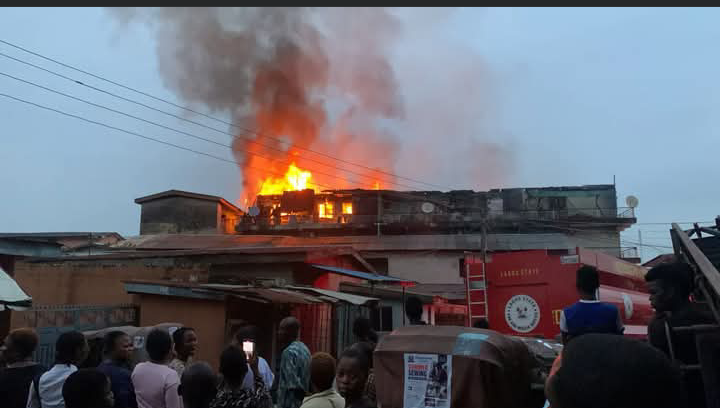
A major fire outbreak in the Ketu-Ikosi area of Lagos State has left two firefighters hospitalised after they sustained injuries while battling a blaze that engulfed a three-storey residential building. The incident, which emergency officials attributed to an electrical surge, has once again drawn attention to the growing risks posed by faulty electrical installations and power fluctuations in Nigeria’s commercial capital.
According to the Lagos State Fire and Rescue Service, the fire erupted at a residential building in the densely populated Ketu-Ikosi community, prompting an immediate emergency response from firefighters and other rescue agencies. Although the blaze caused extensive damage to sections of the property, officials confirmed that no civilian fatalities were recorded, while the injured firefighters are receiving medical treatment and are reported to be in stable condition.
The incident underscores the dangers faced daily by emergency responders, who often put their lives at risk to protect lives and property amid increasing cases of urban fires across Lagos.
Swift Emergency Response Prevents Greater Disaster
Authorities said distress calls were received shortly after the fire broke out, leading to the rapid deployment of personnel from nearby fire stations. Firefighters worked tirelessly to contain the flames and prevent the fire from spreading to neighbouring buildings in the densely built residential district.
During the firefighting operation, two officers sustained injuries believed to have resulted from the intense heat and hazardous conditions inside the burning structure. Emergency medical personnel immediately evacuated the injured responders to a nearby hospital for treatment.
Officials later confirmed that both firefighters remained under medical observation but were responding positively to treatment.
The Lagos State Fire and Rescue Service commended the bravery and professionalism displayed by the emergency team, noting that their prompt intervention prevented what could have developed into a much larger disaster with significant casualties.
Electrical Surge Identified as Cause of Fire
Preliminary investigations by fire authorities indicate that the blaze was triggered by an electrical surge, a recurring cause of residential and commercial fires in Nigeria.
Electrical surges can occur when sudden increases in voltage overload electrical wiring, appliances, or distribution systems. Experts warn that poorly maintained electrical infrastructure, overloaded circuits, substandard wiring, and unstable public electricity supply significantly increase the likelihood of such incidents.
Fire safety professionals have repeatedly urged homeowners, landlords, and business owners to conduct routine electrical inspections and replace aging wiring systems to minimise fire risks.
The latest incident adds to a growing list of fire outbreaks linked to electrical faults in Lagos, where rapid urbanisation and aging infrastructure continue to challenge safety standards.
Property Suffers Significant Damage
Although emergency responders successfully contained the blaze before it spread beyond the affected building, large sections of the three-storey structure sustained extensive damage.
Personal belongings, household appliances, furniture, and other valuables were reportedly destroyed by the fire, leaving affected residents to count their losses.
Authorities have yet to release an official estimate of the financial damage, while structural assessments are expected to determine whether parts of the building remain safe for occupation.
Residents in the area praised firefighters for preventing neighbouring houses from catching fire despite the intensity of the blaze.
Rising Concern Over Urban Fire Incidents
Lagos, Nigeria’s most populous city, experiences numerous fire outbreaks annually, particularly during periods of unstable electricity supply when power surges become more frequent.
Many incidents have been linked to electrical faults, fuel storage, gas explosions, illegal power connections, and poor compliance with building safety regulations.
Emergency management experts continue to advocate stronger enforcement of electrical safety codes, improved public awareness campaigns, and wider installation of fire prevention equipment in residential buildings.
They also encourage residents to install smoke detectors, keep functional fire extinguishers within easy reach, avoid overloading electrical sockets, and disconnect unused appliances during periods of unstable electricity supply.
Firefighters Continue to Face Occupational Risks
The injuries sustained by the two firefighters highlight the occupational hazards confronting emergency responders across Nigeria.
Firefighters routinely operate in dangerous environments characterised by collapsing structures, extreme temperatures, toxic smoke, electrical hazards, and limited visibility. Despite these risks, emergency personnel continue to respond to incidents around the clock, often with limited resources.
Safety advocates have called for increased investment in modern firefighting equipment, protective gear, advanced rescue vehicles, and specialised training to improve operational safety and emergency response capacity.
They argue that strengthening emergency services is essential for protecting rapidly expanding urban populations like Lagos, where high-density housing increases the potential impact of fire disasters.
Authorities Urge Public Vigilance
Following the incident, the Lagos State Fire and Rescue Service renewed its appeal for residents to observe basic fire safety practices and promptly report emergencies.
Officials advised property owners to ensure electrical installations comply with approved standards, avoid using counterfeit electrical materials, and engage only qualified electricians for repairs and installations.
Residents were also reminded to switch off electrical appliances when not in use and immediately report signs of faulty wiring, overheating, or electrical sparks before they escalate into major emergencies.
Emergency responders stressed that early reporting of fires significantly improves response times and increases the chances of saving lives and property.
Strengthening Fire Safety Across Nigerian Cities
The Ketu-Ikosi fire serves as another reminder of the importance of preventive safety measures in rapidly growing urban centres. As Lagos continues to expand, experts believe stronger collaboration between government agencies, property developers, utility providers, and residents will be critical in reducing the frequency of preventable fire outbreaks.
Investment in safer electrical infrastructure, stricter building code enforcement, routine public education, and enhanced emergency preparedness could substantially reduce future fire incidents while improving resilience in one of Africa’s largest metropolitan areas.
For many residents affected by the latest incident, recovery will involve rebuilding damaged homes and replacing lost possessions. For the injured firefighters, their sacrifice stands as a testament to the dedication of emergency responders who continue to place themselves in harm’s way to protect communities.
As investigations continue, authorities are expected to provide additional updates regarding the structural integrity of the affected building and any further recommendations aimed at preventing similar incidents across Lagos State.
Sources:
- Lagos State Fire and Rescue Service (official statements)
- Punch Newspapers
- The Guardian Nigeria
- Vanguard Nigeria
- Channels Television