Reported by Weng Patrick Atokor l Journalist at Weng Global
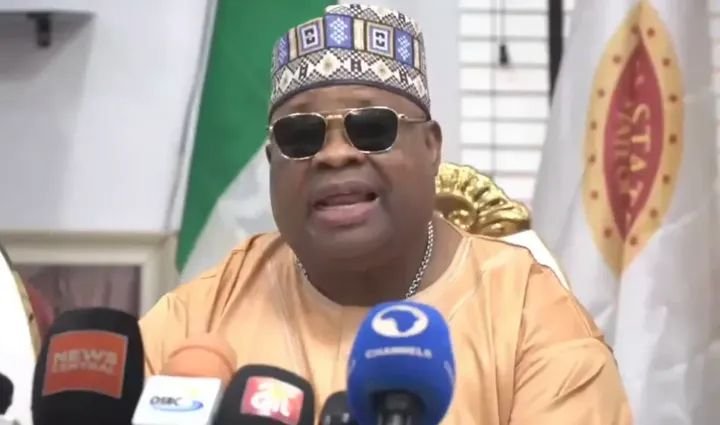
Osun State Governor Ademola Adeleke has dissolved the State Executive Council and relieved political appointees of their appointments ahead of his second-term inauguration, while exempting key government institutions and statutory boards from the exercise.
The decision, announced on Wednesday, November 25, 2026, in Osogbo, preserves the positions of the Secretary to the State Government (SSG), the Chief of Staff to the Governor and the governor’s spokesperson.
The Local Government Service Commission, the State Universal Basic Education Board (SUBEB) and the recently reconstituted governing board of Osun State University (UNIOSUN) were also identified among the institutions spared from the dissolution.
The development comes as Adeleke prepares to begin another term following his re-election in the August 2026 governorship election.
According to a statement issued by the governor’s spokesperson, Mallam Olawale Rasheed, the dissolution forms part of the administration’s transition process ahead of the second-term inauguration scheduled for Friday, November 27.
Adeleke Dissolves Executive Council Ahead of Second Term
Announcing the decision during a valedictory session with members of the outgoing cabinet, Adeleke commended commissioners and other political appointees for their contributions to his administration.
The governor reflected on the administration’s performance since taking office in November 2022, describing the period as one marked by significant challenges, policy initiatives and development projects.
He said members of the outgoing executive council had worked together to advance the state’s development across several sectors.
Adeleke particularly highlighted achievements in education, healthcare, infrastructure, sports, science and technology, the digital economy and climate change.
He also acknowledged the contributions of political appointees, noting that their service had played a role in implementing government policies and programmes.
The governor subsequently announced the dissolution of the State Executive Council and the termination of appointments held by affected political appointees.
However, he clarified that the exercise would not affect every political office or government institution.
SSG, Chief of Staff and Spokesperson Retained
Despite the dissolution, Adeleke exempted three principal members of his administration from the decision.
They are the Secretary to the State Government, the Chief of Staff to the Governor and the governor’s spokesperson.
The retention of the officials means they will continue in their respective positions despite the broader restructuring of the executive administration.
The Secretary to the State Government plays an important coordinating role in government operations, while the Chief of Staff assists the governor in managing administrative and political responsibilities.
The governor’s spokesperson is responsible for communicating government decisions, official positions and policy developments to the public.
Their exemption provides continuity in some of the central administrative and communication functions of the government as the governor prepares for his next term.
Local Government Service Commission, SUBEB and UNIOSUN Board Exempted
A significant aspect of the announcement concerns the decision to preserve selected government commissions and institutional governing boards.
The Local Government Service Commission and the recently reconstituted governing board of Osun State University were specifically mentioned in the governor’s official announcement.
SUBEB was also identified among the institutions exempted in the official state government’s announcement.
The decision means the affected institutions will not be subjected to the same dissolution affecting the outgoing executive council and political appointees.
The Local Government Service Commission is responsible for important aspects of personnel administration within the local government system, while SUBEB oversees the implementation and administration of basic education policies across the state.
UNIOSUN’s governing board provides institutional oversight and helps guide the university’s administration and strategic direction.
Preserving these institutions could help maintain administrative continuity in areas where ongoing programmes, institutional responsibilities and governance arrangements require stability.
However, the announcement does not provide a detailed explanation of the individual considerations behind each exemption.
It is also important to distinguish between the dissolution of the State Executive Council and the status of statutory commissions. The official announcement specifically identifies the institutions and boards being retained; it does not separately name the Osun State Independent Electoral Commission (OSIEC) and the State Civil Service Commission in its list of exemptions.
Affected Appointees Directed to Hand Over
As part of the transition arrangements, Adeleke directed all affected political appointees to hand over their responsibilities to the appropriate career civil servants.
According to the announcement, the affected officials are expected to transfer the affairs of their respective ministries and offices to directors or permanent secretaries.
The directive is intended to ensure that government operations continue while the outgoing political leadership exits office.
Permanent secretaries and directors are career public servants who provide administrative continuity within ministries, departments and agencies, irrespective of changes in political leadership.
Their involvement in the handover process is therefore important in preventing unnecessary disruptions to government activities.
The governor also expressed appreciation to the outgoing appointees for their service and wished them success in their future endeavours.
Adeleke Reflects on Four Years in Office
During the valedictory cabinet session, the governor reflected on his administration’s journey since assuming office on November 27, 2022.
He praised members of the outgoing council for their commitment, sacrifices and contributions to governance.
Adeleke said his administration had confronted several challenges while pursuing development projects and implementing policies across different sectors.
He also claimed that the government had recorded progress in areas including education, healthcare, sports, infrastructure, science and technology, the digital economy and climate change.
The governor further noted that his administration had received recognition from local and national organisations for its activities.
While acknowledging the contributions of his political team, the governor described their collective service as an important part of his administration’s record.
The outgoing council members also took turns reflecting on their experiences serving under Adeleke, expressing their views on the administration and their time in government.
Background: Adeleke’s First-Term Administration
Adeleke assumed office as Osun State governor on November 27, 2022, following his victory in the July 2022 governorship election.
His emergence marked a change in the state’s political leadership, with his administration subsequently undertaking changes to government appointments, commissions and boards.
In November 2022, shortly after taking office, Adeleke approved the dissolution of non-statutory boards, commissions and parastatals, while exempting the governing board of Osun State University.
The administration also announced the dissolution of several statutory commissions in October 2023, including the Osun State Independent Electoral Commission, the State Civil Service Commission, the Judicial Service Commission and the House of Assembly Service Commission.
The government subsequently defended the 2023 decision, arguing that the affected appointments had legal deficiencies.
The latest November 2026 announcement, however, concerns the dissolution of the outgoing executive council and political appointments ahead of the governor’s second term, alongside the retention of selected institutions and boards.
The distinction is important because the dissolution of political appointments does not automatically mean that every government institution, commission or statutory board has been dissolved.
Why the Decision Matters
The restructuring of the Osun State Executive Council represents an important administrative development as the state prepares for another four years under Adeleke’s leadership.
For the incoming administration, the dissolution provides an opportunity to review political appointments, reorganise executive responsibilities and determine the composition of the next cabinet.
The retention of selected commissions and institutional boards also raises questions about the balance between political restructuring and continuity in public administration.
Institutions such as SUBEB and UNIOSUN have responsibilities that extend beyond the immediate activities of the executive council. Maintaining their governing arrangements could help ensure that ongoing institutional programmes are not unnecessarily interrupted.
For residents, the effectiveness of the transition will ultimately depend on how quickly the government establishes its new executive team and maintains the delivery of essential public services.
Education, healthcare, infrastructure, local government administration and other public services will remain important areas requiring attention during the second term.
The administration will also face expectations to demonstrate measurable progress on the development priorities it highlighted during its first term.
What Happens Next?
Adeleke’s second-term inauguration is scheduled for Friday, November 27, 2026.
Following the dissolution, attention is expected to shift towards the constitution of a new State Executive Council and the possible appointment of commissioners and other political officials.
The affected appointees are expected to complete their handover responsibilities to permanent secretaries or directors in their respective ministries and agencies.
Meanwhile, the retained principal officials and exempted institutions will continue under the arrangements announced by the governor.
The composition of the next cabinet and the policy direction of the incoming administration will provide further indications of how Adeleke intends to organise governance during his second term.
For now, the governor’s decision marks the formal conclusion of the existing cabinet arrangement and the beginning of a new administrative phase in Osun State.
Weng Global – Stories beyond borders
Sources
- Osun State Government – Governor Adeleke Dissolves Osun State Executive Council (November 25, 2026).
- TheCable – Adeleke Dissolves Osun Cabinet Ahead of Second-Term Inauguration.
- Tribune Online – Adeleke Dissolves Cabinet Ahead of Second-Term Inauguration.
- The Nation – Gov Adeleke Sacks Cabinet Members, Appointees.
- Osun State Government – Governor Adeleke Dissolves Statutory Commissions (October 2023).