Reported by Simon Daniel Yusuph l Journalist at Weng Global
The Premier League has released explanations surrounding several major VAR decisions from Matchweek 4, including the red cards shown to Manchester City’s Phil Foden, Coventry City’s Taiwo Awoniyi and Crystal Palace’s Axel Disasi.
The three dismissals occurred in separate matches and had significant consequences for their respective teams, with VAR reviews confirming the decisions in each case.
Foden was dismissed during Manchester City’s meeting with Manchester United, Awoniyi was sent off against Brighton, while Disasi received a straight red card during Crystal Palace’s encounter with Ipswich Town.
The decisions have attracted considerable attention as the Premier League continues efforts to improve transparency around refereeing and VAR decisions.
Phil Foden’s red card against Manchester United
Foden was sent off during Manchester City’s 1-0 victory over Manchester United at Old Trafford.
The Manchester City forward received a straight red card after an off-the-ball incident involving United captain Bruno Fernandes.
The dismissal left City with 10 players for most of the match and placed additional pressure on Pep Guardiola’s side in a fiercely contested Manchester derby.
Despite playing with a numerical disadvantage, City secured all three points through an Erling Haaland goal.
The incident was reviewed by VAR, but the on-field decision to dismiss Foden was maintained.
The case highlights one of the central principles of VAR: the technology does not automatically overturn a referee’s decision. VAR intervention is generally reserved for situations in which officials believe a clear and obvious error has occurred or a serious missed incident needs to be reviewed.
Awoniyi sent off against Brighton
Nigerian striker Taiwo Awoniyi was another prominent player dismissed during Matchweek 4.
Awoniyi was shown a straight red card during Coventry City’s match against Brighton after an aerial challenge involving Brighton defender Maxim De Cuyper.
The incident was reviewed by VAR before the dismissal was upheld.
Awoniyi’s red card came during a difficult afternoon for Coventry, who eventually suffered a heavy 5-0 defeat.
The result compounded Coventry’s difficult beginning to life in the Premier League, while Awoniyi’s dismissal is expected to keep him out of upcoming domestic fixtures depending on the resulting disciplinary sanction.
For the Nigerian forward, the incident represents an early setback as he continues his campaign with Coventry.
The club will now have to manage the consequences of both the heavy defeat and the striker’s suspension.
Disasi dismissal against Ipswich Town
Crystal Palace defender Axel Disasi was also shown a straight red card during Matchweek 4.
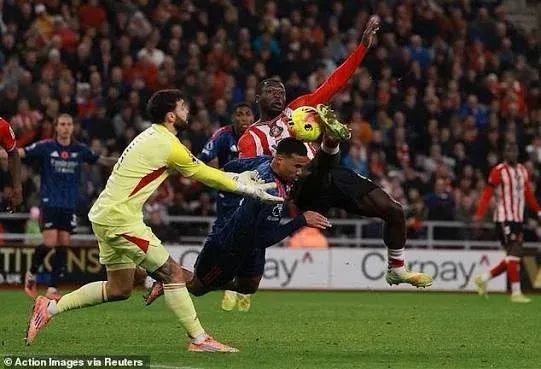
Disasi was dismissed during Palace’s home match against Ipswich Town after a high-footed challenge involving Ipswich forward Jack Clarke.
The referee immediately produced the red card, while VAR subsequently checked the incident.
The dismissal was upheld.
Palace were forced to play with 10 men for a significant portion of the match and eventually lost 3-2.
The defeat was particularly damaging because Palace had taken an early lead but were unable to hold on after Disasi’s dismissal.
The incident demonstrated how a single disciplinary decision can dramatically alter the balance of a Premier League match.
Why VAR decisions are being explained
The Premier League has been increasing the amount of information available to supporters about major refereeing decisions.
The league has introduced greater communication around significant VAR incidents and has also continued publishing assessments from its independent Key Match Incident Panel.
The panel reviews major refereeing decisions, including red cards, penalties and other significant incidents.
The objective is to provide greater clarity about how controversial decisions are reached.
VAR has transformed football officiating by allowing referees to review incidents that may otherwise be difficult to judge in real time. However, the system has also generated continuing debate among supporters, players, managers and analysts.
Publishing explanations is therefore intended to make the process more transparent.
How VAR deals with red cards
A red-card decision is one of the incidents that can be reviewed by VAR.
When VAR identifies a potential clear and obvious error, the video official can recommend an on-field review.
The referee then examines the incident and makes the final decision.
This means that VAR does not independently issue or cancel a red card. The ultimate authority remains with the referee on the field.
That distinction is important in understanding the cases involving Foden, Awoniyi and Disasi.
Although all three incidents underwent VAR scrutiny, the original red-card decisions were ultimately maintained.
The impact on the three clubs
The consequences of the three dismissals extend beyond the individual players.
Manchester City had to play most of the Manchester derby with 10 men but still managed to secure a 1-0 victory.
For Coventry, Awoniyi’s dismissal came during a 5-0 defeat to Brighton and could leave the club without one of its attacking options for forthcoming matches.
Crystal Palace similarly suffered after Disasi’s dismissal, eventually losing 3-2 to Ipswich.
The suspensions resulting from the three red cards could therefore have an impact on upcoming fixtures, particularly for clubs dealing with injuries, congested schedules or limited squad depth.
Why the decisions matter
The three incidents underline the continuing importance of VAR in Premier League football.
While technology has reduced some obvious refereeing errors, it has not eliminated disagreement over subjective decisions.
Football supporters can watch the same incident from several camera angles and still reach different conclusions about whether a challenge deserves a yellow card, red card or no punishment.
The challenge for the Premier League is therefore not only to make VAR decisions accurate but also to make the reasoning behind them understandable.
Greater transparency can help supporters understand why a particular decision was reached, even when they disagree with the outcome.
The release of VAR explanations is consequently an important part of the league’s broader effort to improve confidence in match officiating.
What happens next
Foden, Awoniyi and Disasi will now face the relevant disciplinary consequences associated with their respective dismissals.
The length of their suspensions will depend on the nature of the offences and the applicable Premier League disciplinary rules.
Their respective clubs will also have to adjust their squads while the players serve any confirmed bans.
For supporters, attention will now turn to how the Premier League continues to explain major refereeing decisions as the season progresses.
The Matchweek 4 incidents involving Foden, Awoniyi and Disasi show that VAR remains central to the modern Premier League not only because of the decisions it influences, but because of the continuing demand for greater transparency from football authorities.
Weng Global – Stories beyond borders
Sources
. Premier League
. Reuters
. BBBC Sport
. The Guardian
. Crystal Palace official website
. NBC Sports