Reported by Simon Daniel Yusuph l Journalist at Weng Global
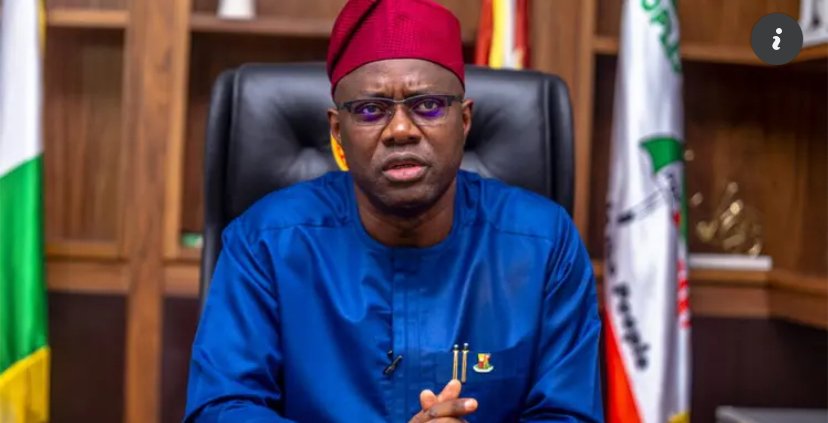
Oyo State Governor and presidential candidate of the Allied Peoples Movement (APM), Seyi Makinde, has repeatedly framed the 2027 presidential election as a contest between the ruling All Progressives Congress (APC) and Nigerians rather than a conventional battle between political parties.
Makinde renewed the position on September 22, 2026, at the APM North-West Zonal Town Hall Meeting in Katsina, where he presented his “Reset Nigeria” agenda ahead of the 2027 election.
“For the election, I maintain and repeat it: it won’t be APC versus APM, or APM versus ADC, or ADC versus NDC. It will be APC versus Nigerians,” Makinde said.
The statement is significant because Makinde is no longer speaking only as an opposition governor. He is now the presidential candidate of the APM, meaning the argument forms part of his campaign strategy as he seeks to present the 2027 election as a referendum on the direction of the country rather than simply a contest between party structures.
From PDP Opposition to APM Presidential Candidate
Makinde’s “APC versus Nigerians” argument did not begin with his move to the APM.
He made a similar argument in November 2024 while still associated with the Peoples Democratic Party (PDP), saying the 2027 election would be between the APC and the Nigerian people rather than between the APC and the PDP. At the time, he urged PDP leaders to unite their political base and allow voters to determine the country’s next leadership.
The political circumstances have since changed.
Makinde has moved into the presidential contest under the APM and has formally launched a campaign built around the “Reset Nigeria” message. The campaign’s platform identifies the economy, education, security and governance or socio-political development as its central areas of focus.
That makes his latest formulation less about identifying the APM as the sole alternative to the APC and more about portraying the election as a choice between the governing system represented by the APC and the interests of ordinary voters.
Why Makinde Uses the ‘Nigerians’ Argument
The language allows Makinde to shift the focus from party-versus-party politics to issues affecting citizens.
Rather than saying voters are simply choosing between APC and APM, he argues that Nigerians themselves should be the central participants in deciding the country’s political direction.
At the Katsina town hall, he urged Nigerians to obtain their Permanent Voter Cards and participate in the 2027 election. He also argued that Nigeria was bigger than individual political figures and existing political systems.
This is consistent with the broader message of his campaign, which describes “Reset Nigeria” as an effort to address problems that, according to Makinde, go beyond individual office holders.
In his September 2026 newsletter, Makinde said the agenda was designed around four pillars: the economy, education, security and socio-political development. He argued that Nigeria’s problems require changes to systems and institutions rather than simply changing the people occupying political offices.
The Economic Argument
Economic hardship is one of the main issues Makinde has placed at the centre of his campaign.
At the Katsina meeting, he argued that Nigeria’s natural resources alone could not guarantee prosperity. He said the country needed greater investment in skills, knowledge and productive economic activity.
The APM’s campaign platform similarly describes its economic objective as building a productive economy capable of creating jobs, supporting businesses and improving household prosperity.
Makinde has also previously argued that Nigeria’s petroleum resources should provide measurable benefits to citizens, including greater transparency across crude production, allocation, refining, transportation, distribution and retail.
By placing economic issues at the centre of his campaign, the governor is seeking to connect the presidential election to everyday concerns such as employment, household income, energy costs and economic opportunity.
Education and the Out-of-School Crisis
Education is another major component of the “Reset Nigeria” proposal.
Makinde has argued that government needs reliable information about the number of children who are out of school before designing effective interventions.
His campaign’s published agenda also places education alongside the economy, security and governance as one of its four major priorities. It says the proposed approach would focus on quality schools, practical skills and opportunities for Nigerian children and young people.
The emphasis allows Makinde to frame the 2027 contest around long-term national development rather than solely around political personalities.
Security and Devolution of Powers
Security is another issue behind Makinde’s argument that Nigerians should be central to the 2027 contest.
At the Katsina meeting, he linked insecurity and economic hardship, arguing that government responses should address underlying causes as well as enforcement.
He also advocated greater devolution of responsibilities to states, including a proposal for states to have a larger role in mining administration while the Federal Government retains regulatory oversight.
His broader socio-political proposal calls for more responsibilities to be devolved to states in an effort to bring decision-making closer to citizens.
Makinde’s campaign platform similarly describes its governance objective as a public service system focused on responsible resource management and measurable delivery.
A Direct Contrast With the APC
Although Makinde says the election will be “APC versus Nigerians,” the APC remains the principal political force against which his campaign is positioning itself.
Makinde has criticised the Tinubu administration over economic conditions, security and aspects of governance. His campaign has also presented the 2027 contest as an opportunity to change the country’s political direction.
The APC, however, has its own response to Makinde’s presidential ambition.
In September, the Oyo State chapter of the APC criticised Makinde’s bid and questioned his capacity to challenge President Bola Tinubu in 2027. The party also alleged that public resources were being used in connection with his presidential ambition. Those are political claims by the APC and should not be treated as established facts without independent evidence.
The competing positions illustrate the broader political contest emerging ahead of the election: Makinde is presenting the race as a choice centred on citizens and national issues, while the ruling party and its supporters are challenging his record, political platform and ability to mount a national challenge.
Makinde’s Campaign Has Become More Structured
The “APC versus Nigerians” message is also being delivered within an increasingly organised presidential campaign.
The APM formally began its 2027 presidential campaign activities in September, including the commissioning of its campaign headquarters in Abuja. The party said its campaign would focus on issues and present policy choices to voters.
The Makinde-Daura campaign has subsequently started zonal town hall meetings, with engagements planned across Nigeria’s six geopolitical zones. BusinessDay reported that the meetings were intended to be issue-based and citizen-driven.
The Katsina meeting therefore formed part of a broader attempt to take the campaign beyond party headquarters and engage voters directly.
Why the Wording Matters
Makinde’s choice of words matters because Nigeria’s presidential elections are formally contested by political parties and their candidates.
By describing the contest as “APC versus Nigerians,” he is using political language to redefine the meaning of the election.
The formulation suggests that, in his view, voters should see themselves not merely as supporters of an opposition party but as citizens deciding whether the current political direction should continue.
That distinction is central to his “Reset Nigeria” message.
At the same time, the statement remains a campaign argument rather than an established description of how the 2027 election will unfold. The election will involve multiple political parties and candidates, and voters will ultimately determine the result through the electoral process.
What Happens Next
Makinde’s campaign is expected to continue using the “Reset Nigeria” agenda as it engages voters across the country.
The four principal areas already identified by the campaign are the economy, education, security and socio-political development. The campaign says it intends to provide further details about its proposals, including how they would be implemented and measured.
For voters, the significance of the emerging debate will ultimately depend on how clearly the competing candidates and parties explain their policies, records, proposed reforms and plans for implementation.
The 2027 presidential contest is still developing, and the positions of the different political actors are likely to evolve as campaigns progress.
For Makinde, however, the central message is already clear: he wants Nigerians to view the election not simply as a contest between APC and another political party, but as a decision about the country’s direction and the performance of those currently controlling the federal government.
Weng Global – stories beyond borders
Sources
- Channels Television
- Punch
- The Guardian Nigeria
- BusinessDay
- Seyi Makinde’s official campaign platform
- Seyi Makinde’s official newsletter