Reported by Simon yusuph,| Journalist at wengglobal
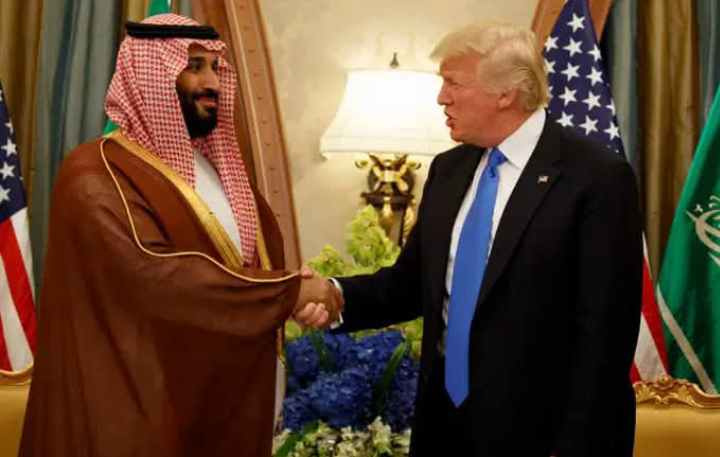
The United States is reportedly preparing to finalize a landmark 30-year civilian nuclear cooperation agreement with Saudi Arabia, a move that could significantly reshape energy development, geopolitical alliances, and regional security dynamics across the Middle East.
According to multiple international media reports, Washington and Riyadh are advancing negotiations on a long-term framework that would support the Kingdom’s ambitions to establish a peaceful civilian nuclear energy program. The proposed agreement, expected to span three decades, is being viewed as one of the most significant strategic partnerships between the two countries in recent years.
If concluded, the deal would enable Saudi Arabia to expand its energy portfolio beyond oil by developing nuclear power for electricity generation, industrial growth, and long-term economic diversification under the Kingdom’s Vision 2030 strategy.
The reported agreement comes at a time when global demand for clean and reliable energy sources continues to rise. Nuclear power is increasingly being considered by many countries as an important component of efforts to reduce carbon emissions while maintaining stable electricity supplies.
Saudi Arabia has repeatedly stated that its interest in nuclear technology is focused on peaceful civilian purposes. The Kingdom argues that nuclear energy will help meet growing domestic electricity demand, preserve more crude oil for export, and support economic transformation initiatives designed to reduce dependence on petroleum revenues.
For the United States, the agreement represents more than an energy partnership. Analysts believe it reflects Washington’s broader strategy to strengthen its influence in the Gulf region amid increasing competition from other global powers, particularly China and Russia, both of which have expanded their economic and technological engagement across the Middle East.
A long-term nuclear cooperation framework would also deepen strategic ties between Washington and Riyadh after years of fluctuating diplomatic relations driven by disagreements over regional conflicts, oil production policies, and human rights concerns.
Under US law, civilian nuclear cooperation agreements commonly referred to as “123 Agreements” under the US Atomic Energy Act establish the legal framework governing the transfer of nuclear technology, materials, equipment, and expertise to partner nations. Such agreements typically include stringent safeguards designed to ensure that transferred technology is used exclusively for peaceful purposes and remains subject to international monitoring.
One of the most closely watched aspects of the negotiations is whether Saudi Arabia will accept restrictions on uranium enrichment and spent fuel reprocessing activities that can potentially be used in the production of nuclear weapons if diverted from civilian purposes.
Previous negotiations between the two countries encountered obstacles over these issues, with US officials seeking stronger non-proliferation commitments while Saudi Arabia maintained its sovereign right to develop nuclear fuel-cycle capabilities under international law.
International observers say the final structure of the agreement will likely determine how it is received by lawmakers in Washington, regional allies, and global nuclear watchdogs.
The International Atomic Energy Agency (IAEA) is expected to play an important oversight role should the program move forward, ensuring compliance with international nuclear safety and non-proliferation standards.
The proposed partnership also reflects Saudi Arabia’s broader investment in advanced technologies aimed at modernizing its economy. Vision 2030, launched by Crown Prince Mohammed bin Salman, places significant emphasis on renewable energy, technological innovation, industrial development, and sustainable infrastructure.
Alongside investments in solar and wind energy, nuclear power has been identified as a key pillar of the Kingdom’s long-term energy security strategy. Saudi officials argue that a balanced energy mix will strengthen national resilience while supporting population growth and industrial expansion.
The timing of the reported agreement is also strategically significant. The Middle East has become an increasingly competitive arena for global influence, with China strengthening trade and infrastructure partnerships while Russia continues to expand cooperation in the energy and defense sectors.
By advancing a comprehensive nuclear agreement, the United States appears determined to reinforce its long-standing security partnership with Saudi Arabia while maintaining a central role in the Kingdom’s future energy development.
Regional analysts note that the agreement could have implications beyond bilateral relations. Other Gulf Cooperation Council (GCC) countries are also investing in nuclear and renewable energy as they seek to diversify their economies and prepare for a future in which fossil fuels may play a less dominant role.
The United Arab Emirates already operates the Barakah Nuclear Energy Plant, the Arab world’s first commercial nuclear power station, providing a model that Saudi Arabia has closely studied.
Supporters of the proposed US-Saudi agreement argue that American participation would ensure higher standards of safety, transparency, and regulatory oversight compared to alternative partnerships with rival global powers.
Critics, however, continue to express concern that expanding nuclear capabilities in an already volatile region requires robust safeguards and sustained international monitoring to prevent proliferation risks.
US lawmakers are also expected to scrutinize the final agreement carefully. Congressional approval processes and legal reviews could influence the timeline for implementation, particularly if questions arise regarding non-proliferation commitments or broader regional security considerations.
Energy experts say that if implemented successfully, Saudi Arabia’s civilian nuclear program could contribute significantly to global efforts aimed at achieving lower-carbon energy systems while supporting the Kingdom’s rapidly growing electricity demand.
For Africa and other emerging economies, developments surrounding the proposed agreement may also carry important lessons. Several African nations are exploring nuclear energy as part of broader strategies to expand electricity access, industrialization, and climate resilience. The evolving US-Saudi partnership may therefore shape future international cooperation models in civilian nuclear development.
As negotiations continue, attention will remain focused on the final terms of the agreement, particularly its safeguards, transparency mechanisms, and compliance with international law. The outcome could redefine strategic relations between Washington and Riyadh while influencing the future balance of energy security and geopolitical competition across the Middle East.
Whether viewed primarily as an energy initiative, a diplomatic breakthrough, or a strategic geopolitical investment, the proposed 30-year nuclear agreement represents a significant milestone with implications extending well beyond the borders of Saudi Arabia and the United States.
Sources:
- Reuters
- Bloomberg
- Associated Press (AP)
- Financial Times
- The Wall Street Journal
- International Atomic Energy Agency (IAEA)
- United States Department of Energy