Reported by Simon yusuph,| Journalist at wengglobal
NEW YORK United Nations Secretary-General António Guterres has called on governments, international institutions, civil society organizations, businesses, and individuals across the world to intensify efforts to eradicate poverty and reduce inequality, describing the fight against deprivation as one of the defining challenges of the modern era.
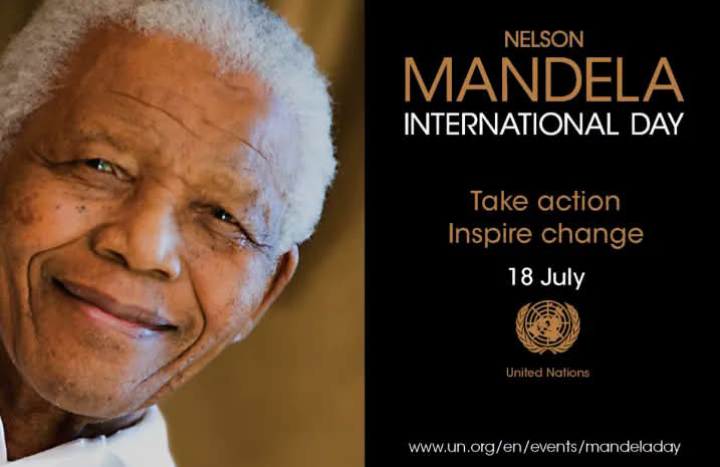
In his message marking Nelson Mandela International Day, observed annually on July 18, Guterres urged the global community to honour the enduring legacy of South Africa’s first democratically elected president by taking concrete action to build societies founded on justice, equality, dignity, and human rights.
The UN chief said Mandela’s life remains a timeless reminder that lasting peace and development cannot be achieved while millions of people continue to live in poverty, face discrimination, or lack access to education, healthcare, decent employment, and equal opportunities.
“Nelson Mandela believed that overcoming poverty is not an act of charity but an act of justice,” Guterres noted, echoing one of Mandela’s most celebrated principles. He stressed that the world must move beyond symbolic commemorations by translating Mandela’s ideals into practical policies capable of transforming lives.
Mandela’s Legacy Remains Relevant
Nelson Mandela International Day was established by the United Nations General Assembly in 2009 to recognize Mandela’s lifelong commitment to peace, reconciliation, democracy, and human dignity. Celebrated every year on his birthday, the day encourages people around the world to devote 67 minutes of public service, representing the 67 years Mandela dedicated to fighting for social justice and equality.
This year’s observance comes at a time when the world faces multiple overlapping crises, including persistent poverty, widening income inequality, armed conflicts, climate-related disasters, rising food insecurity, and economic uncertainty. These challenges have slowed progress toward achieving the United Nations Sustainable Development Goals (SDGs), particularly the goal of ending poverty in all its forms by 2030.
According to recent UN assessments, hundreds of millions of people worldwide continue to live in extreme poverty, while inequality within and between countries continues to widen. The Secretary-General warned that these realities threaten global stability and undermine efforts to promote sustainable development.
A Call for Collective Responsibility
Guterres emphasized that governments alone cannot solve the world’s most pressing challenges. He called for stronger collaboration among public institutions, the private sector, humanitarian organizations, youth groups, community leaders, and citizens.
He encouraged individuals to participate in acts of service within their communities, saying meaningful change often begins with local action. Whether through volunteering, supporting vulnerable populations, mentoring young people, promoting education, or advocating for social justice, every contribution, he said, helps preserve Mandela’s vision of a more equitable world.
The UN chief also reiterated the importance of strengthening international cooperation to address structural inequalities that continue to affect developing nations, particularly across Africa, Asia, Latin America, and other regions facing persistent economic challenges.
Africa’s Development Remains Central
For Africa, Nelson Mandela Day carries profound significance beyond remembrance. Mandela’s struggle against apartheid and his commitment to reconciliation transformed not only South Africa but also inspired liberation movements and democratic reforms across the continent.
Guterres acknowledged that while many African countries have made significant developmental gains over recent decades, millions still face challenges related to unemployment, inadequate healthcare, limited educational opportunities, food insecurity, and the effects of climate change.
He urged wealthier nations and international financial institutions to strengthen partnerships with developing countries through increased investments, debt relief initiatives where appropriate, technology transfer, and equitable access to financing that supports sustainable development.
Analysts say such measures are essential if African economies are to accelerate progress toward achieving the SDGs while creating inclusive growth that benefits all citizens.
Poverty and Inequality Threaten Global Stability
The Secretary-General warned that poverty and inequality are not isolated humanitarian issues but global challenges with far-reaching consequences for peace, security, migration, and economic development.
Communities experiencing persistent deprivation are often more vulnerable to conflict, political instability, disease outbreaks, and environmental shocks. Addressing these root causes, he argued, requires long-term investments in education, healthcare systems, social protection programmes, job creation, and climate resilience.
The UN has consistently advocated for policies that promote inclusive economic growth while protecting the rights of marginalized populations, including women, children, persons with disabilities, refugees, and indigenous communities.
Mandela’s Vision Continues to Inspire
Throughout his life, Nelson Mandela championed forgiveness over revenge, dialogue over division, and justice over oppression. After spending 27 years in prison, he emerged committed to national reconciliation rather than retaliation, helping South Africa transition peacefully from apartheid to democracy.
His leadership earned worldwide respect and established him as one of history’s most influential advocates for human rights.
Each year, Nelson Mandela International Day serves not only as a tribute to his extraordinary life but also as a reminder that individuals possess the power to influence positive change within their communities.
The Secretary-General urged people everywhere to embrace Mandela’s example by rejecting discrimination, promoting equality, defending human rights, and working together to create societies where every individual can live with dignity and opportunity.
Renewing Commitment to the Sustainable Development Goals
The appeal also reinforces the United Nations’ broader campaign to accelerate implementation of the Sustainable Development Goals before the 2030 deadline. Progress has been uneven since the COVID-19 pandemic, with economic disruptions, inflation, conflicts, and climate emergencies reversing gains in several regions.
The UN continues to advocate for stronger international cooperation to ensure no country or community is left behind.
As governments, institutions, and citizens commemorate Nelson Mandela International Day, the Secretary-General’s message serves as both a tribute to one of the world’s greatest moral leaders and a challenge to today’s generation to continue the unfinished work of building a more just, peaceful, and inclusive world.
For wengglobal, Mandela’s legacy remains especially significant across Africa, where his vision of unity, justice, democratic governance, and shared prosperity continues to inspire efforts toward sustainable development. The annual observance reminds global leaders that the fight against poverty and inequality demands sustained political will, inclusive policies, and collective action that extends beyond commemorative events.
Ultimately, Guterres’ appeal underscores a simple but powerful truth that Mandela himself championed throughout his lifetime: a world free from poverty, injustice, and inequality is possible only when humanity chooses solidarity over division and action over indifference.
Sources:
- United Nations (UN)
- United Nations Secretary-General António Guterres’ Nelson Mandela Day Statement
- United Nations News
- Reuters
- Associated Press (AP)