Reported by Simon Daniel Yusuph l Journalist at Weng Global
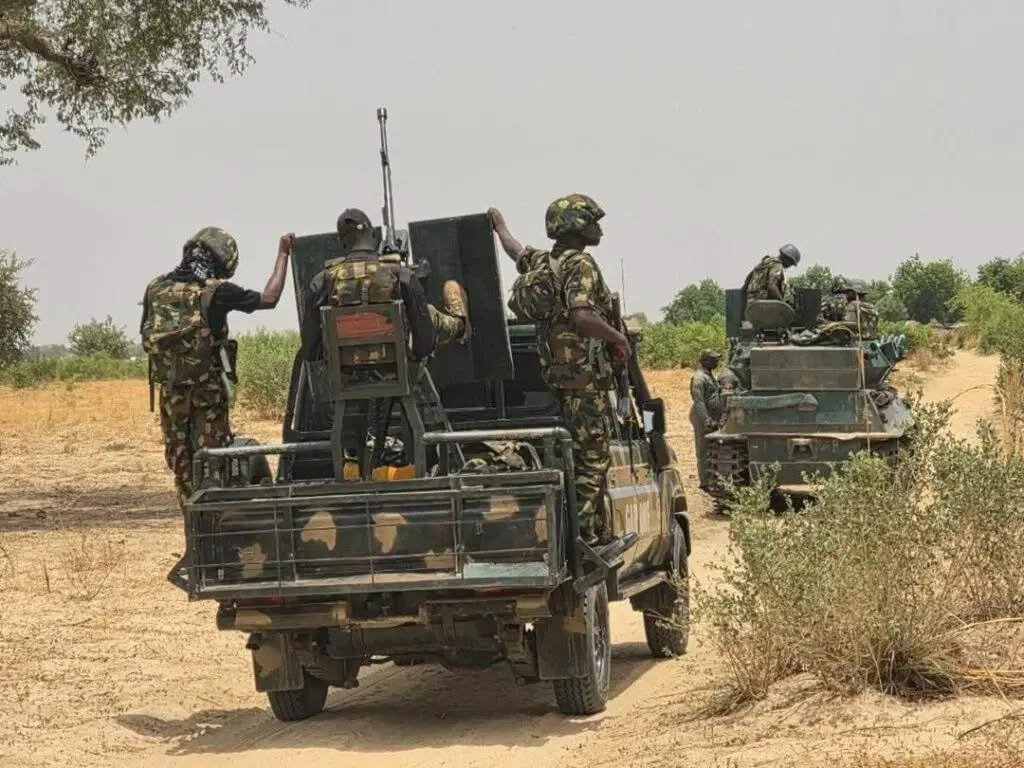
Nigerian troops under Operation HADIN KAI have repelled an attack by suspected Islamic State West Africa Province (ISWAP) fighters on a military position in Borno State, forcing the attackers to withdraw after a firefight, military and security sources have reported.
The reported assault occurred in the Pulka area of Gwoza Local Government Area, where troops, supported by the Nigerian Air Force and the Civilian Joint Task Force, prevented the terrorists from overrunning the military location.
The Nigerian military said the attackers withdrew with casualties, although the available official account did not provide a confirmed number of terrorists killed. Weng Global therefore could not independently verify the separate claim that more than 25 terrorists were killed in the encounter.
Main Development
The attack was reported on September 7, 2026, as suspected ISWAP fighters attempted to assault a military position in Pulka, a strategic community in Gwoza Local Government Area of Borno State.
According to the Nigerian Army’s account, troops operating under Operation HADIN KAI came under sustained attack but maintained their positions and responded with determined firepower.
The attackers were ultimately prevented from breaching or overrunning the military location and were forced to withdraw.
The operation also involved support from the Nigerian Air Force and the Civilian Joint Task Force, according to the military statement reported by Punch and the Voice of Nigeria.
The military said the air support strengthened the ground troops’ response and contributed to the successful defence of the position.
The reported encounter is part of continuing counter-insurgency operations in northeastern Nigeria, particularly in Borno State, where ISWAP and Boko Haram factions remain active despite sustained military operations.
Military Position Held Against Attack
The latest incident highlights the continuing importance of military Forward Operating Bases and other security positions across Borno.
Such locations serve as important points from which Nigerian forces conduct patrols, intelligence operations and counter-insurgency missions in communities affected by terrorist activity.
The Pulka area is particularly significant because Gwoza Local Government Area has experienced years of violence linked to Boko Haram and ISWAP.
The military’s account indicates that the attackers attempted to exploit an opportunity to penetrate the position but were stopped by troops before they could overrun the location.
The use of coordinated ground and air capabilities has become an increasingly important component of Nigeria’s counter-insurgency strategy.
In this case, troops on the ground held their positions while air support strengthened the response.
The military subsequently began exploitation operations to assess the aftermath of the engagement and gather additional intelligence, according to reports on the incident.
Casualty Figures Require Caution
Claims about the number of terrorists killed during military engagements in northeastern Nigeria often emerge shortly after battles, but casualty figures can be difficult to independently establish.
The available report on the Pulka attack said the terrorists withdrew with casualties but did not provide a verified figure for the number killed.
That distinction is important.
While the headline circulating about the incident claims that troops killed more than 25 terrorists, Weng Global has not found sufficiently reliable independent evidence to establish that figure for the September Pulka attack.
The report should therefore not treat the number as confirmed.
Previous military operations in Borno have produced higher confirmed or officially reported casualty claims, but those figures relate to different engagements and should not be transferred to the Pulka incident.
For example, Reuters reported in March that the Nigerian military said at least 80 insurgents were killed when troops repelled an assault on a military base at Mallam Fatori in Borno State. Reuters noted that some of the military’s claims, including the identities of senior commanders reportedly killed, could not be independently verified.
That earlier incident demonstrates why casualty claims from battlefield engagements should be attributed carefully.
ISWAP’s Continuing Pressure on Military Positions
The attack comes amid a broader pattern of assaults on Nigerian military positions by insurgent groups operating in northeastern Nigeria.
ISWAP has increasingly demonstrated the ability to coordinate attacks against military bases and checkpoints, placing pressure on troops deployed to protect communities and maintain territorial control.
A review published by TheCable earlier in 2026 documented a series of attacks on military bases across Nigeria, particularly in Borno State.
The report identified a pattern in which insurgents have targeted military formations rather than relying exclusively on attacks against civilian locations.
The strategy places significant pressure on troops because military bases are critical to maintaining security coverage across remote areas.
The repeated attacks have also raised concerns about the ability of terrorist groups to obtain intelligence about military positions, coordinate fighters across difficult terrain and sustain operations despite pressure from Nigerian security forces.
Borno Remains the Centre of the Insurgency
Borno State remains at the heart of Nigeria’s long-running insurgency.
The conflict began with Boko Haram’s violent campaign more than a decade ago and later became more complicated following the emergence of ISWAP as a distinct faction.
Although the groups have different organisational structures and strategic approaches, both have remained capable of conducting attacks in parts of northeastern Nigeria.
Communities around Lake Chad and areas bordering Cameroon, Chad and Niger have been particularly exposed to militant activity.
Military operations have significantly disrupted some insurgent networks, but the persistence of attacks demonstrates that the security challenge has not been eliminated.
The continued targeting of military positions also means that Nigerian forces must defend bases while simultaneously conducting offensive operations against terrorist networks.
The Role of Air Support
Air support has become an important component of Operation HADIN KAI’s operations.
In the Pulka incident, the military said timely air support strengthened the response to the attack.
The Nigerian Air Force has increasingly been used for intelligence, surveillance and reconnaissance, as well as precision strikes against terrorist targets where operational conditions permit.
The effectiveness of air-ground coordination has been demonstrated in previous engagements.
However, air operations also require careful intelligence and targeting because civilian populations live in or near many areas where armed groups operate.
The objective of military operations is therefore not simply to defeat attackers but also to protect civilians and prevent further displacement.
Human Security Remains the Wider Concern
For residents of Borno, the significance of attacks on military positions extends beyond the battlefield.
A successful assault on a military base can potentially disrupt security operations, restrict movement and create opportunities for armed groups to operate more freely.
Conversely, successful military defence of a position can help prevent terrorists from gaining weapons, equipment or territory.
But military victories alone cannot resolve the wider consequences of the insurgency.
Thousands of civilians across northeastern Nigeria have been displaced by years of conflict, while communities have suffered disruption to agriculture, education, trade and other economic activities.
Security operations therefore remain closely connected to the broader effort to restore normal civilian life.
The ultimate measure of progress will not only be the number of terrorist attacks repelled but also whether communities can eventually live, farm, trade and travel without persistent fear of violence.
What Happens Next
The immediate priority for Operation HADIN KAI will be to consolidate the security gains around the affected military position and prevent the attackers from regrouping.
Military exploitation operations can also provide intelligence about the attackers’ routes, equipment and possible support networks.
The Nigerian military is expected to continue patrols and surveillance in the wider Gwoza area while maintaining pressure on terrorist elements operating in Borno and other parts of the North-East.
Any further casualty figures or claims about terrorist commanders killed during the encounter should be treated according to official confirmation and independent reporting.
For now, the confirmed development is that troops successfully repelled the attack and prevented suspected ISWAP fighters from overrunning the military position.
The reported casualties among the attackers demonstrate that the assault came at a cost to the insurgents, but the absence of a independently verified figure means claims of more than 25 deaths should not be presented as established fact.
The continuing attacks also underline the need for sustained intelligence gathering, cooperation between ground and air forces, community-based security support and humanitarian measures aimed at protecting civilians affected by the conflict.
Why It Matters
The successful defence of the military position is significant because military bases remain essential to Nigeria’s effort to contain ISWAP and other insurgent groups in northeastern Nigeria.
If terrorists succeed in overrunning such positions, they can potentially seize weapons, ammunition and other military equipment while weakening government security coverage in surrounding communities.
The Pulka engagement therefore represents another test of the Nigerian military’s ability to protect its formations while maintaining offensive pressure against armed groups.
At the same time, the incident is a reminder that the insurgency remains an active security challenge.
Despite years of military campaigns and significant territorial gains by Nigerian forces, ISWAP retains the capacity to launch coordinated attacks.
The response will therefore require not only military firepower but also reliable intelligence, effective border security, community cooperation and sustained efforts to address the conditions that allow armed groups to recruit and operate.
Sources
- Nigerian Army / Headquarters Joint Task Force North East, Operation HADIN KAI
- Voice of Nigeria
- Punch
- Vanguard
- Reuters
- TheCable
- Associated Press