Reported by Simon Daniel Yusuph l Journalist at Weng Global
Israeli strikes hit parts of the Gaza Strip as Israel marked the third anniversary of the October 7, 2023 Hamas-led attacks, with Palestinian health and civil defence officials reporting at least two deaths in overnight attacks in Gaza City.
Al-Shifa Hospital reported that two people were killed in an Israeli strike overnight, while Gaza’s civil defence identified one of the victims as Mohamed Tamous, a volunteer with the emergency rescue service. The reported strikes came as Israelis gathered to commemorate those killed and taken hostage in the Hamas-led assault three years ago.
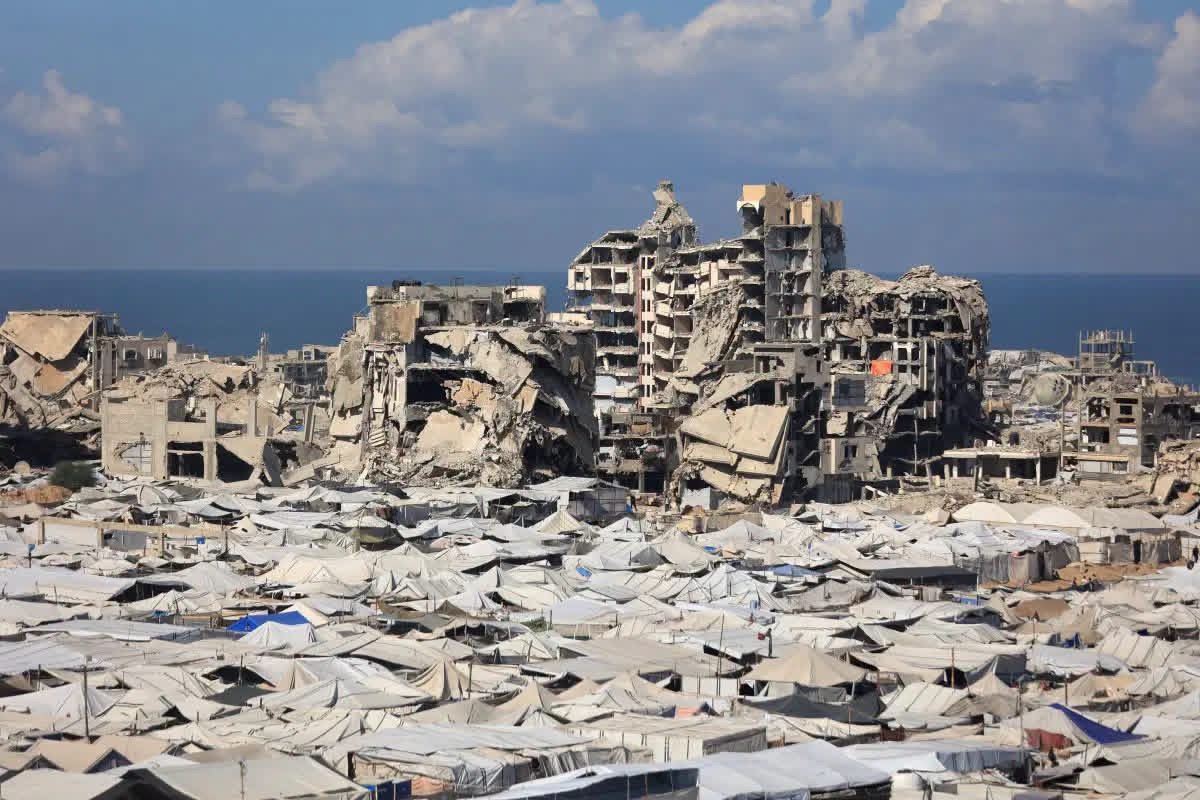
The anniversary has highlighted the sharply different realities facing Israelis and Palestinians: remembrance and demands for accountability in Israel, alongside continued displacement, destruction and sporadic Israeli military action in Gaza despite a ceasefire that formally took effect in October 2025.
Main Development
The latest Israeli strikes were reported overnight into Wednesday, October 7, as Israel observed the third anniversary of the Hamas-led assault on southern Israel.
Palestinian health officials said at least two people were killed in Gaza City. One of the reported deaths occurred near Al-Shifa Hospital, while the second was recorded in a separate strike nearby. Gaza’s civil defence later identified one victim as Mohamed Tamous and said he was a volunteer working with the agency.
The figures were reported by Palestinian officials and medical authorities and had not been independently verified by Weng Global.
The Israeli military told Reuters that the two strikes targeted militants. Israel has repeatedly said its military operations in Gaza are directed against Hamas and other armed groups and has accused Hamas of continuing military activity despite the ceasefire. Hamas has denied allegations that it is rebuilding its arsenal or launching attacks in violation of the agreement.
The strikes occurred against the backdrop of anniversary ceremonies in Israel, where families and survivors gathered to remember victims of the October 7, 2023 attack.
At the site of the Nova music festival, where hundreds of people were killed during the assault, relatives and survivors gathered at dawn to commemorate those who died.
The anniversary has therefore become both a day of mourning and a reminder that the conflict that followed the 2023 attack remains unresolved.
What Happened on October 7, 2023?
The Hamas-led attack on October 7, 2023, marked a major turning point in the Israeli-Palestinian conflict.
Hamas and other Palestinian armed groups crossed from Gaza into southern Israel, attacking communities and military positions. About 1,200 people were killed, according to Israeli figures cited by international reporting, while 251 people were taken hostage and transported into Gaza.
The attack became the deadliest day in Israel’s history and triggered Israel’s extensive military campaign in Gaza.
Three years later, its consequences continue to shape Israeli politics, Palestinian life, regional security and international diplomacy.
The anniversary has also revived debate within Israel over the security failures that preceded the attack and whether the government adequately responded to warnings before Hamas fighters breached the border.
Families of victims and some Israeli demonstrators have continued to demand an independent investigation into the events leading up to October 7.
Prime Minister Benjamin Netanyahu has faced criticism over the government’s handling of the attack and the subsequent war, while political debate has intensified ahead of Israel’s upcoming election.
Gaza’s Continuing Humanitarian Crisis
For Palestinians in Gaza, the anniversary has a different meaning.
The Israeli military campaign launched after October 7 has caused extensive destruction, mass displacement and a severe humanitarian crisis.
Reuters reported on October 7 that more than 74,000 Palestinians had been killed in Gaza since the beginning of the war, citing Palestinian authorities. The figures are provided by Gaza’s health authorities and are not independently verified by Weng Global.
The United Nations has separately documented continuing casualties and humanitarian problems even after the ceasefire took effect.
According to the UN Office for the Coordination of Humanitarian Affairs, Gaza’s Health Ministry reported 1,431 Palestinian fatalities and 5,026 injuries between the announcement of the October 2025 ceasefire and the end of September 2026. OCHA said the figures included people killed or injured during continuing Israeli military activity after the ceasefire.
The UN has described the ceasefire as fragile, with Israeli strikes, shelling, drone attacks and ground operations continuing.
A September 2026 report by the UN Special Coordinator for the Middle East Peace Process said the ceasefire had ended large-scale hostilities but had not brought an end to violence. The report also said Hamas and other Palestinian armed groups had not implemented the required disarmament arrangements and that recovery and reconstruction had not yet progressed at the scale required.
A Ceasefire That Has Not Ended the Violence
The current situation is shaped by a ceasefire agreement that took effect on October 10, 2025.
The agreement produced significant changes, including the return of all remaining Israeli hostages and their remains, according to the UN, and a reduction in the scale of fighting.
However, the agreement did not resolve the central political and security disputes between Israel and Hamas.
Israel continues to demand the disarmament of Hamas and other Palestinian armed groups. Hamas has resisted proposals requiring it to surrender its weapons without broader political and security guarantees.
The resulting deadlock has prevented the ceasefire from developing into a comprehensive political settlement.
Reuters reported this week that key elements of the US-backed plan to end the Gaza war remain stalled, including Hamas’s disarmament, a full Israeli military withdrawal and large-scale reconstruction of Gaza.
The continuing strikes demonstrate the fragility of the arrangement.
Humanitarian Conditions Remain Severe
The conflict has also left Gaza facing enormous reconstruction and humanitarian challenges.
The UN reported earlier this month that approximately 279,000 people were living in 400 flood-prone displacement sites or unsafe buildings, while more than 2,300 unsafe buildings remained occupied and required demolition.
Humanitarian organisations have also warned of shortages affecting food preparation, water services, sanitation and other essential operations.
OCHA reported that funding shortages were expected to reduce daily hot-meal production and household food distributions from October. Restrictions affecting equipment, engine oil and spare parts have also disrupted essential infrastructure, including desalination and waste-management operations.
These conditions mean that the continuation of military activity carries consequences beyond immediate casualties.
For families already displaced multiple times, renewed strikes can mean further movement, loss of shelter and additional damage to already weakened infrastructure.
The humanitarian situation also complicates any future reconstruction programme because large areas remain damaged and access to essential materials and equipment remains constrained.
Reactions and Competing Narratives
The anniversary has produced contrasting reactions in Israel and Gaza.
In Israel, families of victims and survivors have gathered at memorial sites to honour those killed on October 7. Some have also used the anniversary to demand accountability for the security failures that allowed the attack to occur.
The Israeli government continues to frame its military campaign primarily around preventing Hamas from rebuilding its military capabilities and protecting Israeli communities from further attacks.
The Israeli military told Reuters that the two latest strikes were directed at militants.
Hamas, meanwhile, has rejected Israeli accusations that it is violating the ceasefire by rebuilding its military capabilities or launching attacks, and has accused Israel of undermining the peace arrangement.
The competing claims underline one of the central difficulties facing international efforts to secure a durable peace: Israel and Hamas continue to disagree fundamentally over security, disarmament, military withdrawal and Gaza’s future political administration.
Why It Matters
The latest strikes matter because they demonstrate that the October 2025 ceasefire has not produced a complete end to violence in Gaza.
For Israel, October 7 remains a national trauma associated with the deaths of approximately 1,200 people and the abduction of 251 hostages.
For Palestinians, the anniversary comes after three years of war that have transformed Gaza’s physical landscape, displaced most of its population and created a humanitarian emergency.
The continuing violence also carries implications beyond Israel and Gaza.
The conflict has affected relations between Israel and Arab states, US policy in the Middle East, international humanitarian operations and wider regional security.
It has also become a major issue in international diplomacy, with governments and international organisations continuing to press for a durable ceasefire, humanitarian access, reconstruction and a political process capable of addressing the underlying Israeli-Palestinian conflict.
For African countries, the conflict remains significant because many African governments have historically supported Palestinian statehood while maintaining varying degrees of diplomatic, economic and security relations with Israel.
The war has also influenced debates within African institutions about international law, civilian protection, humanitarian intervention and the role of the United Nations.
What Happens Next
The immediate focus will be on whether the latest strikes remain isolated incidents or form part of a wider escalation.
The ceasefire framework remains the central diplomatic mechanism for preventing a return to full-scale war, but major questions remain unresolved.
These include the future of Hamas’s armed forces, the extent and timing of any Israeli withdrawal, the administration of Gaza, the deployment of international security arrangements and the financing and implementation of reconstruction.
The UN has said the ceasefire framework and related Security Council arrangements need to be implemented fully, while warning that Gaza’s recovery and reconstruction cannot be separated from the broader political process.
Humanitarian agencies will also continue to face the challenge of assisting civilians living among damaged buildings, inadequate shelters and limited infrastructure.
For families on both sides, however, the immediate concern remains more personal: remembering those who died, accounting for those who remain missing and trying to rebuild lives disrupted by three years of war.
The October 7 anniversary therefore represents more than a commemoration of a single attack. It is a marker of a conflict that has fundamentally altered Israel, Gaza and the wider Middle East, while leaving many of its most difficult questions unanswered.
Weng Global – stories beyond borders
Sources
- Reuters
- Agence France-Presse (AFP)
- Associated Press (AP)
- United Nations
- UN Office for the Coordination of Humanitarian Affairs (OCHA)
- UN Special Coordinator for the Middle East Peace Process
- Israeli military
- Gaza health authorities
- Gaza Civil Defence
- Al-Shifa Hospital