Reported by Simon Daniel Yusuph l Journalist at Weng Global
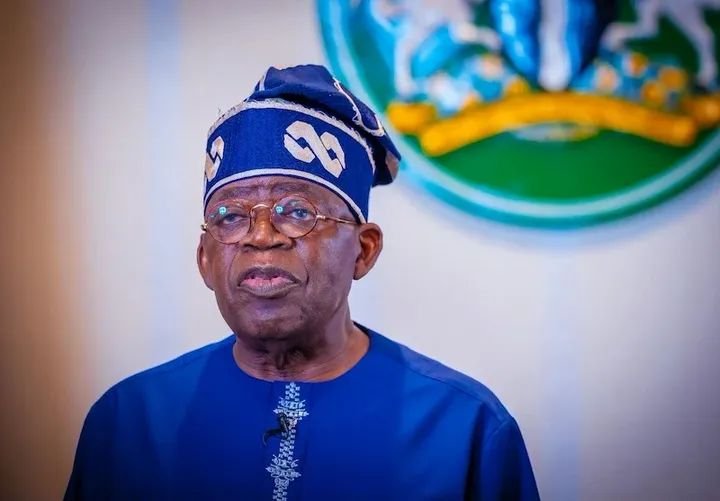
President Bola Ahmed Tinubu has declared that reducing the cost of living is now the central priority of his administration, saying the government will focus on lowering the cost of producing and moving goods as Nigeria seeks to translate economic reforms into more affordable living conditions.
The President’s position places household welfare at the centre of the next phase of his administration’s economic programme, following more than three years of reforms that included the removal of petrol subsidies and changes to the foreign exchange market.
Tinubu has argued that the reforms were necessary to restore macroeconomic stability, but he has also acknowledged that they placed significant pressure on households, workers and businesses.
In a statement marking the third anniversary of his administration in May, the President said the government’s task was no longer limited to stabilising the economy but to ensure that the benefits of reform were felt more directly in the daily lives of Nigerians.
The emphasis on reducing production and transportation costs represents a shift towards addressing some of the supply-side pressures that influence the prices Nigerians pay for food, manufactured goods and other necessities.
Tinubu Links Lower Prices to Production Costs
The President’s approach is based on the argument that lasting relief from high living costs requires more than temporary financial assistance.
Lowering the cost of producing goods could involve improvements in electricity supply, agricultural productivity, access to finance, infrastructure and the availability of industrial inputs.
Reducing the cost of transportation is equally important because goods produced on farms and in factories must eventually reach markets and consumers.
When transportation becomes more expensive, the additional cost can be incorporated into the prices paid by consumers.
Tinubu’s administration has therefore increasingly highlighted infrastructure, compressed natural gas-powered transport, electric vehicles and other measures designed to reduce energy and logistics costs.
In September, the President directed states and relevant stakeholders to accelerate implementation of the National Affordable CNG Transit Programme, saying more Nigerians should begin to see measurable reductions in transportation costs from October 1.
The Presidency said CNG-powered and electric public transport services were already producing lower fares on some routes, citing examples in Borno where commuters were reportedly paying between ₦50 and ₦100 on routes where conventional operators charged between ₦300 and ₦600.
The programme is intended to expand the use of cheaper energy alternatives in public transportation while reducing the effect of petrol prices on commuters.
Transportation Costs Become a Major Focus
Transportation remains one of the most direct channels through which energy prices affect Nigerian households.
Higher transport fares increase the cost of commuting for workers and students, but the effect extends beyond passengers.
Farmers need vehicles to move crops from farms to markets. Manufacturers depend on transporters to move raw materials and finished products. Traders also face logistics costs when moving goods between cities and communities.
This means a reduction in transportation costs could potentially affect prices across several parts of the economy.
The Federal Government has been promoting CNG conversions and electric transportation as alternatives to petrol-powered vehicles.
According to the Presidency, more than 120,000 vehicles had been converted to CNG by September, while CNG and electric buses were operating on routes in several states and the Federal Capital Territory.
The government has presented the initiative as part of a broader strategy to make the savings from cheaper energy visible to ordinary Nigerians.
The challenge, however, is ensuring that reductions in operating costs are reflected in actual transport fares rather than being absorbed elsewhere in the supply chain.
Cost of Living Remains a Major Economic Concern
Tinubu’s renewed emphasis comes against a backdrop in which Nigeria has recorded improvements in some macroeconomic indicators while many households continue to face pressure on their purchasing power.
The World Bank said in its April 2026 Nigeria Development Update that inflation had eased, while Nigeria’s external and fiscal positions had strengthened and economic growth remained robust.
However, the institution also said household incomes had not fully recovered and poverty remained high. It stressed that Nigeria needed to consolidate macroeconomic stability while accelerating inclusive growth.
The World Bank’s Nigeria country overview says real GDP grew by 4.2 per cent in the first half of 2026, compared with 3.9 per cent in the corresponding period a year earlier.
It also reported that 69.6 per cent of Nigerians were estimated to have lived below the lower-middle-income poverty line of $4.20 per day in 2025, while 50.8 per cent were estimated to have been living in extreme poverty under the measure used by the institution.
The figures illustrate the distinction between macroeconomic improvement and household welfare.
An economy can record stronger output and improved reserves while households continue to struggle with food, rent, transportation, education and healthcare costs.
That gap is one of the central issues facing the government as it attempts to move from economic stabilisation towards broader prosperity.
Government Says Reform Benefits Must Reach Households
Tinubu has repeatedly acknowledged that economic reforms alone are not enough.
In his May 2026 third-anniversary statement, the President said Nigeria had not solved every problem but argued that the foundation for economic recovery had been established.
He said the government must now ensure that the benefits of reform become more visible in everyday life.
The administration has linked that objective to efforts to keep food prices under control, reduce transportation costs, expand employment and enable businesses to grow.
The approach reflects a broader economic challenge.
Nigeria needs to increase the supply of goods and services while reducing the cost of producing them.
For agriculture, that means improving access to inputs, irrigation, machinery, storage and transportation.
For manufacturers, it includes reliable electricity, affordable financing, efficient logistics and predictable regulation.
For small businesses, the cost of energy, transportation, credit and raw materials can determine whether an enterprise expands, remains informal or closes.
Agriculture and Food Prices
Food represents one of the most important areas in the cost-of-living debate because households with lower incomes typically devote a larger proportion of their earnings to basic necessities.
Reducing food prices therefore requires attention to production as well as distribution.
Nigeria has significant agricultural potential, but farmers continue to face challenges involving access to inputs, insecurity in some farming communities, transportation, storage, irrigation and market access.
The government’s emphasis on reducing production and transportation costs is therefore closely connected to its agricultural policy.
If farmers can produce more efficiently and move their output to markets at lower cost, the supply of food could increase while some logistical pressures are reduced.
However, lower production costs do not automatically guarantee lower retail prices.
Prices also depend on supply, demand, weather conditions, exchange rates, energy costs, market structure and other factors.
For that reason, the success of the government’s strategy will ultimately be measured by what happens across the entire chain from farm to consumer.
Energy Costs and the Production Chain
Energy is another major component of the administration’s cost-reduction strategy.
Manufacturers, farmers, transport operators and businesses all depend on energy, either directly or indirectly.
Where electricity supply is unreliable, businesses may rely on generators and alternative sources of power, increasing operating expenses.
The government has consequently promoted natural gas as an important part of Nigeria’s industrial and transportation strategy.
The Presidency has linked the expansion of CNG infrastructure to efforts to reduce transport costs, while also identifying gas development as an important component of industrialisation.
The broader objective is to use Nigeria’s domestic energy resources to reduce dependence on more expensive energy sources and improve the competitiveness of businesses.
Whether that produces sustained reductions in consumer prices will depend on infrastructure, supply availability, investment and the extent to which lower energy costs are transmitted through the economy.
The Reform Debate Has Not Ended
The government’s renewed focus on living costs comes amid continuing debate over the consequences of its economic reforms.
The removal of the petrol subsidy in 2023 reduced a major fiscal burden on government but was followed by a sharp increase in petrol and transportation costs.
Tinubu has consistently defended the decision, arguing that the previous subsidy regime was financially unsustainable.
In its May 2026 statement, the Presidency said Nigeria had been spending billions of naira daily to sustain petrol subsidies and argued that resources previously used for subsidies could instead support infrastructure and other national priorities.
Opposition politicians and organised labour have continued to challenge aspects of the government’s economic approach, particularly its effect on household purchasing power.
The Nigeria Labour Congress, in its Independence Day statement, called for lower petrol prices, a nationwide wage award and negotiations for a new national minimum wage.
The union said rising food, transport, rent and education costs had eroded workers’ purchasing power.
Those demands demonstrate that the cost-of-living issue extends beyond government policy announcements to questions about wages and the ability of workers to maintain their standard of living.
Labour Calls for More Immediate Relief
The NLC has argued that workers require immediate measures alongside longer-term economic reforms.
The union linked rising living costs to higher petrol prices following the removal of the subsidy and called for measures aimed at reducing the transmission of fuel costs into transportation and other parts of the economy.
It also demanded a new national minimum wage process, arguing that inflation had significantly reduced the purchasing power of the existing ₦70,000 minimum wage.
The labour position highlights a central tension in the economic debate: structural reforms may take time to produce results, while households facing higher prices have immediate needs.
The government’s strategy of reducing production and transportation costs therefore faces pressure to produce tangible results rather than remain a long-term policy objective.
From Macroeconomic Stability to Everyday Relief
The administration’s economic narrative has evolved since Tinubu took office in May 2023.
The initial focus was on correcting what the government described as major distortions in public finance, fuel pricing and the foreign exchange market.
The next phase is increasingly being framed around productivity, jobs, infrastructure and household welfare.
The World Bank has similarly identified the need to convert Nigeria’s improved macroeconomic position into inclusive growth.
Its April 2026 assessment said stronger macroeconomic stability provides an opportunity for Nigeria to invest more effectively in human capital, expand economic opportunity and support faster and more inclusive growth.
That means the government’s next challenge is not simply maintaining stronger economic indicators.
It is demonstrating that those improvements can produce better outcomes for households and businesses.
What Lower Production Costs Could Mean
If the government’s strategy succeeds, lower production costs could have effects across several sectors.
For farmers, cheaper inputs and more efficient transportation could improve margins and increase supply.
For manufacturers, reliable and affordable energy could reduce operating costs.
For traders, improved roads and logistics could lower the cost of moving products between markets.
For consumers, those changes could eventually contribute to more stable prices.
But the transmission is not automatic.
Businesses may face other costs, including taxes, financing expenses, exchange-rate pressures and regulatory charges.
A reduction in one cost may therefore not immediately translate into a lower retail price.
The government will consequently need to address multiple components of the production and distribution chain if the objective is sustained relief for consumers.
CNG Programme and the October 1 Target
Transportation has become one of the areas where the administration has set a specific near-term target.
In September, Tinubu said more Nigerians should begin seeing measurable reductions in transportation costs from October 1 under the National Affordable CNG Transit Programme.
He directed state governments, transport unions and operators to work towards expanding vehicle conversions and deploying CNG-powered public transport.
The Presidency said states including Edo, Kano, Delta, Kwara, Lagos and Akwa Ibom had already taken steps to expand CNG-supported transportation.
The programme is significant because transportation is one of the most visible areas of household expenditure.
Whether the initiative produces widespread relief will depend on the number of vehicles converted, availability of refuelling infrastructure, operating costs and the extent to which operators pass savings on to passengers.
The Broader Economic Test
Nigeria’s economic challenge is therefore increasingly about translating stability into living standards.
The World Bank says the country has made progress in restoring macroeconomic stability, but it also warns that growth remains insufficient to generate enough productive employment and materially reduce poverty.
That makes job creation another important part of the cost-of-living equation.
A household’s ability to cope with prices depends not only on the price of goods but also on income.
If wages and employment opportunities grow alongside productivity, households are better positioned to absorb economic shocks.
If prices remain high while incomes lag behind, improvements in headline economic indicators may have limited impact on everyday welfare.
What Happens Next?
The immediate test for Tinubu’s cost-of-living priority will be implementation.
The government has already identified several areas where it intends to act: transportation, energy, agriculture, infrastructure, employment, business expansion and social protection.
The National Affordable CNG Transit Programme provides one measurable area in which Nigerians can observe whether the policy produces tangible savings.
The administration will also need to maintain attention to food prices, inflation, electricity supply, logistics and access to finance.
At the same time, organised labour and other stakeholders are likely to continue pressing for higher incomes and additional relief measures.
The broader economic question is whether Nigeria can maintain the macroeconomic improvements recorded since the reforms while generating stronger household incomes and more affordable goods and services.
For Tinubu’s administration, making the cost of living a central priority therefore creates a new benchmark for its economic programme.
The government has moved from arguing primarily for the necessity of difficult reforms to promising that the benefits of those reforms should increasingly be felt by Nigerians.
The outcome will depend on implementation across the economy — from farms and factories to roads, energy systems, transport networks and household incomes.
As Nigeria enters another year of independence, the central economic question is increasingly practical: whether the country’s improving macroeconomic position can translate into lower costs, stronger purchasing power, more productive jobs and better living conditions for ordinary Nigerians.
Weng Global — Stories beyond borders
Sources
- The State House, Abuja
- World Bank
- National Bureau of Statistics
- Nigeria Labour Congress
- Punch Newspapers