Reported by Simon Daniel Yusuph l Journalist at Weng Global
President Bola Ahmed Tinubu has ruled out a return to Nigeria’s petrol subsidy regime, arguing that reversing the policy would undermine the economic reforms his administration says are necessary to put the country on a more sustainable financial footing.
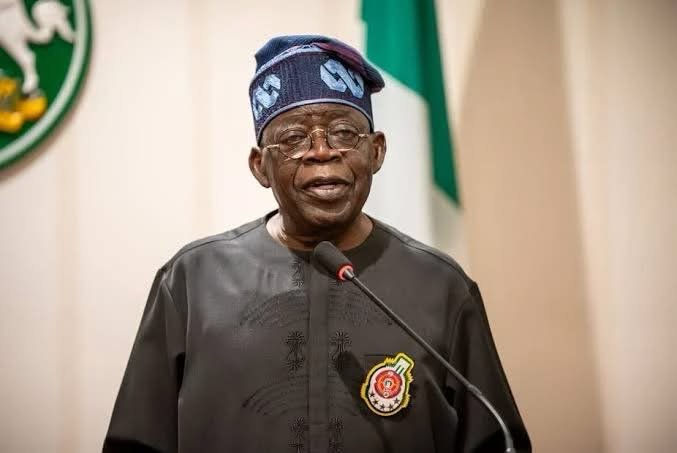
Tinubu made the position clear in his Independence Day address to Nigerians on Thursday, October 1, 2026, as the country marked its 66th anniversary of independence.
The President defended the decision to remove the petrol subsidy in 2023, while acknowledging that the reforms have imposed significant pressures on households and businesses.
His comments come as the government attempts to shift attention from the initial phase of economic stabilisation towards measures intended to reduce transportation costs, improve household incomes and make the benefits of economic reforms more visible to Nigerians.
The President’s position also comes amid continuing public debate over the effects of subsidy removal, particularly the impact of petrol and transportation costs on household budgets.
Tinubu Rejects Return to Petrol Subsidy
Tinubu said Nigeria should not return to what he described as the former subsidy system, arguing that the policy placed a substantial burden on public finances and left the economy vulnerable to movements in international oil prices.
The President has maintained this position since announcing the end of the petrol subsidy at his inauguration in May 2023.
In his latest Independence Day message, he again defended the decision and warned against reversing the reform.
The presidency has also recently criticised proposals to reintroduce petrol subsidies, arguing that the government should instead expand lower-cost alternatives such as compressed natural gas (CNG) and electric transportation.
In a September 2026 statement, the State House said more than 120,000 vehicles had been converted to CNG and that commuters on routes served by CNG and electric buses in seven states and the Federal Capital Territory were already paying between 31 per cent and 83 per cent less in fares.
The government has presented the development as part of its strategy for reducing the cost of transportation without returning to the petrol subsidy system.
Government Turns to CNG as Alternative
The Federal Government’s alternative to petrol subsidies has increasingly centred on natural gas-powered transportation.
Tinubu said in September that the government and state governors had agreed on an objective of achieving measurable reductions in transportation costs from October 1 through the National Affordable CNG Transit Programme.
The programme is being implemented with state governments, transport operators and other stakeholders.
According to the State House, some of the strongest evidence of the potential impact has emerged from Borno State, where CNG-powered and electric public transport services were reported to be carrying passengers for between ₦50 and ₦100 on routes where conventional commercial transport operators charge between ₦300 and ₦600.
The government has also identified developments in Edo, Kano, Delta, Kwara, Lagos and Akwa Ibom as examples of states expanding CNG-supported transportation.
The administration’s argument is that reducing the cost of energy used by transport operators can eventually reduce the cost paid by passengers.
However, achieving that outcome nationwide will depend on the availability of CNG infrastructure, vehicle conversion capacity, refuelling facilities and effective coordination between governments and transport operators.
Why Tinubu Is Defending the Reform
The removal of petrol subsidies was one of the most significant economic decisions taken by the Tinubu administration after it assumed office in 2023.
Before the removal, the government subsidised the difference between the regulated price of petrol and the higher cost of supplying the product.
The reform eliminated that arrangement and moved petrol pricing towards a market-based system.
The World Bank has described the shift towards market-based petrol pricing as part of wider reforms aimed at restoring Nigeria’s macroeconomic stability. It has also noted that the reforms created significant short-term pressure on households and businesses.
The economic argument presented by the government is that resources previously committed to subsidising petrol can instead be redirected towards infrastructure, social programmes and other public priorities.
But the transition has also produced significant adjustment costs.
For millions of Nigerians, particularly those dependent on public transportation, higher petrol prices have affected the cost of commuting, food distribution and other everyday activities.
That tension remains at the centre of the subsidy debate.
Economic Indicators Show Improvement, But Household Pressure Remains
The government’s defence of its reforms is supported by some indicators showing improvement in Nigeria’s broader macroeconomic position.
The World Bank’s latest Nigeria data shows that real economic growth reached 4.2 per cent in the first half of 2026, compared with 3.9 per cent in the corresponding period of the previous year.
The country’s gross foreign reserves also reached $51.9 billion at the end of July 2026.
However, the same World Bank assessment highlights the continued difficulties faced by Nigerian households.
It estimates that 69.6 per cent of Nigerians lived below the lower-middle-income poverty line of $4.20 per day in 2025, while 50.8 per cent, equivalent to about 123 million people, lived in extreme poverty.
Food inflation also remained elevated, reaching 20.3 per cent in July 2026, according to the World Bank.
These figures illustrate the difference between improvements in macroeconomic indicators and the experience of households.
An economy can record stronger growth, improved reserves and greater fiscal stability while families continue to struggle with food, transportation, housing and other living expenses.
That distinction is increasingly important as the government seeks to demonstrate that economic reforms are translating into improvements in everyday life.
Tinubu Says Difficult Reform Phase Is Over
The President’s latest position forms part of a broader message that the most difficult stage of his economic programme has passed.
In a May 2026 statement marking three years of his administration, Tinubu acknowledged the sacrifices made by Nigerian families since the beginning of the reforms.
He said the country had faced serious fiscal pressures, unsustainable fuel subsidies, exchange-rate distortions, rising debt-servicing costs and energy constraints when his administration took office.
The President said the foundation for economic recovery had been laid but acknowledged that the government had not solved every problem.
He identified lower food prices, reduced transportation costs, employment and enterprise expansion as areas requiring greater attention.
That message has increasingly shaped the government’s economic narrative.
The focus is moving from explaining why reforms were necessary to demonstrating whether they can produce tangible improvements in living standards.
Transportation Has Become a Major Test
Transportation is particularly important because fuel prices affect much more than the cost of filling a vehicle.
Higher transport costs can increase the price of moving agricultural produce from rural areas to cities, raise distribution expenses for manufacturers and retailers and increase the daily cost of commuting for workers and students.
The government is therefore attempting to use CNG and electric vehicles to reduce some of these costs.
Tinubu has directed state governments to ensure that savings from cheaper energy are passed on to passengers rather than absorbed entirely by transport operators.
The State House said the National Affordable CNG Transit Programme was established following a meeting between Tinubu and the 36 state governors on August 27, 2026.
The programme’s success will depend not simply on converting vehicles but on ensuring that the resulting savings reach consumers.
That requires adequate refuelling infrastructure, reliable gas supply, functioning converted vehicles and transparent fare arrangements.
The Subsidy Debate Is Not Over
Although Tinubu has ruled out returning to petrol subsidies, the policy remains a major subject of political and economic debate in Nigeria.
Critics of the subsidy removal have argued that the immediate cost to households has been substantial and that government intervention is needed to protect vulnerable citizens.
Supporters of the reform argue that the previous subsidy arrangement was financially costly and susceptible to inefficiencies, while maintaining that Nigeria needs to develop alternatives that reduce dependence on petrol.
The World Bank’s assessment reflects part of that complexity. It says the market-based pricing reform is important for macroeconomic stability but acknowledges that the policy added to short-term pressure on households and firms.
The disagreement is therefore not simply about whether petrol should be subsidised.
It also concerns how Nigeria should balance fiscal sustainability with immediate relief for citizens.
Government’s Argument: Lower-Cost Alternatives Instead of Subsidies
Tinubu’s administration is seeking to make CNG and electric transportation part of that alternative.
The government says Nigeria possesses significant natural gas resources and that greater domestic use of gas can reduce transportation costs while creating opportunities for local investment and industrial development.
The State House said in September that the administration was working to expand CNG infrastructure and vehicle conversion capacity and create opportunities for states, transport operators, manufacturers and private investors.
The policy also reflects a wider effort to reduce the economy’s exposure to international oil-price movements.
Under a subsidy regime, government expenditure can rise when international oil prices or other supply costs increase. Under a more market-oriented system, those changes are more directly reflected in domestic prices.
The government therefore argues that the long-term solution lies in strengthening domestic production, expanding alternative energy sources and improving transport efficiency rather than restoring petrol subsidies.
The Question of Household Relief
The major challenge for the administration is translating macroeconomic reform into improvements that households can actually feel.
The World Bank has said Nigeria’s improving macroeconomic position provides a basis for stronger growth but has also warned that poverty remains high and that the country needs productive jobs and measures capable of protecting economically vulnerable citizens.
That creates a significant policy challenge.
Lower inflation does not necessarily mean prices have returned to previous levels. Similarly, economic growth does not automatically translate into higher incomes for every household.
For many Nigerians, the relevant measure of economic progress is likely to be whether they can afford food, transport, housing, education and healthcare more easily than before.
The government’s emphasis on transportation costs therefore represents one component of a much broader cost-of-living challenge.
What Happens Next?
The Federal Government is expected to continue expanding CNG infrastructure and vehicle conversion while working with state governments to implement the National Affordable CNG Transit Programme.
The administration has set October 1 as a target for more Nigerians to begin seeing measurable reductions in transportation costs.
Whether those reductions become widespread will depend on the pace of implementation across states and the extent to which savings from cheaper energy are reflected in actual fares.
At the same time, the wider economic reform programme will continue to face scrutiny over inflation, food prices, employment, household incomes and poverty.
Tinubu’s rejection of a return to petrol subsidies therefore places greater responsibility on the government’s alternative measures to demonstrate that Nigerians can receive meaningful relief without reversing the reforms.
For the administration, the next phase will be judged not only by macroeconomic statistics but also by whether those improvements translate into more affordable transportation, stronger household purchasing power and better economic opportunities.
The debate over fuel subsidies is consequently likely to remain part of Nigeria’s economic and political conversation, particularly as the country moves towards the 2027 general elections.
For now, however, the President’s position is clear: his administration does not intend to restore the former petrol subsidy regime and instead wants cheaper alternatives, particularly CNG and electric transportation, to deliver relief to Nigerians.
Weng Global — Stories beyond borders
sources
The State House, Abuja
World Bank
Punch Newspapers