Reported by Weng Patrick Atokor | Journalist at Weng Global
President Bola Ahmed Tinubu disagreed with the assessment presented by Nigeria’s Catholic bishops regarding the country’s economic hardship and worsening insecurity during a recent meeting at the Presidential Villa, according to Archbishop Emeritus of Abuja, John Onaiyekan.
The revelation has renewed public discussion about the widening gap between the Federal Government’s assessment of national conditions and the concerns consistently raised by religious leaders, civil society organisations, and ordinary Nigerians facing rising living costs and persistent security challenges.
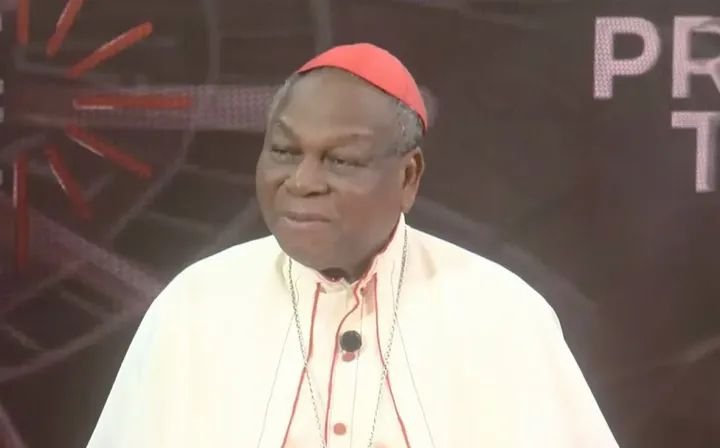
Speaking after the engagement between members of the Catholic Bishops’ Conference of Nigeria (CBCN) and President Tinubu, Onaiyekan said the bishops delivered an honest appraisal of the country’s situation, highlighting economic hardship, insecurity, unemployment, poverty and governance concerns.
According to the respected cleric, President Tinubu did not accept several aspects of the bishops’ presentation, insisting that his administration has recorded measurable progress in addressing the nation’s economic and security problems.
Meeting Focused on National Challenges
The meeting formed part of the regular engagement between the Presidency and faith-based leaders on issues affecting national development.
During the discussions, Catholic bishops reportedly expressed concern over the severe economic pressures confronting millions of Nigerians following major policy reforms introduced by the Tinubu administration.
These concerns included the impact of fuel subsidy removal, exchange rate reforms, inflation, rising food prices, unemployment, declining purchasing power and continuing insecurity across several parts of the country.
Archbishop Onaiyekan explained that the bishops considered it their responsibility to speak truthfully about the realities experienced by Nigerians rather than present a politically convenient narrative.
He noted that while the President listened carefully to the bishops’ observations, he disagreed with portions of their conclusions.
According to him, President Tinubu maintained that the administration had inherited enormous structural problems and was implementing reforms designed to stabilise the economy over the long term.
Tinubu Defends His Administration
President Tinubu reportedly argued that although Nigerians are experiencing temporary hardship, the reforms initiated by his government are beginning to produce positive results.
The administration has repeatedly defended its economic policies, saying difficult decisions such as the removal of petrol subsidy and the unification of the foreign exchange market were necessary to prevent a deeper economic crisis.
Government officials have consistently maintained that these reforms are laying the foundation for sustainable economic growth, increased foreign investment and stronger public finances.
The President reportedly told the bishops that his government deserves recognition for achievements already recorded in infrastructure development, fiscal reforms, revenue generation and security operations.
He maintained that progress should be assessed over time rather than solely through current economic discomfort.
Bishops Stand by Their Position
Despite the President’s response, Archbishop Onaiyekan indicated that the Catholic bishops did not retract their assessment.
Instead, they reaffirmed that their observations reflected what they hear from communities across the country.
According to the cleric, the bishops are not acting as political opponents but as moral voices committed to promoting justice, accountability and the welfare of Nigerians.
He stressed that religious leaders have a responsibility to draw attention to the suffering of citizens, especially the poor and vulnerable.
The Church, he said, cannot ignore widespread complaints about hunger, insecurity, unemployment and declining living standards.
Economic Pressures Continue
Nigeria continues to face one of its most challenging economic periods in recent years.
Inflation has remained elevated, while food prices have continued to increase in many markets across the country.
Businesses have also struggled with higher operating costs driven by increased energy prices, exchange rate volatility and transportation expenses.
Many households have experienced declining purchasing power as wages fail to keep pace with inflation.
The Federal Government has introduced several intervention programmes aimed at cushioning the effects of these reforms, including student loans, conditional cash transfers, support for small businesses and agricultural initiatives.
However, critics argue that the impact of these programmes has not yet reached enough Nigerians to offset rising living costs.
Security Remains a National Concern
Insecurity also featured prominently during the discussions.
Nigeria continues to confront multiple security threats, including terrorism in the North-East, banditry in the North-West, kidnapping across several states, communal conflicts and separatist-related violence in parts of the South-East.
Although security agencies have reported successes in neutralising criminal groups and rescuing kidnapped victims, attacks continue to occur in several communities.
The bishops reportedly urged the government to strengthen intelligence gathering, improve coordination among security agencies and prioritise the protection of lives and property.
President Tinubu reportedly assured the delegation that security remains one of his administration’s highest priorities and pledged continued investment in the nation’s security architecture.
Importance of Constructive Dialogue
Political analysts believe the meeting demonstrates the importance of sustained engagement between government and religious institutions.
Nigeria’s major religious bodies—including the Catholic Church, Christian organisations and Islamic groups—have historically played influential roles in advocating good governance, peace and national unity.
Observers note that while disagreements between political leaders and religious authorities are not unusual, open dialogue allows differing perspectives to be expressed peacefully.
Archbishop Onaiyekan suggested that disagreement should not be interpreted as hostility but as part of democratic engagement aimed at improving governance.
He emphasised that both government and religious leaders ultimately share the common objective of building a more secure, prosperous and united Nigeria.
Mixed Public Reactions
News of the Archbishop’s remarks has generated widespread reactions among Nigerians.
Some citizens praised the bishops for speaking candidly about the country’s economic realities, arguing that religious leaders should continue advocating for ordinary people.
Others defended the President, insisting that major economic reforms require time before their benefits become fully visible.
Several policy experts have also noted that structural reforms often produce short-term hardship before yielding long-term economic gains, making public communication and targeted social support essential during transition periods.
Looking Ahead
The exchange between President Tinubu and the Catholic bishops highlights the broader national debate over the pace and effectiveness of ongoing reforms.
While the Presidency maintains that Nigeria is on the path toward economic recovery and improved security, many citizens continue to judge government performance through their day-to-day experiences.
As reforms continue, stakeholders are expected to maintain dialogue on policies that can accelerate economic recovery, improve security, reduce poverty and restore public confidence.
For many Nigerians, the success of these efforts will ultimately be measured not by policy announcements alone but by tangible improvements in living standards, employment opportunities and safety across the country.
Sources: Vatican News, Catholic Bishops’ Conference of Nigeria (CBCN), Presidency of the Federal Republic of Nigeria, Channels Television.