Reported by Simon Daniel Yusuph l Journalist at Weng Global
Researchers and deaf community advocates have raised concerns over the future of indigenous sign languages in Nigeria, warning that some locally developed systems of communication could disappear without urgent documentation, recognition and sustained support.
Among the languages attracting attention are Hausa Sign Language, widely used among deaf communities in northern Nigeria, and the indigenous signing system associated with the Tiv people of Benue State.
The concern is that these languages, which developed within local communities long before formal sign language education became established in Nigeria, are receiving limited institutional attention as formally taught sign languages become more widespread.
Researchers say inadequate funding, limited linguistic documentation, migration, changes in education and the growing influence of Nigerian Sign Language could place pressure on indigenous signing systems, particularly those used by relatively small communities.
The warning has renewed calls for government institutions, universities, disability organisations and community leaders to invest in documenting and preserving Nigeria’s indigenous sign languages before valuable linguistic and cultural knowledge is lost.
The issue is not simply about communication. For many deaf Nigerians, indigenous sign languages represent cultural identity, community history and a means of participating in everyday social life.
Indigenous Sign Languages Existed Before Formal Deaf Education
Nigeria is home to considerable linguistic diversity, with hundreds of spoken languages and different forms of communication developed within local communities.
Indigenous sign languages form part of this diversity. They have emerged naturally among deaf people and, in some communities, are also understood and used by hearing members.
Unlike systems introduced through formal education, these languages developed through everyday interaction, family relationships, community activities and shared experiences.
The November 19, 2026 report by Agence France-Presse (AFP) highlighted the experience of deaf Nigerians who continue to communicate through locally developed signing systems.
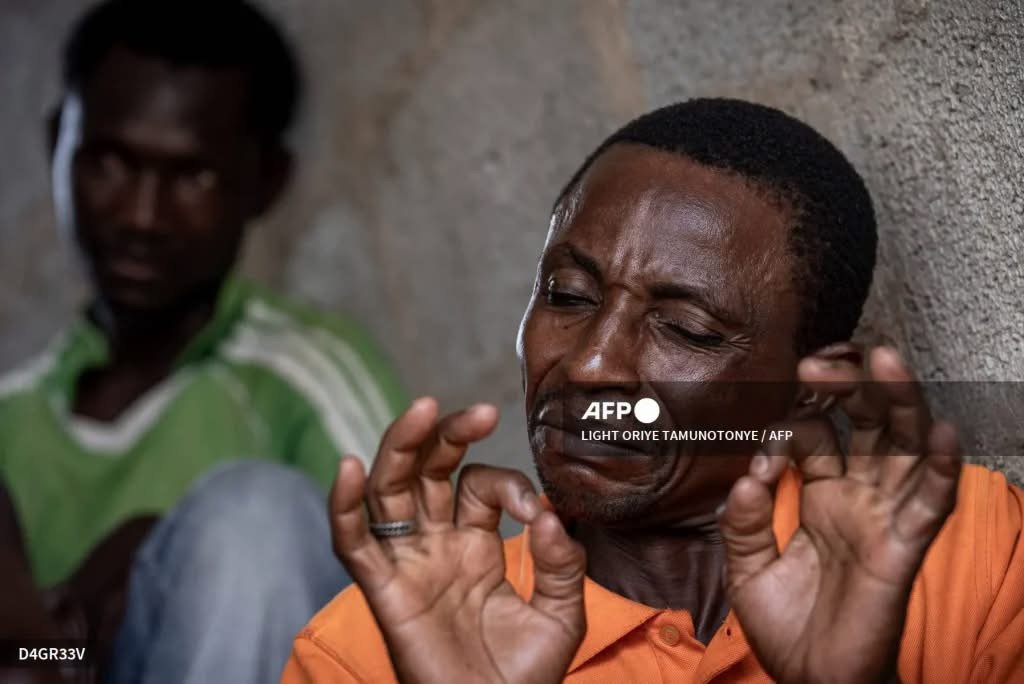
One example is Umaru Zayyanu, a 37-year-old Nigerian who uses Hausa Sign Language to communicate.
Zayyanu explained that indigenous signing is closely connected to his identity and the history of deaf communities, which had their own communication systems before formal sign language education reached the country.
His experience illustrates why researchers and advocates are concerned about the possible disappearance of indigenous signing traditions.
For communities that have relied on these languages for generations, losing them could mean losing a significant part of their cultural heritage.
Hausa Sign Language and Its Importance in Northern Nigeria
Hausa Sign Language is one of the indigenous signing systems that researchers have identified as particularly important.
It has developed within Hausa-speaking communities and is widely used among deaf people across northern Nigeria.
The language provides a means of communication for people who may have limited access to formal deaf education or who grew up learning to sign within their families and local communities.
In the AFP report, Hausa Sign Language was described as a common means of communication among deaf people across the northern part of the country.
Its importance extends beyond exchanging information. It can help deaf people establish relationships, participate in local economic activities and maintain connections with their cultural communities.
Sanni Lawal, a deaf man who operates a laundry business in Zuba, near Abuja, also expressed his attachment to indigenous signing.
He said he cherished his indigenous sign language and wanted it to gain wider recognition.
Such experiences demonstrate that local sign languages are not merely informal substitutes for officially taught communication systems. They can serve as established languages through which communities express their experiences and understand the world around them.
Researchers therefore argue that Hausa Sign Language deserves systematic study, documentation and support.
Tiv Sign Language Also Needs Preservation
Another area of concern is the indigenous signing system used by members of the Tiv community in Benue State.
Festus Zenda, a deaf advocate who has participated in documentation projects involving local deaf communities, has helped document the signing system associated with the Tiv people.
He warned that indigenous signing systems should be studied and preserved before changes in education, migration and wider use of Nigerian Sign Language contribute to their decline.
The concern is particularly important for languages used within relatively small communities.
When younger generations move away from their original communities for education, employment or other opportunities, they may increasingly adopt communication systems used in schools and larger social environments.
If there are no deliberate efforts to pass indigenous signs from one generation to another, the number of people who understand and use them could gradually decrease.
The situation may become more difficult when older signers, who possess extensive knowledge of traditional vocabulary and expressions, are not recorded or involved in preservation projects.
For this reason, researchers say documentation should involve the deaf people who use these languages rather than relying exclusively on outside observers.
How Formal Sign Language Education Is Changing Communication
Nigeria’s formal sign language education has been influenced by developments in international deaf education.
The AFP report traced the introduction of formal deaf education in Nigeria to the work of Andrew Foster, an American educator who helped establish deaf education programmes across several African countries around the period of independence.
Many African countries subsequently adopted formal sign languages influenced by American Sign Language.
In Nigeria, Nigerian Sign Language is used in formal deaf education and other institutional settings.
Its wider use has provided an important communication framework for deaf people, particularly in schools and organised programmes.
However, researchers say the expansion of formal sign language education can create pressure on indigenous systems when local languages are excluded from teaching, research and institutional recognition.
This does not mean Nigerian Sign Language should be abandoned or that formal education is responsible for every decline in indigenous signing.
Rather, the challenge is to develop an inclusive approach that recognises the value of both formal and indigenous languages.
Formal sign language education can improve access to schooling, public services and communication across different communities. At the same time, indigenous sign languages can preserve local knowledge, cultural expressions and communication traditions that may not be represented in standardised systems.
The central concern is ensuring that the expansion of one communication system does not result in the disappearance of others.
Limited Documentation Makes Preservation More Difficult
One of the major challenges facing indigenous Nigerian sign languages is the shortage of comprehensive documentation.
Unlike widely taught languages, some local signing systems have received limited academic attention and have not been systematically recorded.
This creates difficulties for researchers seeking to establish their vocabulary, grammar, regional variations and cultural significance.
Documentation is important because sign languages are not simply collections of hand gestures. They have linguistic structures and patterns that enable users to communicate complex ideas.
A proper documentation programme should therefore record more than individual signs.
It should capture facial expressions, hand movements, body positioning, sentence structures, conversations, storytelling and other elements that contribute to meaning.
Video recording is particularly important because written descriptions alone cannot adequately represent the visual and spatial features of signed communication.
Researchers also need to work directly with experienced deaf signers, community elders, families and local organisations to ensure that recorded material accurately reflects how languages are used.
Without these efforts, valuable linguistic information may disappear when experienced signers die or when younger members of their communities stop using traditional forms of communication.
Nigerian Researchers Have Started Documentation Efforts
Although concerns remain, initiatives have already been undertaken to document indigenous Nigerian sign languages.
The Indigenous Nigerian Sign Language Documentation Project, associated with the Sign Language Development and Empowerment Initiative (S-DELI), has worked towards recording locally developed signing systems across different deaf communities.
The project has included documentation of Magajingari Sign Language in Kaduna State.
According to project information, preliminary fieldwork in 2018 involved recording deaf signers in the Magajingari community.
The documentation effort sought to build a collection of vocabulary and expressions covering different aspects of Nigerian life, including family, food, farming, animals and cultural activities.
The project also identified the importance of recording natural conversations, stories and social expressions to understand how indigenous signing works beyond individual words.
Its broader objective has been to develop accessible learning and documentation resources, including multimedia materials that can support deaf people, families, educators and researchers.
Such initiatives demonstrate that preservation is possible when communities and researchers work together.
However, sustaining these efforts requires funding, technical resources, institutional partnerships and long-term commitment.
Funding and Institutional Recognition Remain Important
Researchers and advocates say inadequate funding continues to limit the scale of indigenous sign language preservation efforts.
Language documentation requires trained researchers, video equipment, fieldwork, interpretation, data storage and resources for organising recorded materials.
It also requires time because researchers must establish relationships with communities and document different generations of signers.
The AFP report highlighted a programme supported by the United States Agency for International Development (USAID) and administered by Gallaudet University, which provided training to deaf educators in Nigeria.
The programme also created opportunities for discussions about indigenous sign languages, including whether languages such as Hausa Sign Language should receive greater recognition and consideration in education.
However, the programme was discontinued in 2025 following changes to United States foreign aid spending.
Its closure illustrates how dependence on external funding can affect long-term research and development initiatives.
Advocates argue that Nigerian institutions should take a stronger role in supporting the preservation of indigenous sign languages instead of relying mainly on temporary international programmes.
Universities, government education agencies, disability organisations and cultural institutions could contribute through research grants, training programmes, language archives and community-based documentation.
Why Preserving Indigenous Sign Languages Matters
The possible disappearance of indigenous sign languages raises important questions about inclusion, education and cultural preservation in Nigeria.
For deaf people who have grown up using local signing systems, their language may be the most familiar and effective way to communicate.
If these languages are neglected, affected communities could face additional barriers to education, social participation and access to information.
Preservation can also improve understanding between deaf and hearing people.
In communities where indigenous signing is used by both groups, documenting the language can help families and local institutions communicate more effectively with deaf members.
There is also an important cultural dimension.
Languages preserve memories, experiences, traditions and ways of understanding the world. Indigenous sign languages can carry local expressions, storytelling traditions and community knowledge that may not be fully represented in other languages.
Their disappearance would therefore affect more than the ability to communicate through hand movements. It could also weaken a part of Nigeria’s cultural and linguistic heritage.
What Government and Educational Institutions Can Do
The concerns raised by researchers point to the need for a coordinated preservation strategy.
Government institutions responsible for education, culture and disability inclusion could support research into indigenous sign languages and encourage their documentation in communities where they are used.
Universities could introduce or strengthen academic programmes in sign language linguistics, giving Nigerian researchers opportunities to study local signing systems and contribute to international scholarship.
Schools for deaf children could also explore inclusive approaches that recognise indigenous signing alongside Nigerian Sign Language.
Such an approach would require consultation with deaf communities, qualified educators and language researchers to determine how different languages can be appropriately supported in educational settings.
Another important step would be the development of digital archives containing video recordings, dictionaries, educational materials and documented conversations.
These resources could help younger generations learn indigenous signs and provide researchers with reliable material for further study.
Community participation must remain central to the process. Deaf people should be recognised not only as beneficiaries of preservation projects but also as experts and custodians of their languages.
A Race Against the Loss of Cultural Knowledge
The warning from researchers highlights a wider challenge facing minority languages around the world: languages can gradually disappear when younger generations stop using them and institutions fail to provide opportunities for their continued development.
For Nigeria, the challenge includes preserving sign languages that have received less attention than spoken languages and formally taught communication systems.
Hausa and Tiv signing traditions demonstrate the diversity of communication developed within the country’s deaf communities.
Their continued survival will depend on whether researchers, government institutions, educators and community organisations can create the conditions necessary for documentation, teaching and wider recognition.
The objective should not be to prevent deaf Nigerians from learning Nigerian Sign Language or accessing formal education. Rather, it should be to ensure that the availability of formal education does not require communities to abandon their indigenous linguistic heritage.
As deaf advocates continue to call for recognition and support, the future of these languages will depend on practical action, sustained research and the involvement of the people who use them every day.
Preserving indigenous sign languages is ultimately about protecting the right of communities to maintain their identities, pass knowledge to future generations and participate fully in Nigerian society.
Weng Global – stories beyond borders
Sources:
- Agence France-Presse (AFP), November 19, 2026 – Reporting on indigenous sign languages and deaf communities in Nigeria.
- Sign Language Development and Empowerment Initiative (S-DELI) – Indigenous Nigerian Sign Language Documentation Project.
- SAGE Open – Academic research on deaf communities and sign language use in Nigeria.
- Gallaudet University – Research and training initiatives involving deaf education and indigenous sign languages.