Reported by Simon Daniel Yusuph l Journalist at Weng Global
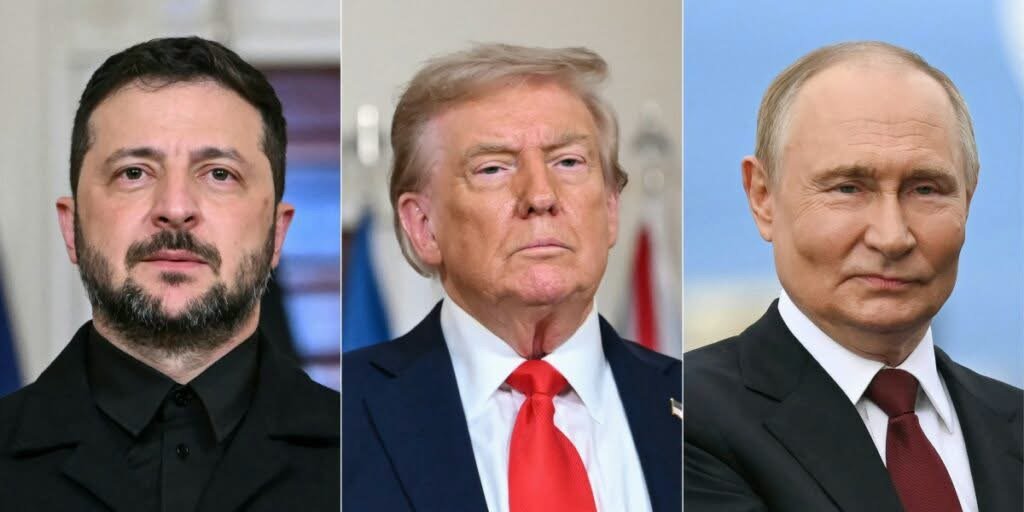
Ukrainian President Volodymyr Zelensky has criticised United States President Donald Trump for describing Russian President Vladimir Putin as his “friend”, arguing that such a relationship is difficult to understand while Russia continues its invasion of Ukraine.
In an interview with the BBC published on Friday, November 27, 2026, Zelensky described Trump’s public expression of friendship towards Putin as “strange” and compared the remark to someone describing Adolf Hitler as a friend during the Second World War.
The Ukrainian leader also called on Washington to increase pressure on Moscow, accusing the United States of not doing enough to compel Russia to change its position in negotiations aimed at ending the war.
Speaking to BBC correspondent Sarah Rainsford in Kyiv, Zelensky said Putin was responsible for aggression against Ukraine and should not be treated as a friend.
“It’s strange. He is an aggressor and a killer. He can’t be a friend. Just cannot be,” Zelensky said.
He added: “It’s the same that somebody say about Hitler during the Second World War that he’s a good friend. No, he’s not a friend.”
The comments reflect growing frustration in Kyiv over Washington’s diplomatic approach to Moscow, particularly as efforts to negotiate an end to the nearly five-year-old full-scale Russian invasion continue without a breakthrough.
Trump’s Public Display of Friendship With Putin
The disagreement followed Trump’s meeting with Putin at a summit in Shenzhen, China, where the two leaders held discussions and were photographed together.
Trump subsequently shared a photograph of himself with the Russian president on his Truth Social platform, describing Putin as “My Friend”.
The American president’s public description of Putin attracted criticism in Ukraine, where officials have repeatedly urged Western allies to maintain pressure on Moscow over its military campaign.
For Zelensky, the issue goes beyond personal relations between two world leaders. It concerns the message Washington sends while Ukraine continues to face Russian military attacks and seeks international support.
The Ukrainian president acknowledged that Trump was entitled to determine how he related to other leaders but questioned the appropriateness of describing Putin as a friend while the invasion continued.
The exchange has highlighted the contrasting diplomatic approaches of the two presidents.
Trump has maintained that personal engagement with Putin could help create the conditions for a negotiated settlement, while Zelensky argues that negotiations must be accompanied by sufficient pressure on Russia.
Zelensky Wants Washington to Put More Pressure on Moscow
During the BBC interview, Zelensky expressed dissatisfaction with what he described as the American administration’s failure to exert enough pressure on Russia.
He argued that the United States has the international influence and political leverage required to push Moscow towards meaningful negotiations.
According to the Ukrainian president, Washington should not focus simply on maintaining comfortable diplomatic relations with both sides but should recognise the circumstances of the conflict.
He said: “It’s not about comfortable talks. It’s about strong country who can pressure because this country has power and respect.”
Zelensky also warned against an approach that treats Russia and Ukraine as equally responsible for the circumstances surrounding the war.
“When you try to be very neutral with the aggressor, it means you support victims and you support also aggressor. It’s not right,” he said.
His position reflects Ukraine’s longstanding argument that Russia should face stronger diplomatic and economic pressure because it launched the full-scale invasion in February 2022.
Moscow, however, has repeatedly defended its military actions and presented its own conditions for a settlement, including demands relating to Ukraine’s security arrangements and territories.
The differences have complicated efforts to reach an agreement that both sides would accept.
Peace Negotiations Face Further Difficulties
The interview also exposed continuing uncertainty surrounding negotiations between Russia and Ukraine.
The United States has been involved in diplomatic efforts to broker an agreement, with Trump’s representatives, including Steve Witkoff and Jared Kushner, playing roles in discussions with the parties.
However, Zelensky indicated that the negotiations had not delivered the progress Ukraine wanted.
He described the latest discussions as difficult, saying that gaining a clearer understanding of the positions involved had revealed additional disagreements.
The latest round of talks in Abu Dhabi earlier in November reportedly made little visible progress.
Zelensky said negotiations were expected to resume in December, although important questions remained unresolved, including the future of occupied Ukrainian territories and the security arrangements required to prevent another Russian attack.
For Kyiv, any agreement must provide credible protection against future aggression rather than simply bring an immediate halt to fighting.
Russia has continued to demand that the negotiations address what it describes as the root causes of the conflict, including NATO’s relationship with Ukraine and Moscow’s security concerns.
Ukraine has rejected demands that would undermine its sovereignty or require it to surrender territory under military occupation.
The disagreement over these issues remains a major obstacle to a negotiated settlement.
Ukraine Raises Concerns Over Delayed Air Defence Supplies
Beyond diplomacy, Zelensky used the interview to highlight Ukraine’s urgent need for additional air defence equipment, particularly systems capable of intercepting ballistic missiles.
He said Ukraine was facing a significant shortage of anti-ballistic missiles and systems needed to protect its cities and critical infrastructure.
The Ukrainian president expressed concern about whether promised American supplies would arrive on time.
He also suggested that Washington’s attention had shifted towards the Middle East, affecting the availability of military assistance for Ukraine.
Asked about the scale of the shortage, Zelensky described it as very serious.
He said the lack of interceptor missiles was directly connected to the ability to protect human lives, particularly as Russia continued launching attacks against Ukrainian cities and infrastructure.
“The deficit of these missiles is people’s lives,” he said.
Ukraine relies heavily on Western military support to strengthen its air defences against Russian ballistic missiles, cruise missiles and drones.
The Patriot air defence system, supplied by the United States and other partners, is among the equipment Kyiv considers important for intercepting advanced Russian missile attacks.
Delays or shortages in ammunition can reduce the ability of Ukrainian forces to protect population centres and essential facilities.
The issue has therefore become another source of tension between Kyiv and Washington.
Winter Increases Pressure on Ukraine
Zelensky’s concerns come as Ukraine prepares for another difficult winter amid continued Russian attacks on energy and civilian infrastructure.
Russian strikes have repeatedly targeted electricity facilities, railway networks, bridges and other infrastructure considered important to the country’s economy and daily life.
Damage to power stations and electricity distribution networks can leave households without heating, electricity and other essential services during periods of freezing temperatures.
The Ukrainian government has warned that Russia could intensify attacks on infrastructure as winter approaches.
Zelensky said intelligence assessments indicated that Moscow was preparing another major wave of attacks.
The president also described the pressure facing Kyiv, where attacks on infrastructure have affected transport, businesses and residents.
He acknowledged that some people had left the capital because of the security situation and difficulties associated with power disruptions.
However, he insisted that Ukraine would continue defending the city.
The winter situation adds urgency to Kyiv’s requests for additional air defence systems, ammunition and international assistance.
For Ukraine, protecting energy infrastructure is not simply a military objective. It is also essential to maintaining public services and preventing further hardship for civilians.
Tensions Over American Military and Diplomatic Support
The BBC interview also highlighted broader disagreements between Zelensky and the Trump administration.
Their relationship has experienced periods of tension, including a public confrontation at the White House in February 2025.
Since then, the two leaders have continued to differ over the approach to ending the war, the level of American assistance required by Ukraine and the terms of a possible peace agreement.
Washington has presented negotiations as an opportunity to stop the fighting and prevent further loss of life.
Kyiv, however, has expressed concern that pressure for a quick settlement could leave Ukraine vulnerable if the agreement does not include reliable security guarantees.
The availability of American military equipment and intelligence support has also remained an important issue.
Zelensky’s latest remarks suggest that Ukraine wants the United States to use its influence more directly against Moscow rather than rely primarily on diplomatic engagement.
The American administration has maintained that negotiations require communication with both sides.
Trump has defended his approach by arguing that maintaining contact with Putin is necessary to reach an agreement.
Trump Defends His Approach to Putin
Responding to questions about his description of Putin as a friend, Trump defended his approach and said his priority was ending the war.
He argued that personal hostility between political leaders could make negotiations more difficult.
Trump said: “We want to stop killing. I could say he’s not a friend. I want to make a deal.”
He also suggested that openly expressing dislike for Putin could create the same difficulties that have affected relations between the Russian and Ukrainian leaders.
The American president has repeatedly presented himself as seeking a negotiated settlement that would end the conflict.
His approach has involved direct engagement with the Kremlin, although the strategy has attracted criticism from Ukrainian officials and some European leaders who believe Moscow should face stronger pressure.
The disagreement illustrates the different priorities shaping the diplomatic process.
While Washington emphasises the need to keep negotiations moving, Kyiv insists that any settlement must address Russia’s responsibility for the invasion and provide credible protection for Ukraine.
International Implications of the Disagreement
The public disagreement between Zelensky and Trump comes at a sensitive moment for Ukraine’s international support.
European governments have continued discussions about financial and military assistance, while questions remain over the long-term funding required to sustain Ukraine’s defence and economy.
The European Union recently failed to reach consensus on a proposed $49 billion loan intended to support Ukraine’s financial and military needs in the coming year.
The uncertainty surrounding future assistance has increased the importance of American support, particularly in areas where Ukraine depends on specialised military equipment.
European leaders have also expressed concern about the possibility of negotiations proceeding without sufficient participation from Ukraine and its European partners.
For Kyiv, maintaining unity among its allies remains important as it seeks to prevent a settlement that could leave the country exposed to renewed aggression.
The dispute over Trump’s description of Putin as a friend therefore forms part of a wider debate about the future direction of Western policy towards Russia.
It also raises questions about how diplomatic engagement can be balanced with pressure, accountability and security guarantees.
What Happens Next?
Zelensky’s interview is likely to add to the diplomatic discussions taking place ahead of the next expected round of negotiations in December.
Ukraine will continue pressing Washington and European partners for stronger air defence support and a more forceful approach towards Moscow.
The United States, meanwhile, faces the challenge of maintaining communication with both sides while trying to secure a settlement that can end the fighting.
Whether the next negotiations produce progress will depend largely on the willingness of Russia and Ukraine to address their major differences, particularly over territory, security guarantees and the conditions for ending military operations.
For now, Zelensky has made clear that Ukraine does not consider personal diplomatic warmth towards Putin a substitute for action against the invasion.
His comparison with Hitler was a forceful expression of that position and reflects the depth of disagreement between Kyiv and Washington over how Russia should be approached.
As the war continues and winter approaches, the effectiveness of international diplomacy and the availability of military assistance will remain central to Ukraine’s ability to defend its territory and protect civilians.
Sources
- BBC News – Interview with Ukrainian President Volodymyr Zelensky, November 27, 2026.
- Associated Press – Report on Zelensky’s criticism of Trump’s relationship with Putin.
- Reuters – Report on Zelensky’s comparison of Trump’s friendship with Putin to friendship with Hitler.
- CBS News – Coverage of the disagreement between Zelensky and Trump.
- The Washington Post – Report on Trump’s defence of his relationship with Putin.