DSS Pushes Stronger Intelligence Collaboration as North-West Battles Terrorism, Banditry and Kidnapping!
The Director-General of the Department of State Services (DSS), Oluwatosin Adeola Ajayi, has called for stronger cooperation among security agencies and closer engagement with governments, traditional institutions and communities as Nigeria intensifies efforts to confront terrorism, banditry, kidnapping and other security threats across the North-West.
The call forms part of a broader push by Nigeria’s intelligence and security architecture to improve information sharing, coordinate operations across state boundaries and strengthen community-based approaches to preventing violent crime.
The North-West, comprising Kaduna, Kano, Katsina, Kebbi, Sokoto, Zamfara and Jigawa states, continues to face a complex mixture of armed banditry, kidnapping, arms trafficking, communal violence and terrorist activity. The porous nature of state and international borders, extensive rural terrain and the mobility of criminal groups have made the region particularly challenging for security agencies.
Recent security conferences involving DSS officials have consequently placed inter-agency cooperation and intelligence-led operations at the centre of the response.
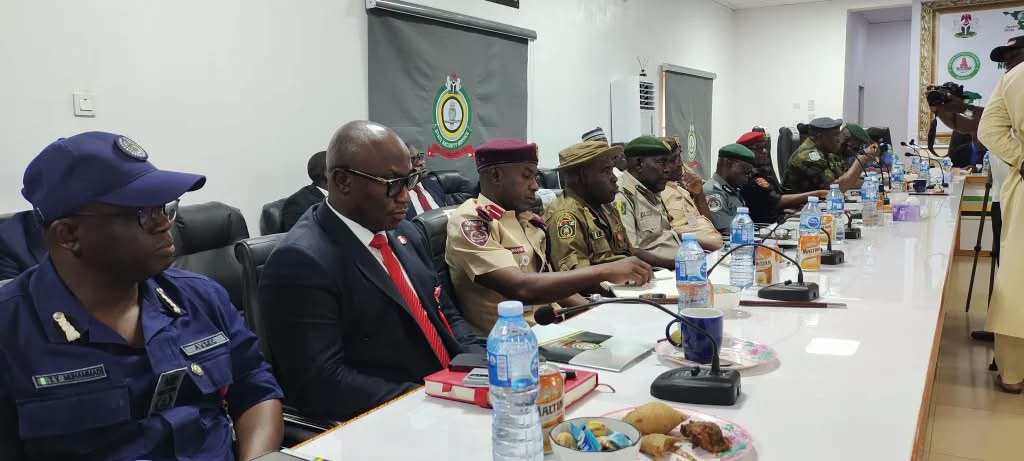
The issue received renewed attention during the 20th North-West Zonal Directors Conference of the DSS held in Kano in May 2026, where security officials discussed emerging threats and the need for stronger collaboration across the region. Voice of Nigeria reported that the meeting focused on intelligence sharing, coordinated responses and strategies for addressing banditry, arms trafficking, kidnapping and other security concerns. (Voice of Nigeria)
Intelligence sharing becomes central to regional security
The emphasis on intelligence cooperation reflects the changing nature of insecurity in the North-West.
Rather than operating as isolated criminal groups confined to individual local government areas, armed networks can exploit administrative boundaries, forest corridors and rural communities to evade security forces. Information gathered in one state can therefore become critical to preventing an attack or kidnapping in another.
At the Kano conference, the Kano State Director of the DSS, Husseni Abubakar, stressed the importance of enhanced synergy between the DSS and other enforcement agencies. He said the Service’s responsibility includes obtaining, processing and disseminating actionable intelligence to sister agencies while also supporting tactical operations. (FMINFO)
The Federal Ministry of Information and National Orientation, reporting on the conference, said the DSS identified banditry, arms and ammunition trafficking, cyber-related threats, illegal mining, sabotage of national assets and hate campaigns among the security concerns confronting the region. (FMINFO)
These threats are interconnected. Arms trafficking can strengthen bandit groups, illegal mining can generate revenue for criminal networks, while kidnapping can provide funds that allow armed organisations to purchase weapons and sustain recruitment.
For security planners, the implication is that tackling one threat in isolation may not be enough.
Kano conference highlights regional vulnerability
Kano State Governor Abba Kabir Yusuf, while declaring the DSS conference open, warned that insecurity in neighbouring states could have direct consequences for Kano despite the state’s relative stability.
BusinessDay reported that Yusuf called for stronger intelligence sharing and coordinated security operations, describing the conference as an important platform for security agencies to address banditry, arms trafficking, kidnapping and cyber-related crimes. (BusinessDay)
The governor also cited the rescue of Hamza Musa Durba, Secretary of Kibiya Local Government Area, as an example of how intelligence-led cooperation can produce operational results. According to government accounts, Durba was abducted from his residence and subsequently rescued following a security operation, with suspects connected to the incident arrested. (FMINFO)
The episode illustrates the importance of rapid intelligence gathering when dealing with kidnapping cases, where delays can increase the risk to victims and allow perpetrators to move them across state boundaries.
Lessons from Kaduna
The current emphasis on cooperation also builds on earlier efforts by the DSS to develop regional security strategies.
In November 2025, DSS directors from the seven North-West states converged in Kaduna to review security threats and develop strategies for strengthening collaboration against terrorism, banditry and other emerging challenges.
The meeting also involved representatives from the Federal Capital Territory, Niger and Plateau states, reflecting the fact that insecurity in the North-West can have consequences beyond the geopolitical zone.
The Guardian reported that the Kaduna conference was designed to harmonise intelligence operations and strengthen joint response mechanisms across state boundaries. (Guardian NG)
The meeting also placed emphasis on community engagement. Kaduna State DSS Director Hakeem Abiola said cooperation with traditional rulers, religious leaders and civil society organisations was central to preventing disputes from escalating into wider security problems. (Guardian NG)
The approach reflects an increasingly recognised principle in counter-terrorism: intelligence does not come exclusively from formal security structures. Local residents, traditional leaders, religious organisations and community groups can provide critical information about suspicious movements, emerging disputes, criminal recruitment and other warning signs.
Community participation remains critical
Security agencies can deploy troops, police officers and intelligence personnel, but maintaining long-term security across large rural territories requires cooperation from the communities themselves.
In Kaduna, officials highlighted the state’s community-oriented peace initiatives and the Kaduna Peace Model, which was credited with helping reduce kidnapping and banditry along key routes including the Kaduna-Abuja, Kaduna-Kachia and Birnin Gwari corridors.
BusinessDay reported that the Kaduna DSS also cited cooperation with traditional rulers, religious leaders and civil society organisations as an important component of efforts to maintain peace. (BusinessDay)
The experience offers a potential model for other states facing similar threats. Community engagement can improve early warning systems while helping security agencies distinguish between ordinary residents and criminal actors.
However, community cooperation depends heavily on trust. Residents are less likely to provide information if they fear retaliation from criminals or believe that their reports will not be handled confidentially.
For this reason, the DSS’s emphasis on intelligence coordination must also be accompanied by effective protection of informants, professional handling of intelligence and respect for citizens’ rights.
Military operations depend on actionable intelligence
The relationship between the DSS and military formations is particularly important in the fight against terrorism and banditry.
At the 2025 Kaduna conference, a representative of the Nigerian Army’s 1 Division acknowledged the contribution of DSS intelligence to military operations across the North-West.
Punch reported that Brigadier General Mohammed Kana, representing Major General Mohammed Wase, said consistent and actionable intelligence supplied by the DSS had contributed to military successes against terrorists and bandits in the region. (Punch Newspapers)
The significance of this relationship lies in the different responsibilities of security institutions. Intelligence agencies can identify networks, movements and threats, while military and law-enforcement formations can use that information to plan arrests, raids, rescue operations and other interventions.
Without timely intelligence, military deployments may become reactive. With reliable intelligence, security agencies can potentially disrupt attacks before they occur.
The terrorism-banditry connection
Another challenge confronting the North-West is the increasingly complicated relationship between terrorism and criminal banditry.
Although not every bandit group is necessarily part of a terrorist organisation, criminal networks can overlap through weapons supplies, financing, kidnapping-for-ransom operations and territorial control.
The emergence and activities of groups such as Lakurawa have added another dimension to the regional security picture.
Recent military operations have targeted suspected terrorist networks in parts of the North-West, including operations aimed at disrupting their logistics and movement. The Nigerian Army has said intelligence-led operations and cooperation between security agencies are essential to preventing armed groups from establishing permanent operational bases.
The DSS’s renewed emphasis on regional cooperation therefore comes at a time when security threats are becoming more fluid and interconnected.
Governments and communities have a role to play
The security challenge cannot be addressed by intelligence agencies alone.
State governments are responsible for supporting local security structures, providing logistics and improving conditions that allow security agencies to operate effectively. Traditional rulers and community leaders can contribute to early warning and conflict prevention, while citizens can assist by reporting suspicious activities through appropriate channels.
At the same time, security agencies must ensure that counter-terrorism measures remain lawful and proportionate.
The importance of public trust cannot be overstated. Heavy-handed or indiscriminate security operations can alienate communities whose cooperation is needed to identify criminal networks.
The DSS has also faced scrutiny over detention and other aspects of its operations. In June 2026, AIT reported that Director-General Ajayi ordered the release and compensation of a man who had been wrongly linked to Boko Haram following an internal review. (AIT LIVE)
The development highlights the importance of intelligence accuracy and due process alongside operational effectiveness.
A regional problem requires a regional response
The North-West’s security challenges do not respect state boundaries. Criminal groups can move between Kaduna, Katsina, Zamfara, Sokoto, Kebbi, Kano and Niger State, while weapons and other illicit resources can move through borders and remote routes.
This makes fragmented security responses less effective.
A coordinated regional framework could enable agencies to share intelligence more rapidly, track suspects across jurisdictions, coordinate operations and identify emerging threats before they develop into major security incidents.
The idea was also raised during the 2025 Kaduna DSS conference, where officials called for a regional security forum involving security chiefs, traditional rulers and political leaders. The proposed framework was intended to strengthen coordinated responses to cross-border crime and terrorism. (Guardian NG)
What success will ultimately require
Ajayi’s call for joint action comes at a time when the Federal Government is under increasing pressure to demonstrate measurable progress against insecurity.
The House of Representatives in June 2026 summoned the National Security Adviser, DSS Director-General, service chiefs, Inspector-General of Police and other officials over rising insecurity, reflecting the level of concern surrounding the country’s security situation. The Nation reported that lawmakers sought a more aggressive and comprehensive strategy against banditry and other threats. (The Nation)
The challenge for the security establishment is therefore not simply to increase operations, but to make those operations more coordinated, intelligence-driven and sustainable.
For the North-West, meaningful progress will ultimately be measured by safer communities, reduced kidnapping, fewer terrorist attacks, disrupted arms trafficking networks and the restoration of economic activity.
The DSS’s emphasis on collaboration provides one part of that strategy. Intelligence sharing can help security agencies anticipate threats; military and police operations can disrupt armed networks; while community participation can provide the local knowledge necessary to sustain security gains.
For WengGlobal, the broader lesson is clear: Nigeria’s North-West security crisis cannot be solved by any single agency acting alone. It requires a coordinated architecture in which intelligence agencies, military and police formations, governments, traditional institutions and communities operate with shared objectives and clearly defined responsibilities.
As armed groups continue to adapt, Nigeria’s security response must adapt with them. Stronger intelligence cooperation, faster information sharing, community trust and accountable operations will be critical if the country is to move from reacting to attacks toward preventing them.
Sources
- Voice of Nigeria — North-West Security Chiefs Meet in Kano, Seek Collaboration
- Federal Ministry of Information and National Orientation — Gov Yusuf Extols President Tinubu, DSS Leadership at Kano
- BusinessDay — Kano, DSS Push for Stronger North-West Security Collaboration Amid Rising Threats
- The Guardian — DSS Directors Meet in Kaduna on Strategies Against Terrorism
- Punch — DSS Directors Meet in Kaduna, Strategise on North-West Insecurity
- Vanguard — DSS Directors Meet in Kaduna, Map Out Fresh Strategies Against Terrorism
- BusinessDay — Northwest DSS Directors Meet in Kaduna to Review Security Strategies
- The Nation — Rising Insecurity: Reps Summon Finance, Defence Ministers, NSA, Service Chiefs, Others
- AIT Live — DSS Releases, Compensates Man Wrongfully Arrested Over Alleged Links with Boko Haram
Meta Description: