Obasanjo Calls for African Democratic Reset, Says Winner-Takes-All Politics Is Undermining Governance!
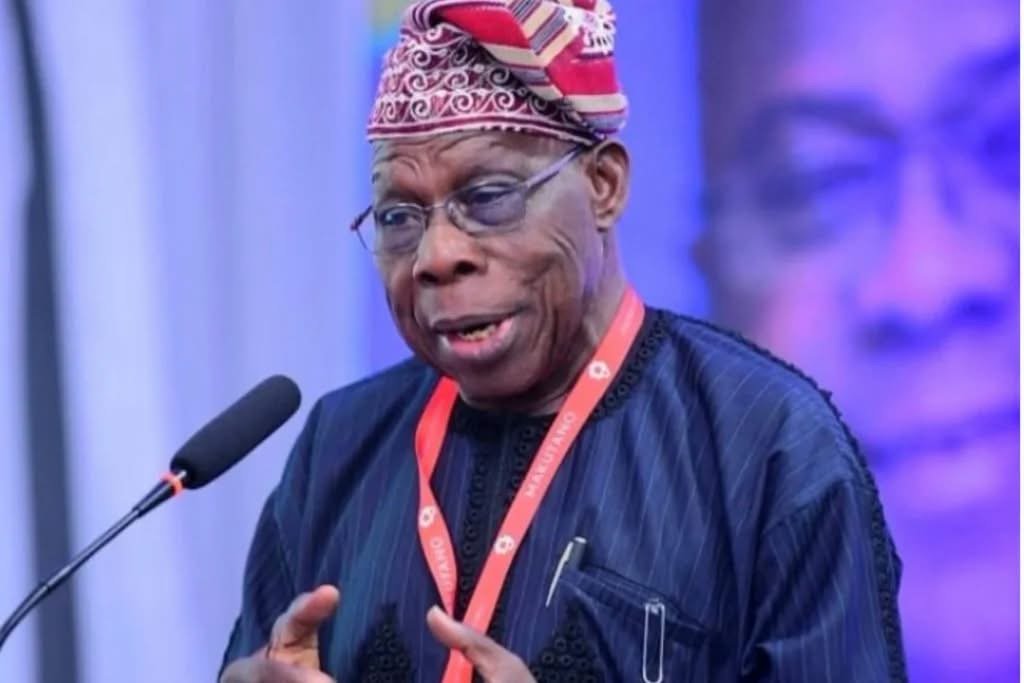
Former Nigerian President Olusegun Obasanjo has called for a fundamental rethink of the democratic model practised across Africa, arguing that the continent cannot build durable and inclusive governance by relying on political systems inherited from colonial powers without adapting them to African realities.
Obasanjo’s intervention places the debate over the future of democracy in Africa beyond the familiar question of whether elections are being conducted and instead focuses attention on whether existing political institutions are delivering meaningful representation, accountability, justice and development to citizens.
The former president made the argument at a colloquium in Abuja marking the 60th birthday of former Deputy Speaker of the House of Representatives, Emeka Ihedioha, in March 2025. He argued that what is commonly described as democracy in Africa has failed to adequately reflect the continent’s culture, values, history and traditional approaches to governance. (Channel Television)
Obasanjo questioned whether African countries were genuinely practising democracy or largely operating a Western liberal democratic model inherited from colonial rule.
His criticism was not directed at the principle of popular government itself. Rather, he challenged the manner in which representative democracy has evolved in many African states, particularly where political power is concentrated in the hands of a small elite and electoral victories provide extensive control over state institutions and resources.
Obasanjo’s Case for an African Context
According to Obasanjo, democratic governance should be judged by its ability to deliver for the broader population rather than by the mere existence of elections, political parties and constitutional institutions.
He argued that pre-colonial African societies had their own systems of governance through which communities addressed collective concerns and made decisions. His central argument was that contemporary African democracy should draw from the continent’s own historical and cultural experiences while retaining democratic principles that protect citizens’ participation and rights. (Channel Television)
The former president said the current model had become disconnected from African realities because it often permits political and economic elites to exercise disproportionate influence while large sections of society remain excluded from meaningful decision-making.
His remarks have revived a long-running debate among African scholars, politicians and civil society organisations about whether the continent should simply strengthen existing liberal-democratic institutions or develop governance arrangements that combine constitutional democracy with indigenous approaches to consensus-building and community participation.
The issue is particularly significant because African countries have adopted different constitutional systems since independence, with varying degrees of presidentialism, parliamentary representation, federalism, decentralisation and traditional authority.
There is therefore no single “African democracy” that can be substituted for the Western model. Instead, the challenge is how individual countries can develop institutions that reflect their particular histories and social structures while maintaining fundamental democratic standards.
The Winner-Takes-All Problem
One of the most important elements of Obasanjo’s argument is his criticism of winner-takes-all politics.
In such political systems, winning an election can provide the successful party or candidate with disproportionate control over executive authority, public appointments, state resources and political influence. Opposition parties may retain seats in legislatures, but their ability to influence governance can be significantly constrained.
Obasanjo’s concern is that this structure can transform elections into extremely high-stakes contests in which political actors view defeat not simply as the loss of an election but as the loss of access to power and resources.
Academic research has similarly identified winner-takes-all politics as a major challenge to democratic consolidation in Africa. A chapter published by Cambridge University Press on democratic institutions and constitutional design argues that winner-takes-all politics can encourage incumbents to manipulate political rules and marginalise opponents, while opposition groups may become increasingly desperate to regain power. (Cambridge University Press)
This dynamic can create a cycle in which elections become increasingly contentious, political competition becomes less tolerant and state institutions are perceived as instruments of the governing party.
For Obasanjo, the solution lies in developing a governance system that allows political competition without turning government into the exclusive property of the electoral winner.
From Democracy to “Monetocracy”
The former president has also criticised the increasing influence of money in African politics.
In June 2025, while speaking at the 32nd Annual Meeting of Afreximbank in Abuja, Obasanjo described the continent’s political environment as increasingly resembling what he called “monetocracy”—a situation in which financial power plays an excessive role in determining political leadership.
He argued that Western liberal democracy, as inherited by African countries, had not produced the governance outcomes required for the continent’s development. He called for African leaders to interrogate the inherited system and redesign governance around African realities, values and aspirations. (allAfrica.com)
The Guardian reported that Obasanjo linked Africa’s governance difficulties to poor leadership, corruption, dependence on foreign assistance and weaknesses within existing democratic structures. (The Guardian Nigeria)
His criticism of money-driven politics is significant in a continent where election financing, political patronage and access to public resources remain persistent concerns.
When political office becomes associated with access to economic privileges, elections can become expensive contests dominated by wealthy individuals and political networks. That can weaken the principle of equal political participation and make it harder for citizens without substantial financial backing to compete effectively.
Democracy Must Deliver, Not Merely Exist
At the heart of Obasanjo’s argument is a broader definition of democracy.
Formal democratic institutions—elections, legislatures, political parties, courts and constitutions—are important, but their existence alone does not guarantee democratic governance.
A functioning democracy also requires institutions capable of protecting rights, resolving disputes fairly, limiting executive power and ensuring that citizens can participate meaningfully in political and economic life.
Obasanjo has argued that representative democracy has increasingly separated political decision-making from ordinary citizens. In his view, a system in which citizens vote periodically but have little influence over governance between elections risks becoming democratic in form but exclusionary in practice. (Daily Trust)
This concern extends to the judiciary and other institutions responsible for checking government power.
At the March 2025 colloquium, Obasanjo questioned the effectiveness of legal remedies when citizens who believe they have been wronged are told to seek justice through institutions that may themselves be weakened or compromised. (THE AUTHORITY NEWS)
For democracy to endure, therefore, the credibility of courts, electoral bodies, legislatures and other oversight institutions must be protected.
A Debate Beyond Nigeria
Although Obasanjo’s remarks were made in Nigeria, their implications extend across the continent.
Several African countries have struggled with disputed elections, constitutional manipulation, prolonged incumbency, weak opposition institutions and public distrust of political processes.
The continent has also experienced military interventions in countries where democratic institutions have been weakened or where citizens have become disillusioned with civilian governments.
This does not mean democracy itself is responsible for every governance failure. Poor institutions, corruption, economic inequality, insecurity, weak rule of law and political patronage can undermine democratic systems regardless of the constitutional model adopted.
Indeed, the argument for reform is strongest when it recognises that African countries need democratic institutions that are both accountable and capable of responding to their specific circumstances.
The challenge is therefore not simply whether Africa should reject Western liberal democracy, but how democratic principles can be adapted and strengthened without compromising fundamental rights, political pluralism and constitutional accountability.
Indigenous Governance and Modern Institutions
Obasanjo’s reference to African traditions also raises difficult questions about how indigenous governance systems can coexist with modern constitutional democracy.
Traditional institutions in many African societies historically relied on consultation, community dialogue, consensus and collective responsibility. Some scholars and political thinkers believe elements of these traditions could strengthen contemporary governance by encouraging broader participation and reducing the adversarial character of electoral politics.
However, traditional systems were not uniformly democratic by modern standards. Some excluded women, young people, lower social classes or other groups from political authority.
Any effort to incorporate indigenous governance practices into modern democratic systems would therefore require careful consideration of equality, constitutional rights and contemporary standards of political representation.
The objective should not be to romanticise the pre-colonial past but to identify useful principles—such as consultation, accountability, community participation and consensus-building—that can complement modern democratic institutions.
The Case for Inclusive Politics
A key implication of Obasanjo’s argument is the need to make political systems more inclusive.
That could involve strengthening opposition rights, improving electoral transparency, reforming political party financing, protecting judicial independence, expanding local participation and creating stronger mechanisms for dialogue between governments and citizens.
It could also involve rethinking the distribution of political power so that electoral victory does not translate into unrestricted control over state institutions.
Cambridge University Press research on winner-takes-all politics similarly argues for stronger mechanisms to empower opposition groups and create more inclusive forms of majoritarian government. (Cambridge University Press)
Such reforms would not eliminate political competition. Instead, they could make competition less destructive by ensuring that losing an election does not mean complete political exclusion.
Africa’s Democratic Future
Obasanjo’s intervention comes at a critical moment for African democracy.
Across the continent, citizens increasingly expect governments to deliver jobs, security, infrastructure, education, healthcare and economic opportunities rather than simply conduct periodic elections.
The credibility of democracy will therefore depend increasingly on whether democratic institutions can produce tangible improvements in people’s lives while protecting citizens from abuses of power.
In March 2026, The Guardian reported another intervention by Obasanjo in which he urged African leaders to rethink democracy inherited from colonial powers in both context and content. He stressed the importance of stronger institutions, independent judiciaries, free expression and governance directed towards the common good. (The Guardian Nigeria)
That position suggests that his argument is not necessarily a rejection of democracy itself. Instead, it is a demand for a more effective and locally relevant democratic practice.
The distinction matters.
Africa does not need less accountability, fewer citizen rights or weaker institutions. If anything, the continent needs stronger institutions capable of resisting political capture, protecting citizens and ensuring that government serves the public interest.
Obasanjo’s call to rethink winner-takes-all politics therefore presents an important question for policymakers and citizens: can African democracies evolve beyond political systems in which electoral victory provides near-total control over governance?
The answer may depend on whether political leaders are prepared to accept that democracy is more than the right to win elections. It is also the obligation to govern inclusively, respect opposition, protect institutions and recognise that political power ultimately belongs to the people.
For WengGlobal, the broader significance of Obasanjo’s argument lies in the need for an informed continental conversation about what democratic governance should look like in Africa’s own political, economic and cultural environment.
The continent’s democratic future cannot be secured by elections alone. It will require institutions that command public confidence, political systems that discourage winner-takes-all behaviour, credible courts, accountable leadership and meaningful citizen participation.
Africa’s challenge, ultimately, may not be whether to choose democracy or abandon it, but whether to build a democratic model capable of delivering justice, inclusion and accountable government in the realities of the societies it is meant to serve.
Sources
- Channels Television — Democracy Has Failed In Africa, Says Obasanjo
- The Guardian — Obasanjo: Time to roar is now, Africa’s sleeping giants must drive own growth
- Leadership — Obasanjo Criticises Africa’s Leadership, Overdependence On Aid, Flawed Democracy
- Daily Trust — Our Democracy Is Failing – Obasanjo, Others
- BusinessDay — Obasanjo, Kukah throw jabs at Tinubu, say grabbing power illegally, corruptly impeding democracy in Africa
- The Guardian — 89th Birthday: Obasanjo urges values-based governance, diaspora partnership
- Cambridge University Press — Tackling Winner-Takes-All Politics in Africa
- Council on Foreign Relations — To the Victors Go the Spoils: How Winner-Takes-All Politics Undermine Democracy in Sierra Leone