Europe Scrambles for Eclipse Glasses as 2026 Total Solar Eclipse Drives Unprecedented Demand!
MADRID — A rush for certified solar eclipse glasses is intensifying across Europe as millions prepare for Wednesday’s rare celestial event, with pharmacies, opticians, museums and specialist retailers in several countries reporting depleted stocks ahead of the August 12, 2026 solar eclipse.
The scramble has been particularly pronounced in Spain, where parts of the country fall directly within the path of totality. Across other European countries, where the Moon will cover only part of the Sun, demand for protective eyewear has also surged as the public prepares to watch one of the most anticipated astronomical events of the year.
The shortage has become an unexpected feature of preparations for the eclipse, with retailers reporting that supplies have disappeared rapidly and some online customers facing delivery dates after the event itself.
A report carried by the Kuwait Times, based on AFP reporting, said pharmacies, opticians and other retailers in Spain, France, Belgium and Portugal had struggled to keep certified eclipse glasses in stock. In Spain, the National Museum of Natural Sciences in Madrid reportedly exhausted its supply after participating in a government-backed distribution programme involving about two million pairs of glasses. (Kuwait Times)
The rush is not limited to Spain. In the United Kingdom, The Guardian reported that high-street stores were running short of eclipse glasses ahead of Wednesday’s partial eclipse. The Royal Observatory Greenwich also confirmed that it had sold out online and in its physical shops following what it described as an unprecedented volume of orders. (The Guardian)
A rare astronomical event draws Europe’s attention
The August 12 eclipse is significant because it will bring the path of totality across parts of Europe for the first time since 1999.
According to NASA, the total solar eclipse will pass across Greenland, Iceland, northern Russia, the Atlantic Ocean, Spain and a small portion of Portugal. Much of the wider Northern Hemisphere, including large areas of Europe and northwestern Africa, will experience a partial eclipse. (NASA Science)
The European Space Agency similarly identifies eastern Greenland, western Iceland, northern Spain and northeastern Portugal as areas where totality will be visible, while most of the rest of Europe will experience a partial eclipse. (European Space Agency)
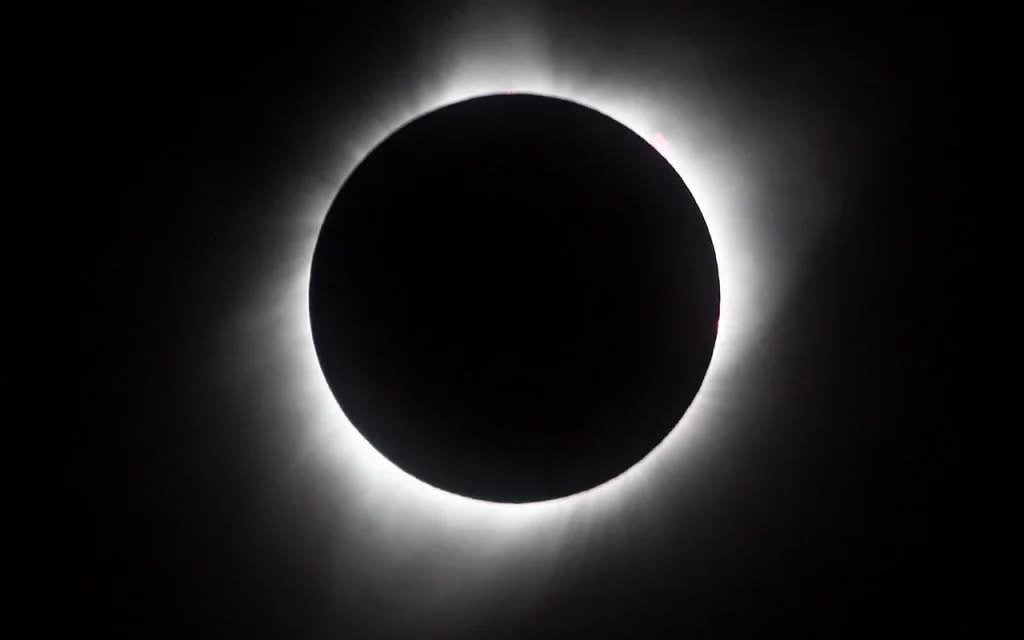
A total solar eclipse occurs when the Moon moves directly between Earth and the Sun and completely blocks the Sun’s bright surface from observers located within the narrow path of the Moon’s shadow.
The phenomenon is different from a partial eclipse, during which only part of the Sun is obscured. That distinction is important for safety because viewers observing any uncovered portion of the Sun must use appropriate eye protection.
Reuters reported Tuesday that the eclipse’s path will begin in northern Siberia before crossing the Arctic Ocean, eastern Greenland and western Iceland before reaching northern Spain and northeastern Portugal. The path will then extend towards Spain’s Mediterranean coast and the Balearic Islands. (Reuters)
Protective glasses become a scarce commodity
The sudden demand for eclipse glasses has exposed the difficulty of predicting consumer demand for a phenomenon that occurs only occasionally in a particular location.
In Madrid, some pharmacies still had certified glasses available Tuesday, although supplies varied significantly from one location to another. The Kuwait Times, citing AFP, reported that some Spanish retailers had been out of stock for days.
In Barcelona, one optical-shop operator said his store had exhausted its supply for about 10 days. In Brussels, meanwhile, a shipment of 100 pairs reportedly sold out within approximately 30 minutes after arriving at an optician’s shop. (Kuwait Times)
France has also experienced uneven availability. Some pharmacies reportedly ran out of glasses while awaiting additional deliveries, while demand pushed some retailers to charge higher prices.
Portugal has seen similar pressure despite efforts by opticians to distribute certified glasses free of charge. A network of more than 600 opticians had reportedly participated in a distribution initiative, but several locations had exhausted their stocks after multiple restocking attempts. (Kuwait Times)
The situation demonstrates how a major astronomical event can rapidly translate into a consumer-supply challenge, particularly when public interest rises sharply in the final days before the event.
Britain faces its own eclipse-glasses shortage
Although the United Kingdom is outside the path of totality, interest has remained high because large parts of the country will experience a substantial partial eclipse.
The Guardian reported that British consumers were struggling to find suitable protective glasses, with some high-street retailers showing products as out of stock and online orders unlikely to arrive before the eclipse. (The Guardian)
The Royal Observatory Greenwich said its own supplies had been exhausted because of the exceptional level of demand.
However, astronomy groups have argued that the situation is not necessarily a global shortage of eclipse glasses but rather a last-minute distribution problem. The Guardian reported that Go Stargazing founder Neill Sanders had imported 300,000 pairs from the United States, distributing tens of thousands through astronomy clubs and community groups. (The Guardian)
That distinction matters. While individual shops and distribution points may be empty, supplies can still exist elsewhere. The immediate challenge is getting sufficient quantities to consumers before the eclipse begins.
Eye specialists warn against unsafe alternatives
The rush for glasses has also generated a significant public-health warning.
Experts caution that ordinary sunglasses are not designed to protect the eyes from the intensity of direct solar radiation during an eclipse. Looking directly at the Sun, even when it appears partially obscured, can cause serious retinal injury.
NASA states that observers must use appropriate eye protection during the partial phases of a solar eclipse. Only during the brief period of complete totality, when the Sun’s bright surface is entirely covered by the Moon, can people within the path of totality safely look directly at the eclipse without solar viewing protection. (NASA Science)
The distinction is crucial because the period of totality is relatively short. Once any portion of the Sun’s bright surface becomes visible again, viewers must immediately resume using suitable solar protection.
The rush for protective glasses has also raised concerns about counterfeit or uncertified products. The Kuwait Times, citing AFP, reported that Spanish authorities had withdrawn six models from the market because of concerns about potential eye injuries. (Kuwait Times)
For consumers, the message from astronomy and eye-health authorities is straightforward: an eclipse should never be viewed through ordinary sunglasses, homemade filters or products whose safety certification cannot be established.
Indirect viewing offers an alternative
People unable to obtain certified eclipse glasses are not necessarily excluded from experiencing the event.
The Guardian reported that astronomers have recommended indirect viewing techniques, including using a simple pinhole projector. Such a method allows the Sun’s image to be projected onto a surface without the observer looking directly at the Sun. (The Guardian)
This approach can be particularly useful for observing the partial phase of an eclipse, when direct viewing requires appropriate solar protection.
The key principle is to avoid staring directly at the Sun through ordinary optical devices or improvised filters.
Eclipse tourism adds to the pressure
The shortage of glasses is unfolding alongside a broader surge in interest in eclipse tourism.
Northern Spain, Iceland and other locations along the path of totality have attracted visitors seeking unobstructed views of the event. Reuters reported that northern Spanish cities and locations including parts of Iceland will experience totality, while major European cities such as Madrid and Barcelona will see partial phases rather than complete darkness. (Reuters)
The eclipse is therefore expected to produce a mixture of scientific interest, tourism activity and public viewing events across the region.
For Spain in particular, the event has attracted attention because totality will occur relatively close to sunset in parts of the country. NASA noted that in Spain and northwestern Portugal, the Sun will become fully eclipsed late in the day, shortly before sunset. (NASA Science)
That combination could produce striking visual conditions but also makes weather and viewing conditions important factors for observers.
A reminder of the importance of preparation
The last-minute rush for eclipse glasses offers a broader lesson about preparation for major astronomical events.
Solar eclipses are predictable years in advance, and the August 12, 2026 event has been documented extensively by international space and astronomy organisations. The European Space Agency has already identified several forthcoming eclipses that will be visible from Europe, including total eclipses in 2026 and 2027 and an annular eclipse in 2028. (European Space Agency)
Yet the present scramble demonstrates that public preparation often accelerates only when an event becomes imminent.
For consumers still seeking eclipse glasses, authorities and astronomy organisations recommend obtaining products specifically designed and certified for direct solar viewing rather than improvising with ordinary eyewear.
For those who cannot find suitable glasses, indirect projection provides a safer alternative during the partial phases.
The August 12 eclipse is ultimately more than a spectacle. It is an opportunity for scientific observation, public education and renewed interest in astronomy. But as Europe prepares for the Moon’s shadow to cross parts of the continent, experts are urging the public to ensure that enthusiasm does not come at the expense of eye safety.
The eclipse may last only minutes in any given location, but an eye injury caused by unsafe viewing can be permanent.
Sources and related reporting
- Reuters — Reporting on the path and European viewing locations for the August 12, 2026 total solar eclipse. (Reuters)
- The Guardian — Reporting on the shortage of solar eclipse glasses across the UK and advice from astronomy and eye-health experts. (The Guardian)
- Kuwait Times / AFP — Reporting on shortages of certified eclipse glasses in Spain, France, Belgium and Portugal. (Kuwait Times)
- NASA — Official scientific information on the August 12, 2026 total solar eclipse, its path and safe viewing requirements. (NASA Science)
- European Space Agency (ESA) — Official eclipse maps and information on the European path of totality. (European Space Agency)