Dele Momodu Urges Osun Opposition to Rally Behind Adeleke, Warns Division Could Hand APC Victory!
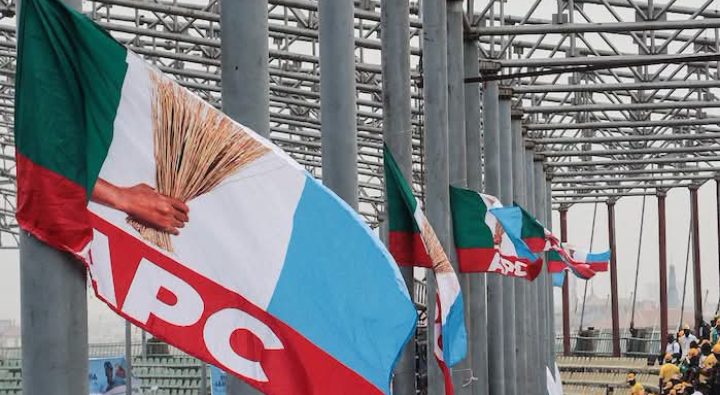
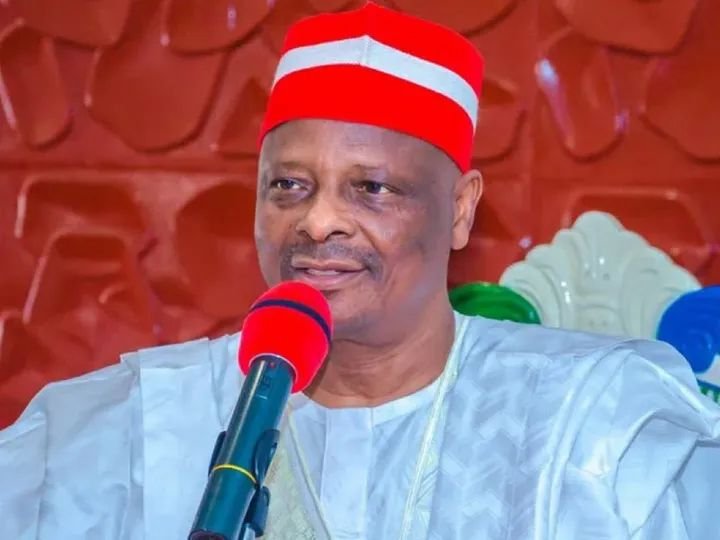
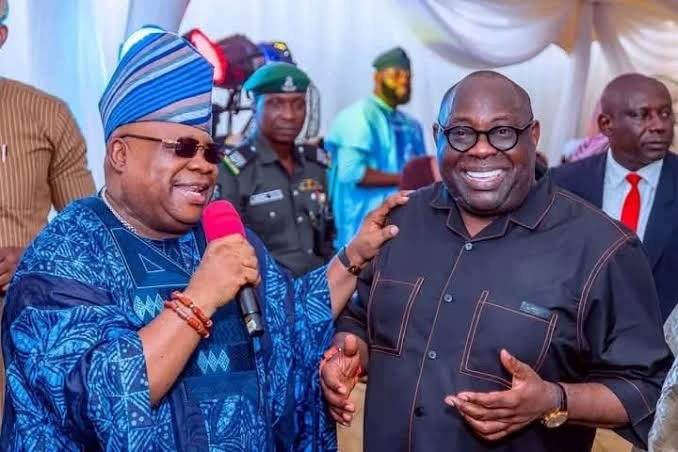
OSOGBO, Nigeria — African Democratic Congress (ADC) chieftain and veteran journalist Dele Momodu has called on opposition political forces in Osun State to unite behind Governor Ademola Adeleke ahead of the August 15, 2026 governorship election, arguing that a divided opposition could create an opening for the All Progressives Congress (APC) to reclaim the state.
Momodu’s appeal, reported on Tuesday, comes just days before voters across Osun go to the polls to decide whether Adeleke will secure a second term or whether the APC and other opposition contenders will produce a new political direction for the state.
In his latest intervention, Momodu argued that the opposition should recognise the political consequences of splitting its votes among multiple candidates. He urged political actors opposed to the APC to consider strategic cooperation rather than allowing rivalry among opposition parties to determine the outcome of the election.
The comments add another layer to an already closely watched contest involving Adeleke of the Accord Party, APC candidate Bola Oyebamiji and ADC candidate Najeem Salaam, among others.
The Daily Post reported on August 11 that Momodu had explained why he believes Adeleke deserves another term in office and appealed for support for the governor ahead of the August 15 election. (Daily Post)
The intervention is politically notable because Momodu himself is a prominent figure within the ADC, the party fielding Salaam against Adeleke. His appeal therefore creates an unusual situation in which a senior opposition coalition figure is publicly urging a section of the opposition to support a candidate outside his party’s ticket.
Momodu’s argument: unity over fragmentation
At the heart of Momodu’s position is the argument that opposition fragmentation can unintentionally strengthen the ruling party.
Nigeria’s electoral history contains several examples in which closely divided opposition votes have influenced outcomes, particularly where a governing party retains a relatively consolidated support base.
Momodu has consistently advocated cooperation among opposition forces at the national level.
In April 2026, PUNCH reported that he warned against attempts to establish a one-party political system in Nigeria and argued that opposition figures needed to work together to provide a credible challenge to the APC. He specifically pointed to cooperation among major opposition personalities as evidence that political forces could overcome longstanding differences. (Punch Newspapers)
His latest intervention in Osun appears consistent with that broader philosophy, although the immediate political circumstances are more complicated because the ADC itself has a candidate in the governorship contest.
For Momodu, the calculation appears to be that the larger objective of preventing APC dominance may require opposition actors to look beyond individual party interests.
That argument, however, is unlikely to be universally accepted among opposition parties or their supporters.
Osun contest is already a three-way political battle
The August 15 election has developed into a competitive contest involving three prominent political figures.
Adeleke, the incumbent governor, is seeking re-election under the Accord Party after leaving the Peoples Democratic Party.
Oyebamiji is contesting for the APC and has emerged as the principal challenger from the ruling party at the federal level.
Salaam, a former Speaker of the Osun State House of Assembly, is representing the ADC and is seeking to establish the party as a credible alternative to the two larger political forces.
PUNCH reported in March that all three candidates had expressed confidence about their prospects as campaigning formally commenced. The newspaper noted that INEC had moved the election date from August 8 to August 15, 2026. (Punch Newspapers)
INEC’s official election calendar confirms that August 15 is the scheduled date for the Osun governorship election. (INEC Nigeria)
The commission has also confirmed that 14 political parties are participating in the contest, while the Peoples Democratic Party and Labour Party are not fielding candidates in the election. (Punch Newspapers)
That political configuration makes Momodu’s appeal particularly significant.
Why Adeleke is at the centre of the debate
Adeleke enters the election as an incumbent seeking to defend his record.
The governor and his supporters have repeatedly highlighted infrastructure projects, healthcare interventions, education initiatives, worker welfare and other programmes as reasons voters should return him to office.
When campaigning officially began in March, Adeleke argued that his performance during his first term justified his re-election bid and called on voters to support a free and fair electoral process. (Punch Newspapers)
His administration has also sought to portray the election as a referendum on its performance rather than simply a contest between political parties.
That framing is being challenged by the APC, which argues that the state requires a change in leadership.
The APC campaign has accused the Adeleke administration of shortcomings in governance and resource management. Its campaign leadership has expressed confidence that Oyebamiji can defeat the incumbent.
Adeleke’s camp has rejected those criticisms and maintained that the governor’s performance has earned him another term. (Punch Newspapers)
As a result, voters are being presented with competing narratives: continuity under Adeleke, change under Oyebamiji, or an alternative political route under Salaam.
APC sees opportunity in opposition divisions
Momodu’s warning that APC could benefit from opposition fragmentation reflects a central strategic issue in the election.
The APC does not need to win every constituency by overwhelming margins if votes for competing opposition candidates are sufficiently divided.
This is particularly relevant in a race featuring multiple parties and candidates with established political bases.
The APC has openly positioned itself as the principal challenger to Adeleke. Its campaign council has argued that the incumbent can be defeated and has mobilised supporters around Oyebamiji.
In April, PUNCH reported that APC campaign officials described themselves as confident of defeating Adeleke, while the governor’s camp dismissed the claims and predicted his re-election. (Punch Newspapers)
The competing claims demonstrate the political stakes.
For the APC, the election represents an opportunity to regain control of a strategically important Southwest state.
For Adeleke, it is an opportunity to consolidate his political standing and demonstrate that his 2022 victory was not an isolated electoral breakthrough.
For the ADC, the election offers a chance to establish itself as a serious alternative ahead of the 2027 general elections.
ADC’s position creates a political dilemma
Momodu’s intervention raises an obvious question: what does his call for opposition unity mean for the ADC candidate, Najeem Salaam?
Salaam is not an insignificant figure in Osun politics.
A former Speaker of the Osun State House of Assembly, he brings considerable political experience and is campaigning under an opposition platform that has positioned itself as part of the broader national movement against APC dominance.
The ADC was adopted in 2025 as the political platform for a coalition involving several prominent opposition figures, including former Vice President Atiku Abubakar, Peter Obi, Nasir El-Rufai, Rotimi Amaechi and Dele Momodu.
The Guardian reported at the time that the coalition was designed to provide a stronger opposition platform ahead of the 2027 general elections. (The Guardian Nigeria)
That coalition strategy has national implications, but its interests do not automatically translate into identical positions in every state election.
Osun demonstrates the difficulty.
A party seeking to build national strength must also compete in state elections, nominate candidates and protect its political identity. Calls for tactical alliances can therefore create tensions between short-term electoral competition and longer-term coalition objectives.
Momodu and Adeleke have a longstanding relationship
The personal and political relationship between Momodu and Adeleke is also relevant to understanding the latest endorsement.
The two men have maintained a longstanding friendship, with Momodu frequently speaking positively about the governor.
In May 2026, The Boss Newspaper published a profile describing the relationship between the two men as a longstanding friendship and political association. The publication highlighted their close personal ties and Momodu’s public support for Adeleke. (thebossnewspapers.com)
The Osun State Government has also publicly acknowledged their relationship.
In May 2025, the state government reported that Adeleke described Momodu as a “unique breed” and praised his contributions to human development during an event marking the commissioning of the Dele Momodu Foundation Leadership Centre in Ibadan. (Osun State Official Website)
Momodu has therefore not emerged suddenly as an advocate for Adeleke.
His support has a history that predates the current election.
Nevertheless, his latest appeal carries additional political weight because of his position within the ADC and the wider opposition coalition.
Opposition unity remains a national issue
Momodu’s intervention in Osun also reflects a much wider argument in Nigerian politics.
Opposition parties have spent much of the past year discussing whether they can overcome ideological, regional and personal differences to form a credible challenge to the APC ahead of 2027.
The coalition that adopted the ADC as its platform was one of the most significant developments in that effort.
Momodu has repeatedly argued that a fragmented opposition risks strengthening the ruling party.
In September 2025, Channels Television reported his criticism of what he described as efforts to weaken opposition parties and his argument that the APC was concerned about the emergence of a strong opposition ahead of 2027. (Channels Television)
In April 2026, he again warned against one-party dominance, according to PUNCH and The Guardian. (Punch Newspapers)
His Osun intervention can therefore be viewed as an extension of a political philosophy he has consistently articulated: opposition forces must cooperate if they want to prevent the consolidation of political power by one party.
But unity must still be democratic
While tactical cooperation can influence election outcomes, it also raises questions about voter choice.
Political parties exist partly to present competing visions and policies to the electorate. If opposition parties withdraw candidates or urge supporters to back another party, voters should still retain the freedom to make their own decisions.
The legitimacy of any alliance ultimately depends on whether it reflects genuine political agreement rather than elite bargaining conducted without meaningful consultation with citizens.
This distinction is especially important in Osun, where voters will have the final say.
Momodu can encourage opposition cooperation, but he cannot determine how voters will respond.
Salaam’s supporters may reject the argument. Oyebamiji’s supporters will certainly continue campaigning for their candidate. Adeleke’s supporters will seek to consolidate the governor’s existing support.
The ballot box remains the decisive mechanism.
Peaceful election is more important than political calculations
Beyond questions of alliances and vote arithmetic, the most important concern is ensuring that the August 15 election is peaceful and credible.
The Osun Development Association recently called on candidates, political parties and supporters to conduct issue-based campaigns and avoid violence, hate speech and intimidation. (Punch Newspapers)
That appeal is particularly relevant because political competition can become tense as election day approaches.
The responsibility for maintaining peace rests with all stakeholders.
Candidates should restrain supporters from provocative conduct. Political parties should reject violence regardless of who commits it. Security agencies should remain impartial and protect voters and electoral officials. INEC should maintain transparent communication throughout the process.
The outcome should be determined by voters rather than intimidation or political pressure.
What Momodu’s endorsement could mean
Whether Momodu’s appeal produces a measurable electoral effect remains uncertain.
His influence extends across Nigeria’s political, media and business circles, but Osun voters are not a homogeneous bloc. Local loyalties, party structures, candidate popularity, governance records and community-level networks will all influence voting decisions.
The ADC’s own grassroots organisation, APC’s federal and state political machinery and Adeleke’s incumbency advantage will each play roles.
The endorsement may nevertheless influence political conversations during the final days of the campaign.
It could encourage some opposition voters to reconsider whether supporting multiple candidates risks dividing the anti-APC vote.
It could also generate resistance among ADC supporters who believe Salaam deserves the opportunity to contest independently.
Either way, the intervention has ensured that the question of opposition unity is now part of the final debate before the election.
The final decision belongs to Osun voters
For Wengglobal, the significance of Momodu’s latest statement extends beyond his personal support for Adeleke.
It exposes one of the central strategic questions facing Nigeria’s opposition: can parties with different interests unite around a common electoral objective without undermining the democratic choices they claim to defend?
In Osun, that question will be tested sooner than in the 2027 national election.
The August 15 contest will determine whether Adeleke remains governor, whether Oyebamiji can return the APC to the Osun Government House, or whether Salaam and the ADC can break the emerging two-party pattern.
Momodu believes opposition unity is essential and has now publicly urged political actors to back Adeleke rather than allow divisions to create an advantage for the APC.
But ultimately, political endorsements can only influence voters; they cannot replace them.
The strength of Osun’s democracy will be measured by whether citizens can make their choices freely, whether parties respect the rules and whether the final result reflects the ballots cast.
As the election enters its final stretch, the competing camps have a responsibility to put the interests of Osun above political rivalry.
If Momodu’s warning is correct, fragmented opposition could help the APC.
If his political calculation is rejected by voters, the election may produce a different outcome.
Either way, the people of Osun — not party strategists, endorsements or political alliances — will have the final word on August 15.
Sources
- Daily Post — “Osun 2026: Why Adeleke deserves second term – Dele Momodu,” August 11, 2026. (Daily Post)
- PUNCH — “Osun gov: Adeleke, Oyebamiji dream victory as campaign begins,” March 12, 2026. (Punch Newspapers)
- PUNCH — “We are experts in defeating sitting gov – Osun APC,” April 30, 2026. (Punch Newspapers)
- PUNCH — “Association urges peaceful campaigns ahead of Osun gov poll,” June 25, 2026. (Punch Newspapers)
- PUNCH — “Osun gov: Campaigns begin March 11 as INEC finalises candidates,” March 6, 2026. (Punch Newspapers)
- The Guardian Nigeria — “Atiku, Obi, El-Rufai, Amaechi, others attend ADC coalition unveiling in Abuja,” July 2, 2025. (The Guardian Nigeria)
- The Guardian Nigeria — “Coalition: Time for APC to feel some heat, says Dele Momodu,” July 2, 2025. (The Guardian Nigeria)
- Channels Television — “2027: APC Jittery, Does Not Want A ‘Strong Competition’ — Dele Momodu,” September 12, 2025. (Channels Television)
- The Guardian Nigeria — “Makinde, Momodu raise concern over devolution into one-party state,” April 7, 2026. (The Guardian Nigeria)
- Independent National Electoral Commission (INEC) — Official 2026 Osun Governorship Election timetable and election information. (INEC Nigeria)
- Osun State Government — “Governor Adeleke Eulogises Dele Momodu at 65,” May 15, 2025. (Osun State Official Website)