Reported by Simon yusuph,| Journalist at wengglobal
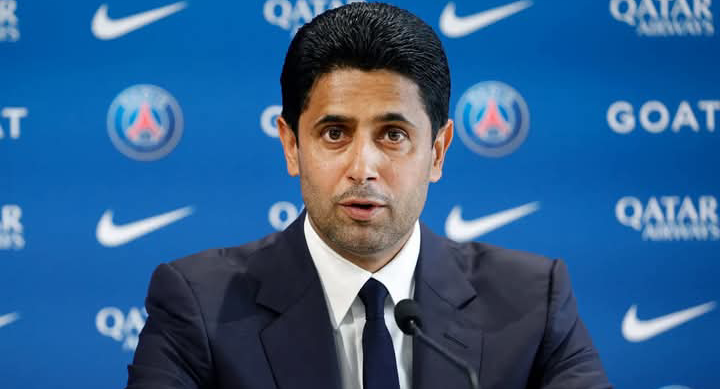
Paris Saint-Germain (PSG) president Nasser Al-Khelaifi has ruled out any intention of contesting the FIFA presidency in 2027, dealing a significant setback to efforts within the Union of European Football Associations (UEFA) to rally behind a high-profile challenger to incumbent FIFA President Gianni Infantino.
Al-Khelaifi’s decision comes at a time of mounting tensions between FIFA and several European football stakeholders over governance, commercial reforms, and the future direction of the global game. While the influential Qatari executive had been widely mentioned in European football circles as a potential candidate capable of mounting a credible challenge, sources close to him have firmly dismissed the speculation.
According to reports from French outlet RMC Sport, later echoed by L’Équipe, Reuters, and several international media organisations, Al-Khelaifi has “no ambition, no intention, and no interest” in seeking the presidency of world football’s governing body. His entourage described recent speculation as a “media frenzy” and insisted that he remains committed to supporting football institutions rather than pursuing elected office.
The development leaves UEFA without an obvious consensus candidate as preparations gradually begin for the FIFA presidential election scheduled for March 2027 in Rabat, Morocco.
UEFA’s Search Intensifies
The search for an alternative candidate reflects broader disagreements between UEFA and FIFA that have intensified in recent months.
Relations between the two governing bodies have become increasingly strained following FIFA’s controversial proposal to create a commercial entity that could sell minority investment stakes linked to the FIFA World Cup. UEFA has strongly opposed the proposal, arguing that football’s governance and its flagship competitions should not become commercial assets available for private investment.
The disagreement has evolved beyond a commercial debate into wider questions about governance, transparency, consultation with member associations, and the future balance of power within global football.
Against that backdrop, several UEFA member associations reportedly viewed Al-Khelaifi as one of the few football executives with sufficient international influence to unite European support while also maintaining strong relationships across Asia and other football confederations.
His extensive experience as president of Paris Saint-Germain, chairman of the European Club Association (ECA), and a prominent figure in international sports administration made him a natural subject of speculation.
However, his latest position effectively ends those discussions for now.
Why Al-Khelaifi Was Considered
Few football administrators possess Al-Khelaifi’s combination of political influence, commercial expertise, and global relationships.
Since assuming leadership of PSG, he has overseen the club’s transformation into one of world football’s biggest brands while simultaneously strengthening his influence within European football governance.
His role at the European Club Association has also positioned him as a leading voice for elite clubs on issues ranging from competition reforms to financial sustainability.
Supporters of a possible candidacy believed these credentials could make him one of the few individuals capable of mounting a serious challenge to Infantino, who has led FIFA since 2016 and remains one of the most influential figures in world football.
Nevertheless, Al-Khelaifi has consistently avoided suggestions that he intends to enter football’s highest political office.
Infantino Remains Favourite
With Al-Khelaifi removing himself from consideration, Gianni Infantino’s path toward another term appears considerably smoother.
The Swiss administrator has already indicated his intention to seek re-election after nearly a decade in office.
Although criticism of some FIFA initiatives has grown particularly regarding governance reforms, commercial strategy, tournament expansion, and relations with confederations no officially declared challenger has emerged with comparable international backing.
Analysts believe any successful candidate would require broad support extending well beyond Europe, given FIFA’s electoral structure in which all 211 member associations participate equally.
That reality makes building a viable opposition campaign particularly challenging.
Governance Debate Continues
The latest development also highlights the evolving relationship between football’s major governing institutions.
UEFA has argued that major structural reforms affecting the global game should involve wider consultation with confederations, clubs, players, and national associations before implementation.
FIFA, meanwhile, has defended its proposals as efforts to strengthen the sport’s long-term financial future and increase investment opportunities for member associations worldwide.
The disagreement illustrates the increasingly complex governance landscape of international football, where commercial growth, institutional independence, and sporting integrity frequently intersect.
For African football, the outcome of these debates could prove particularly significant. Many African federations rely heavily on FIFA development funding while simultaneously maintaining strong competitive and administrative relationships with UEFA.
As discussions continue ahead of the 2027 FIFA presidential election, African member associations are expected to remain influential voices in shaping the future leadership of world football.
What Happens Next?
With Al-Khelaifi no longer considered a potential candidate, UEFA is expected to continue consultations in search of an alternative figure capable of challenging Infantino.
Several names have been discussed informally within football governance circles, although none has publicly declared an intention to run.
For now, the absence of a confirmed rival reinforces Infantino’s position as the overwhelming favourite heading into the next election cycle.
Whether UEFA eventually succeeds in uniting behind another candidate remains uncertain, but Al-Khelaifi’s decision has undoubtedly narrowed the field at a crucial moment in international football politics.
As football continues to grapple with questions surrounding governance, commercial expansion, and institutional accountability, the leadership contest for FIFA’s highest office promises to remain one of the sport’s defining stories over the coming months.
Sources
- Reuters
- RMC Sport
- L’Équipe
- Sports Business Journal
- The Guardian
- talkSPORT