Reported by Weng Patrick Atokor l Journalist at Weng Global
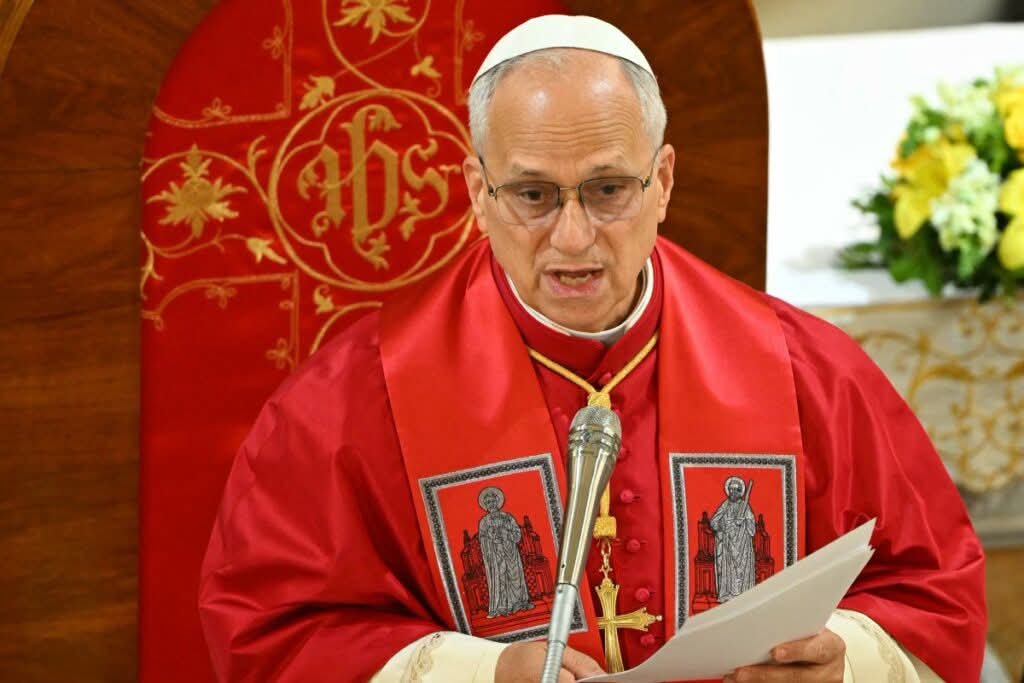
Pope Leo XIV is set to meet privately with seven survivors of sexual abuse within the Catholic Church in Lourdes on Sunday, September 27, during his four-day apostolic visit to France.
The meeting is one of the most closely watched parts of the Pope’s first official visit to France, a country where the Catholic Church continues to confront the consequences of decades of sexual abuse and institutional failures.
The visit, which runs from September 25 to 28, is taking place across Paris, Lourdes and Metz. According to the Vatican, the programme includes meetings with French political and religious leaders, young people, charitable organisations and civil society, as well as a visit to UNESCO and events focused on Europe, peace and unity.
But the planned encounter with abuse survivors in Lourdes gives the trip a particularly sensitive dimension.
Why Pope Leo XIV Is Meeting Abuse Survivors
The Vatican announced ahead of the trip that Pope Leo would meet privately with people who had been victims of abuse within the Church. The Vatican said the survivors would participate in preparing the encounter.
The meeting is scheduled to take place in Lourdes, one of the Catholic Church’s most important pilgrimage sites.
Vatican News reported that seven survivors from different backgrounds are expected to share their experiences with the Pope. They include people who were abused by diocesan priests and others who experienced abuse in Catholic educational institutions. One of the participants is a former pupil of Notre-Dame de Bétharram, a Catholic boarding school that has faced extensive allegations of physical and sexual abuse.
The encounter is private, meaning the public is not expected to hear the full details of what each survivor tells the Pope.
That privacy is significant because survivor meetings are not simply public ceremonies. They can provide victims with an opportunity to describe their experiences directly to Church leadership without the encounter being structured as a public debate or conference.
The Vatican has previously said Pope Leo wants to listen to victims and continue the Church’s efforts to confront sexual abuse.
What Happened in France?
The background to the meeting goes back decades.
In 2021, France’s Independent Commission on Sexual Abuse in the Church, known by its French acronym CIASE, published a major investigation into sexual abuse involving the Catholic Church.
The inquiry estimated that about 330,000 people had been sexually abused as minors by clergy or other people working within the Church in France over a period of roughly 70 years. The figure included abuse by priests, religious figures and other Church personnel.
The report became a major turning point in the French Church’s public reckoning with abuse.
It brought renewed attention to allegations that abuse had continued for years while institutional structures failed to adequately protect children or respond to victims.
French Catholic bishops subsequently introduced measures intended to recognise victims and provide compensation and other forms of support.
The process has included the Independent National Authority for Recognition and Reparation, known as INIRR.
According to Associated Press reporting published ahead of Pope Leo’s visit, around 2,000 victims had come forward through the French reparations process. About 1,184 decisions had been finalised, while other cases remained under review. The authority reported average financial compensation of about €36,892 among cases that had received reparations.
The reparations process is therefore part of a wider attempt by the French Church to acknowledge the harm caused by abuse and provide forms of recognition and assistance to survivors.
However, questions remain about whether institutional reforms have gone far enough.
Why Some Survivors Remain Critical
The meeting with Pope Leo is welcomed by some survivors, but it has also attracted criticism from survivor organisations and advocates.
One concern involves the selection of the seven people who will meet the Pope.
According to Associated Press reporting, some survivor groups have argued that the meeting does not represent the wider community of people affected by abuse because participants were selected for the private encounter.
Vatican News reported that several dozen people who had experienced abuse contacted French bishops after the papal visit was announced, hoping to meet Pope Leo personally. Organisers said it was not possible to accommodate everyone.
The disagreement illustrates a wider challenge facing institutions confronting historical abuse: a private meeting can give individual survivors an opportunity to speak, but it cannot by itself represent every survivor or resolve broader questions about institutional responsibility.
For that reason, the significance of Sunday’s meeting will depend not only on what is said inside the room but also on what actions follow.
Why Lourdes Matters
The choice of Lourdes is also highly symbolic.
Lourdes is internationally known as a major Catholic pilgrimage destination associated with healing, prayer and care for people experiencing illness and suffering.
Vatican News reported that local Church officials consider Lourdes particularly meaningful for survivors of sexual violence because victims have themselves travelled there seeking consolation.
The location also brings the abuse issue directly into one of the Church’s most recognisable spiritual settings.
During his visit, Pope Leo is expected to encounter reminders of the Church’s abuse crisis. The Lourdes sanctuary has covered mosaics created by former Jesuit priest and artist Marko Rupnik, who has faced allegations of sexual and psychological abuse from women. Rupnik has denied wrongdoing, and his canonical case remains ongoing.
The sanctuary said the coverings were intended as a longer-term measure rather than merely a temporary arrangement for the Pope’s visit.
Another symbolic element is a mosaic called “Renaître”, or “Rebirth”, created with the involvement of abuse survivors and their relatives. Vatican News described the work as representing the process of putting broken pieces back together.
The Wider Abuse Crisis in the Catholic Church
The French situation is part of a much wider global crisis.
For decades, Catholic institutions in different countries have faced allegations that priests, religious figures and other Church personnel sexually abused children and vulnerable people.
The controversy has not been limited to individual perpetrators. Investigations in several countries have examined whether Church authorities knew about abuse, how complaints were handled and whether institutional practices allowed some perpetrators to remain in positions of authority.
That distinction is important.
The issue is not only whether individual offenders were punished. It also concerns safeguarding systems, reporting procedures, institutional accountability, compensation and the protection of children and vulnerable people.
In France, the 2021 investigation forced many of these questions into the public debate.
Pope Leo’s Approach to Abuse
Pope Leo XIV has already met abuse survivors during his pontificate.
During his visit to Spain earlier in 2026, he met six survivors of clerical abuse. The French meeting therefore continues an approach in which the Pope directly hears from people who experienced abuse within Church institutions.
The Vatican has presented these encounters as opportunities for listening and dialogue.
However, survivor advocates have continued to call for concrete institutional measures alongside personal encounters.
This creates an important distinction between listening to survivors and changing institutional systems.
A meeting can acknowledge suffering and give survivors an opportunity to speak. Institutional reform requires changes to procedures, accountability mechanisms, safeguarding structures and the handling of allegations.
The two issues can therefore exist together: recognition of survivors and demands for further reform.
What the Pope’s France Visit Means Beyond the Abuse Issue
The abuse crisis is not the only subject of Pope Leo’s four-day France visit.
The Pope has also met French President Emmanuel Macron and is scheduled to engage with political and religious leaders, young people and other groups.
According to the French presidency, discussions between Macron and Pope Leo included bilateral relations and international issues such as climate change, artificial intelligence, the war in Ukraine, peace and stability in the Middle East, and partnerships with Africa.
The Pope is also visiting UNESCO in Paris and travelling to Metz, where his programme includes discussions centred on Europe, peace and unity.
The France trip is therefore broader than the abuse issue.
Nevertheless, the meeting with survivors gives the visit a direct connection to one of the Catholic Church’s most serious institutional challenges.
What Happens Next?
Pope Leo XIV is scheduled to meet the seven survivors privately in Lourdes on Sunday.
The encounter itself is unlikely to resolve the long-running debate over clerical sexual abuse in France.
The more important questions will concern what happens after the meeting.
Survivors and advocacy groups will continue to watch how the Church handles outstanding abuse cases, reparations, safeguarding and accountability.
France’s existing reparations system is also changing. The INIRR stopped accepting new submissions at the end of August 2026, with a new permanent structure expected to continue support for victims.
The future response will therefore extend beyond Pope Leo’s personal encounter with survivors.
For the Catholic Church, the challenge is to demonstrate that listening to victims is accompanied by practical measures that improve protection, transparency and accountability.
Why the Lourdes Meeting Matters
Pope Leo XIV’s meeting with abuse survivors matters because it brings the experiences of victims directly into the programme of a papal visit at a time when the French Catholic Church continues to deal with the consequences of its abuse crisis.
The 2021 investigation exposed the scale of the problem in France. Subsequent reparations and recognition programmes have attempted to address some of the harm, while survivor organisations continue to call for deeper institutional change.
The Lourdes meeting cannot undo the abuse suffered by victims.
It can, however, provide an opportunity for the Pope to hear directly from survivors and for their experiences to remain part of the Church’s ongoing discussion about responsibility and reform.
The central issue will ultimately be what follows the meeting.
For survivors, recognition may be important, but so are accountability, protection and lasting institutional change.
For the Church, the France visit provides another public test of how it responds to one of the deepest wounds in its modern history.
Weng Global – Stories beyond borders
Sources
- Vatican News — Pope Leo XIV’s apostolic journey to France and the planned encounter with abuse survivors.
- Vatican News — Report from Lourdes on the seven survivors scheduled to meet Pope Leo XIV and the significance of the encounter.
- Reuters — Reporting on the French abuse crisis, the 2021 investigation and survivor expectations surrounding the Pope’s visit.
- Associated Press — Reporting on the seven survivors and criticism surrounding the selection of participants.
- Associated Press — Reporting on France’s reparations process and victims who have sought recognition and compensation.
- French Presidency — Official information on Pope Leo XIV’s apostolic visit and meetings with President Emmanuel Macron.