Reported by Weng Patrick Atokor l Journalist at Weng Global
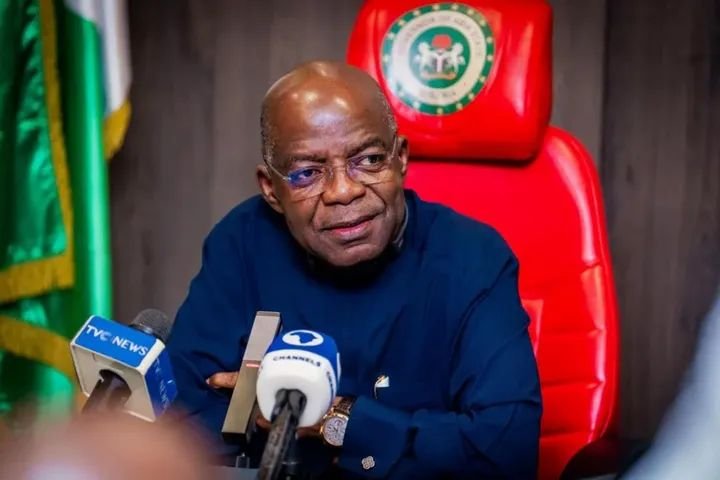
Nigeria’s former Abia State governor and Senator representing Abia North, Orji Uzor Kalu, has disclosed that he previously operated in the international arms trade, saying he sold weapons to buyers in different countries regardless of their identity, provided they had the money to pay.
Kalu made the revelation during an interview on Arise Television on Monday, November 9, 2026, while discussing his business history and longstanding relationships with prominent African political leaders.
The senator’s comments have drawn attention because of the sensitive nature of international arms trading and Nigeria’s continuing security challenges, particularly the proliferation of illegal weapons and their impact on violence across the country.
According to reports of the interview published on November 10, Kalu openly acknowledged that dealing in weapons was previously part of his business activities outside Nigeria.
When the interviewer directly asked whether he had been an arms dealer, the former governor answered in the affirmative.
He explained that his business involved the movement and sale of heavy weapons between countries, rather than the small arms commonly associated with criminal violence and insecurity.
Kalu Says Parents Persuaded Him to Abandon Arms Trading
Explaining how he eventually left the business, Kalu said his parents intervened and insisted that he discontinue his involvement in arms trading.
He attributed his decision to stop selling weapons to their insistence, explaining that he complied with their request.
According to the senator, his mother and father both approached him and demanded that he abandon the business.
He said:
“My mother and my father came and said I must stop, and I stopped.”
Kalu did not disclose the specific year he entered the arms business, how long he remained involved or when the transactions ended.
He also did not provide details about the companies or individuals through which he obtained the weapons.
Senator Says Profit Was His Motivation
During the interview, Kalu was questioned about the potential consequences of selling weapons to buyers who might use them in violent conflicts.
The interviewer challenged him on whether he was comfortable supplying weapons to people who could use them to kill others.
In response, Kalu maintained that his primary motivation was financial gain rather than determining how customers eventually used the weapons.
He said:
“I was selling guns to make money, whether they blow up it’s not my business.”
The statement formed one of the most significant parts of the interview, given the international concerns surrounding the movement of conventional weapons and their potential use in armed conflicts.
His comments also raised questions about the responsibilities of individuals and businesses involved in international weapons transactions.
However, Kalu did not identify specific transactions, provide documentary evidence of the deals or establish whether the activities he described complied with the relevant laws and regulations governing international arms transfers.
It would therefore be premature to conclude from the interview alone that any particular transaction was illegal.
Kalu Responds to Questions About the ANC and Apartheid Struggle
The interviewer also questioned Kalu about whether he supplied weapons to the African National Congress (ANC) during its struggle against apartheid in South Africa.
The ANC played a central role in the movement against South Africa’s apartheid system, which enforced racial segregation and political discrimination against the country’s Black majority.
Kalu rejected the suggestion that his arms business was specifically tied to the ANC.
Instead, he maintained that his approach was to sell weapons to any interested buyer who had the financial capacity to purchase them.
He mentioned countries including the Democratic Republic of the Congo (DRC) and Namibia when explaining the geographical reach of his former business activities.
His response did not establish that he supplied weapons to any particular organisation in those countries.
The senator also declined to provide further information about the sources of the weapons, describing the details as his private business.
What Kalu Said About Muammar Gaddafi
Another notable moment came when the interviewer asked whether Kalu had sold weapons to former Libyan leader Muammar Gaddafi.
Gaddafi ruled Libya from 1969 until he was overthrown and killed in 2011 during the country’s uprising and subsequent armed conflict.
Rather than providing details of a specific transaction, Kalu responded that he would sell to anyone who had the money to purchase weapons while he was involved in the business.
He subsequently described Gaddafi positively, saying, “May his soul rest in peace. He was a good man.”
The exchange did not provide independent confirmation of a specific arms transaction between Kalu and the former Libyan leader.
Kalu’s response nevertheless reinforced his earlier explanation that his former business was not restricted to particular political groups or nationalities.
Kalu Also Discusses His Relationships With South African Leaders
The arms-trading disclosure emerged during a broader discussion about Kalu’s business career and relationships with influential African political figures.
The senator traced his connections with South African leaders to his relationship with the country’s former president, Nelson Mandela.
According to Kalu, Mandela introduced him to other prominent figures in South African politics, including Thabo Mbeki and Cyril Ramaphosa.
He also discussed his relationship with former South African president Jacob Zuma, explaining how his connections with the country’s political leadership continued across successive administrations.
Kalu further recounted a conversation in which Mandela allegedly explained the historical considerations behind the ANC’s choice of Mbeki over Ramaphosa as his running mate.
These accounts were presented as part of Kalu’s recollection of his personal relationships with prominent African leaders.
Nigeria’s Security Challenges Bring Additional Attention to the Disclosure
Kalu’s remarks are particularly significant in the context of Nigeria’s persistent security challenges.
The country continues to face threats from armed criminal groups, kidnapping networks, insurgents and other violent actors operating in different regions.
The circulation of illicit firearms has remained a major concern for security agencies and communities affected by violence.
Weapons trafficking is also an international security issue because arms can move across national borders and reach different users through complex supply networks.
Kalu attempted to distinguish his former business from the circulation of small arms within Nigeria, insisting that he dealt in heavy weapons transferred between countries.
However, his description does not independently establish the nature, quantities, destinations or regulatory status of the weapons involved.
The distinction between heavy weapons and small arms is important, but both categories can have serious consequences when transferred outside lawful controls or diverted to unauthorised users.
His disclosure has therefore brought renewed attention to questions surrounding international arms trading, the responsibilities of arms dealers and the transparency of weapons supply networks.
Questions About the Arms Trade Remain Unanswered
Although Kalu openly acknowledged his former involvement in international arms trading, several important details remain unclear following the interview.
These include:
- The exact period during which he operated in the arms business.
- The identities of the companies or individuals that supplied the weapons.
- The specific countries and organisations that purchased the weapons.
- Whether the transactions involved the necessary export licences and regulatory approvals.
- The quantities and categories of weapons traded.
- Whether any of the weapons were subsequently diverted to unauthorised users.
Kalu did not provide these details during the televised discussion.
His refusal to identify his suppliers also leaves important questions about the structure and extent of the business unanswered.
As of November 10, 2026, the reports reviewed by Weng Global did not establish whether any law enforcement or regulatory agency had opened an investigation into the senator’s remarks.
There is also no established evidence in the available reporting that the transactions he described violated the law.
What Happens Next?
The disclosure is likely to attract further public attention because of the political position Kalu currently occupies and the sensitive nature of international arms trading.
As a serving senator, his account of previously selling heavy weapons internationally raises legitimate questions about the history of the business, its regulatory framework and the identities of its customers.
Further clarification from Kalu could help establish when the business operated, the countries involved and whether the transactions were conducted through authorised channels.
Any assessment of the legality of his former activities would, however, require specific evidence, including transaction records, applicable licences and relevant legal documentation.
For now, the central development is Kalu’s own public acknowledgement that he previously traded in heavy weapons internationally and sold to buyers based on their willingness and ability to pay.
His remarks provide an account of a previously undisclosed aspect of his business history, but important questions about the transactions remain unanswered.
Weng Global – Stories beyond borders
Sources
- Punch – I Sold Arms to Anyone With Money — Kalu.
- Daily Post Nigeria – I Sold Arms to Countries, Anyone Willing to Pay – Orji Kalu Opens Up.
- P.M. News – Gaddafi: I Sold Guns to Anyone With Money – Orji Kalu.