Reported by Simon Daniel Yusuph l Journalist at Weng Global
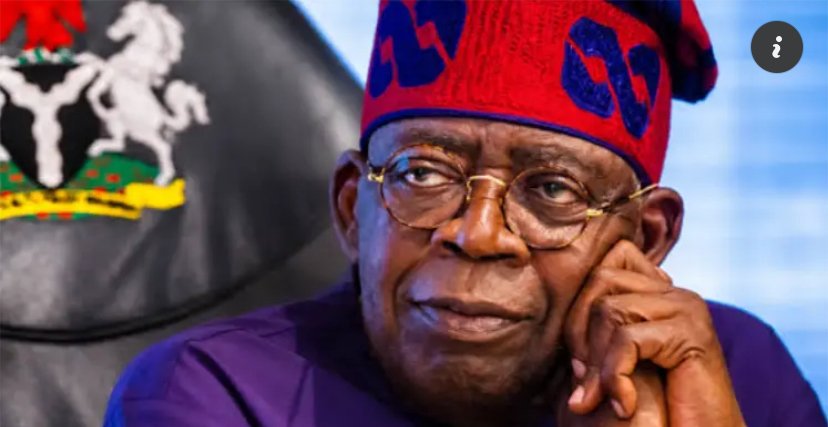
More than 1,000 Islamic clerics in northern Nigeria have called on President Bola Ahmed Tinubu to reconsider his bid for a second term in the 2027 presidential election, citing persistent insecurity, economic hardship, killings and kidnappings, particularly in the North-West.
The call was contained in a communiqué issued after a national conference held in Kano State on Sunday, October 4, 2026, titled “An Assessment of the State of the Nation under President Tinubu and the 2027 General Elections.” The conference was organised under the umbrella of Ko Da Naka – For the Struggle to Promote Good Governance and Community Development, in collaboration with the AFAQ Educational Foundation.
MAIN DEVELOPMENT
The clerics’ position places criticism of the Tinubu administration within an important section of Nigeria’s northern religious community as political activity intensifies ahead of the 2027 general elections.
According to reports on the communiqué, the participants expressed dissatisfaction with the government’s handling of both the economy and security situation. They argued that Nigerians continue to face serious pressure from rising living costs, unemployment and insecurity.
The clerics specifically cited killings, kidnappings and acts of terrorism, with particular concern about conditions in the North-West. They urged the government to take stronger measures to protect citizens and improve security before the 2027 elections.
The group also criticised several economic policies associated with the Tinubu administration, including the removal of the petrol subsidy, changes to the naira exchange-rate system, increases in electricity tariffs and tax reforms.
The clerics argued that these measures had increased the burden on ordinary Nigerians rather than sufficiently easing economic difficulties.
Their position was presented as a political assessment rather than an endorsement of any particular opposition candidate.
ECONOMIC HARDSHIP AT THE CENTRE OF THE CRITICISM
A major part of the communiqué focused on the economic consequences of policies implemented or continued under the Tinubu administration.
The participants questioned the government’s insistence on maintaining policies they believe have increased hardship, particularly for households already struggling with higher living costs and unemployment.
Reports of the communiqué indicate that the clerics argued that government revenue objectives should not take precedence over the welfare of citizens facing economic pressure.
The debate over the government’s economic programme has remained one of the central issues in Nigerian politics since Tinubu assumed office.
The administration has defended its reforms as necessary measures intended to restructure the economy, improve government revenue and create conditions for longer-term growth. Critics, however, have argued that the immediate effects on households and businesses have been severe.
The clerics’ intervention adds another voice to that broader national debate.
INSECURITY AND KILLINGS
Security concerns were another major reason given for the call against Tinubu’s re-election.
The North-West has continued to face attacks by armed groups, kidnappings and other forms of criminal violence, while other parts of Nigeria have also experienced serious security challenges.
The clerics argued that persistent violence has undermined citizens’ confidence in the government’s ability to protect lives and property.
Their criticism is particularly significant because religious leaders in northern communities can have considerable influence in shaping public discussion and voter attitudes.
However, their position represents the views of the participating clerics and should not be interpreted as evidence that all northern Muslims or Islamic organisations oppose Tinubu’s re-election.
Indeed, other Muslim groups have taken a different position.
DIFFERING NORTHERN MUSLIM POSITIONS
The call from the Kano conference comes against the backdrop of political support for Tinubu from other Islamic organisations.
Reports indicate that the Jama’atu Izalatil Bid’ah Wa Iqamatis Sunnah, commonly known as JIBWIS, and the Qadiriyya Sufi order had previously expressed support for Tinubu and Vice President Kashim Shettima ahead of the 2027 election.
That contrast is important.
It demonstrates that there is no single political position among Islamic organisations or Muslim communities in northern Nigeria ahead of the election.
The latest communiqué therefore represents one organised group’s assessment of the administration rather than a unified declaration by northern Islamic leaders.
For Weng Global, this distinction is important in maintaining balanced political reporting and avoiding the suggestion that an entire religious or regional population has adopted one political position.
WHO ORGANised THE KANO CONFERENCE?
The conference was organised by Ko Da Naka, which describes itself as an organisation focused on promoting good governance and community development, in partnership with the AFAQ Educational Foundation.
Reports identified several scholars and clerics who presented papers at the conference, including Dr Abdulmuɗɗalib Ahmad Giɗaɗo, Professor Muhd Muslim Ibrahim, Sheikh Kabir Bashir Abdulhamid, Dr Aminu Isma’il Sagagi, Dr Najibullah Abdallah Nuhu and Sheikh Abdurrazaq Uba Musa.
The conference examined the state of the country under Tinubu and the implications of the administration’s policies for the 2027 elections.
Participants also discussed the role of religious leaders in promoting accountability and responsible citizenship.
CALL FOR ACCOUNTABILITY IN 2027
Beyond asking Tinubu to reconsider his re-election plans, the participants urged Nigerians to hold political leaders accountable through the ballot box.
Reports on the communiqué indicate that the clerics warned voters against allowing political inducements or religious considerations to determine their choices at the 2027 elections. They also urged religious leaders to remain independent and prioritise citizens’ welfare over political endorsements.
That position places the conference within a wider debate about the role of religious leaders in Nigerian politics.
Religious institutions and clerics have historically played an influential role in political mobilisation, particularly in northern Nigeria. Their public statements can therefore contribute to political narratives and influence discussions ahead of elections.
At the same time, religious leaders’ political interventions can also generate debate over whether faith-based influence should be used to support or oppose individual candidates.
THE 2027 POLITICAL LANDSCAPE
The controversy comes as Nigeria moves closer to the 2027 general elections, when voters will decide whether Tinubu receives another term in office.
Tinubu’s administration has presented its economic reforms as part of a longer-term restructuring programme. The government has also repeatedly highlighted measures aimed at strengthening national security and combating armed groups and criminal networks.
The Federal Government has defended its security record and said security agencies have intensified intelligence gathering, military operations and inter-agency cooperation.
In a September 2026 statement, the Federal Ministry of Information and National Orientation said approximately 1,000 terrorist elements, including several leaders, had been eliminated during the first quarter of 2026. The ministry also pointed to major rescue operations and other security interventions as evidence of continuing government efforts.
Those government claims provide an important counterpoint to the concerns raised by the Kano conference.
The disagreement illustrates the broader political contest likely to define the 2027 campaign: whether Nigerians judge the administration primarily by its stated long-term objectives or by the immediate effects of its policies and security outcomes.
POLITICAL SIGNIFICANCE
The intervention by more than 1,000 clerics could become politically significant because it comes from northern Nigeria, a region that has historically been an important constituency in presidential elections.
However, it would be premature to conclude that the communiqué represents a decisive shift in northern voting patterns.
Political support in Nigeria is influenced by several factors, including party structures, candidates, regional interests, economic conditions, religious affiliations, security concerns and local political alliances.
The presence of opposing positions among northern Islamic groups further demonstrates the complexity of the political landscape.
For Tinubu’s political organisation, the development represents criticism that will need to be addressed as the election approaches. For opposition parties, it could provide an opportunity to highlight dissatisfaction with the government’s record.
Neither development, however, automatically determines how voters will behave at the ballot box.
REACTIONS
As of the latest reports reviewed by Weng Global, there had been no official response from the Presidency directly addressing the communiqué issued by the clerics.
Several Nigerian publications reported that the Presidency had not officially reacted to the demand as of their respective publication times.
The absence of an immediate official response means the clerics’ allegations and assessments should remain clearly identified as their own claims and political position.
The Federal Government’s broader defence of its security policies, however, indicates that the administration rejects the idea that it has failed to respond to the country’s security challenges. The Information Ministry has highlighted security operations and cooperation among agencies as evidence of progress.
WHY IT MATTERS
The Kano communiqué matters because it adds to the increasingly active political debate surrounding President Tinubu’s possible second term.
The call also highlights the connection between security and electoral politics in northern Nigeria.
For communities affected by kidnapping, terrorism and other forms of violence, security performance is not simply a political talking point. It directly affects freedom of movement, economic activity, education, agriculture and everyday life.
Economic policy is equally important.
The removal of the petrol subsidy, changes to the foreign-exchange framework, electricity tariff increases and tax reforms have generated extensive debate about the balance between economic reform and citizens’ immediate welfare.
As the 2027 election approaches, political parties and candidates are likely to face increasing pressure to demonstrate how their policies would address these concerns.
WHAT HAPPENS NEXT
The immediate political significance of the clerics’ communiqué will depend partly on whether the group maintains its position and whether it engages directly with political parties or candidates ahead of the election.
The Presidency may also respond to the concerns raised by the group, particularly those relating to security and economic policy.
Meanwhile, political parties are expected to intensify mobilisation as the 2027 election approaches.
For voters, the central question will ultimately extend beyond endorsements and religious appeals. The election will provide an opportunity to assess competing records, policies and candidates.
The clerics’ intervention is therefore one development within a much broader political process.
A CONTEST OVER PERFORMANCE AND PUBLIC CONFIDENCE
The demand from more than 1,000 Islamic clerics that Tinubu reconsider his 2027 re-election bid reflects growing political scrutiny of the administration’s record on security and the economy.
Their position is significant because of the size of the gathering and the political importance of northern Nigeria, but it should not be treated as evidence of a unanimous northern or Muslim position.
Other Islamic organisations have publicly expressed support for Tinubu, showing that political opinion within the region remains divided.
Ultimately, the 2027 election will be decided by voters rather than religious organisations alone.
For President Tinubu and his political allies, the development reinforces the importance of demonstrating measurable progress on insecurity, economic conditions and citizens’ welfare.
For opposition parties, it presents another opportunity to challenge the administration’s record.
For Nigerian voters, the most important issue will be whether the competing claims made by politicians and other influential groups are supported by evidence and whether proposed alternatives offer credible solutions to the country’s problems.
Weng Global – stories beyond borders
Sources
- Vanguard
- The Guardian Nigeria
- Nigerian Tribune
- The Times Nigeria
- Independent Newspaper Nigeria
- Federal Ministry of Information and National Orientation
- The Daily Reality